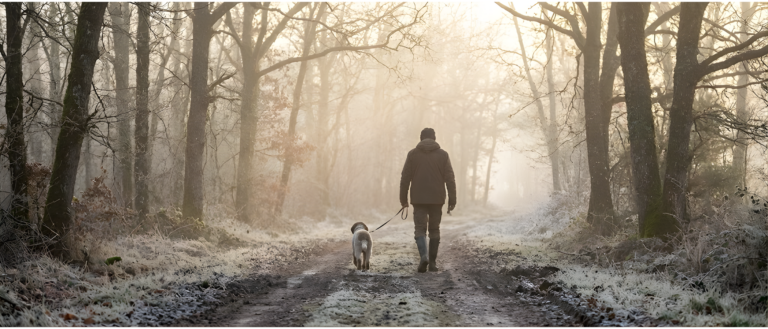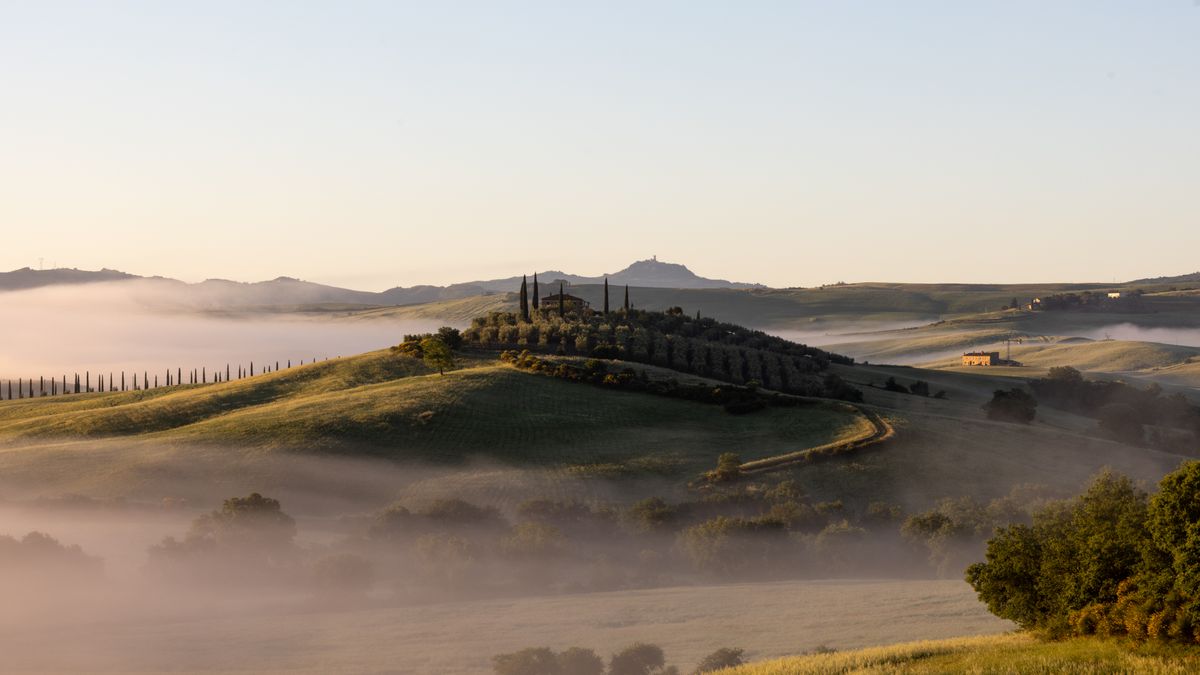
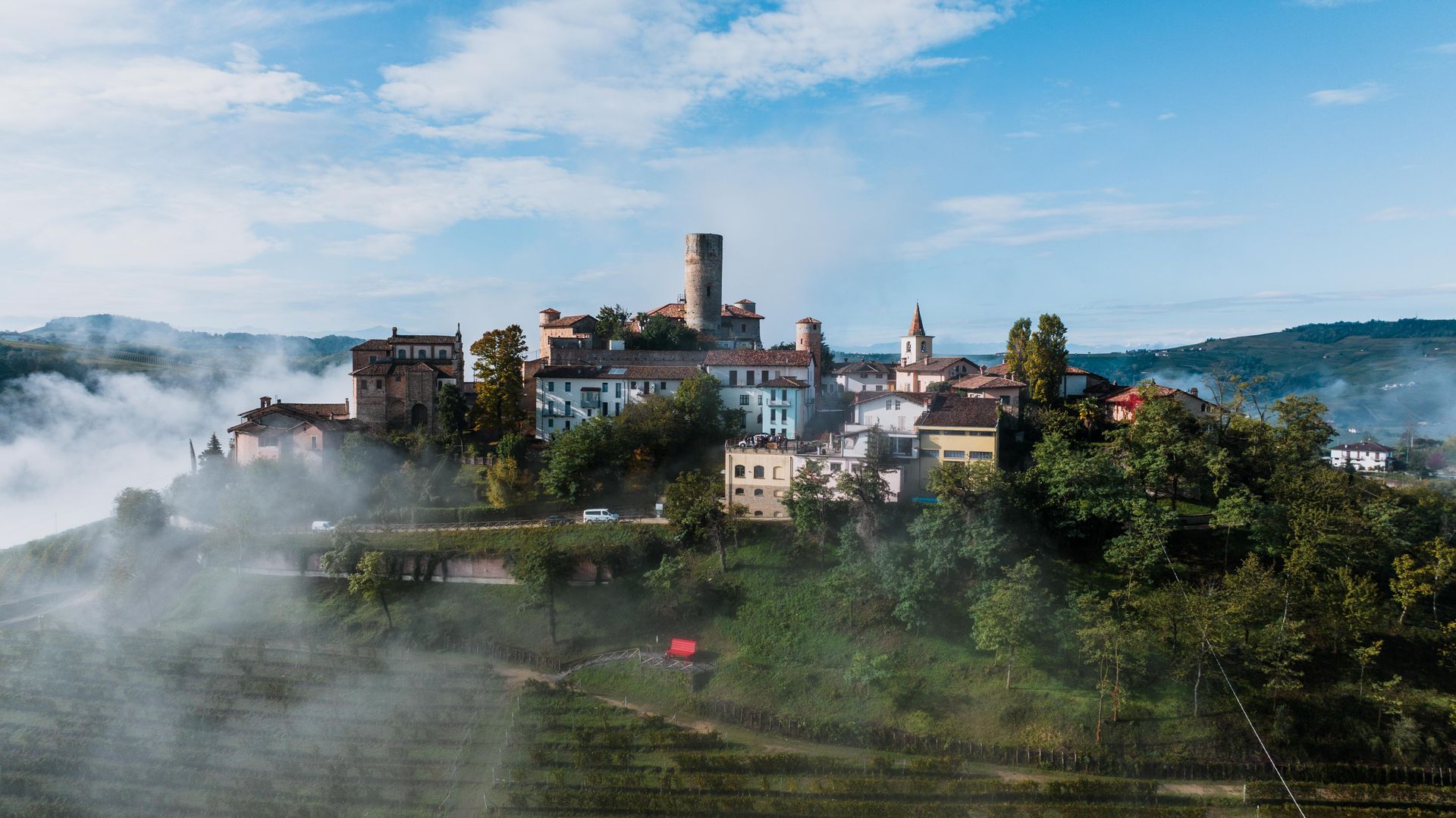
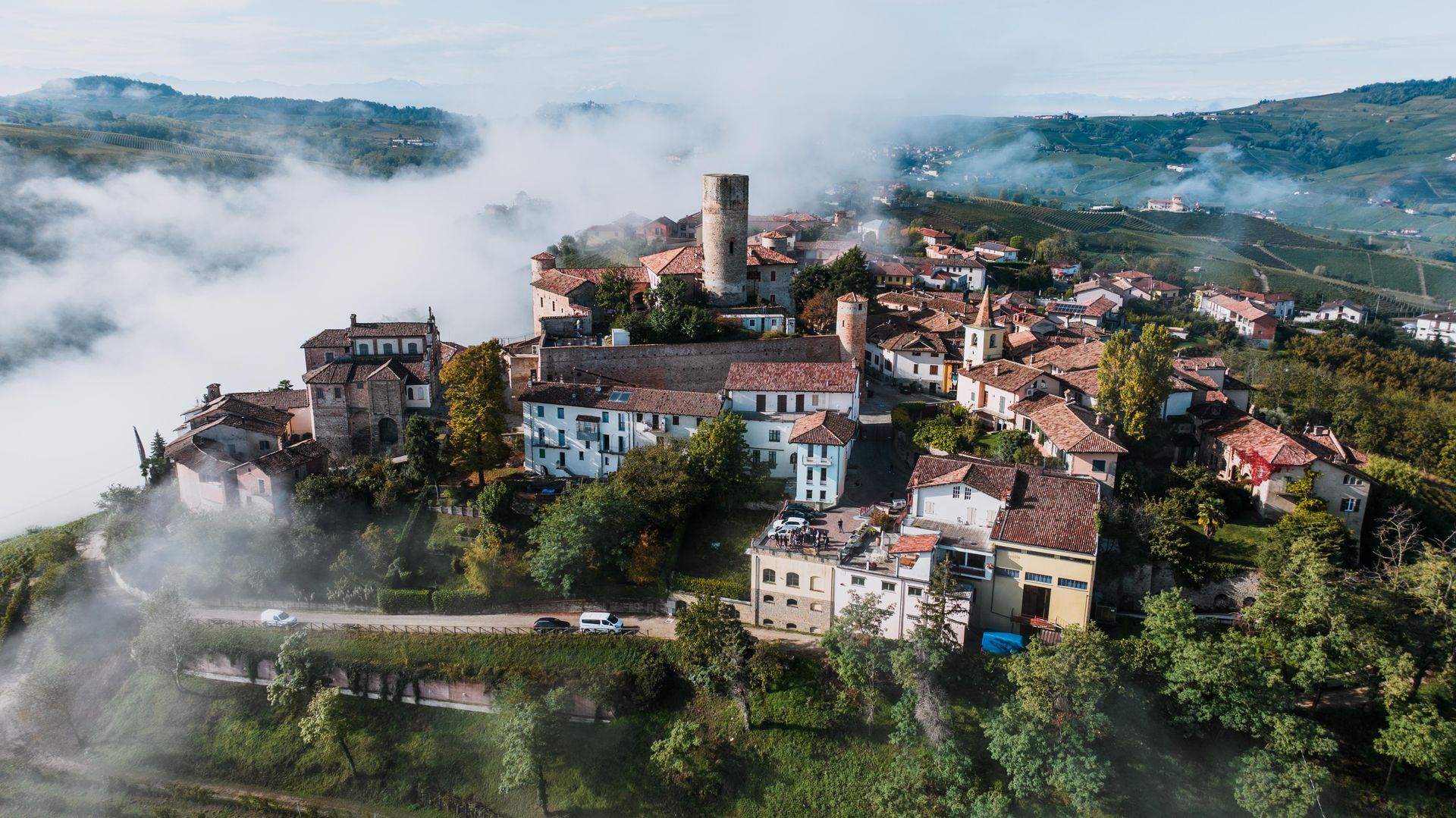
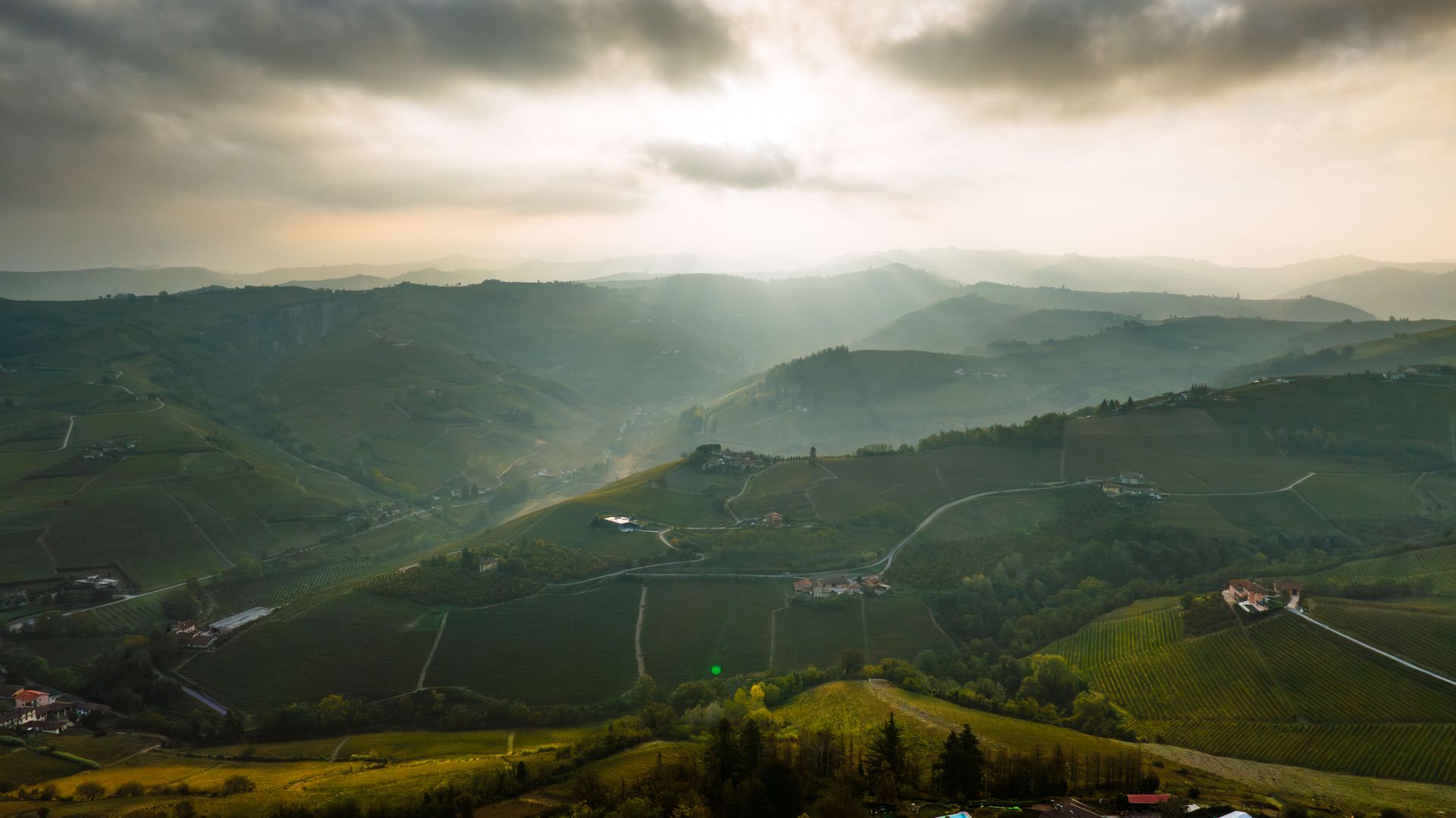
The Piedmontese call it the nebbia. It is not bad weather. It is the reason everything in this region happens now.
Why autumn is the season
Nebbiolo is a difficult grape with a specific habit: it is among the first varieties to bud in spring and the very last to ripen. It is picked from mid-October to the end of October, often two full weeks after everything else in the valley has been brought in. Which means the harvest of the region's great grape falls exactly inside the fog season.
Whether the grape is named after the fog, the pale bloom on its skin, or nobile, nobody has settled it, and any Piedmontese who tells you otherwise is giving you his favourite version. The first documented mention is from 1268, a wine called nibiol grown near Turin. What everyone agrees on is what it smells like at maturity, and the phrase has never been improved on: tar and roses.
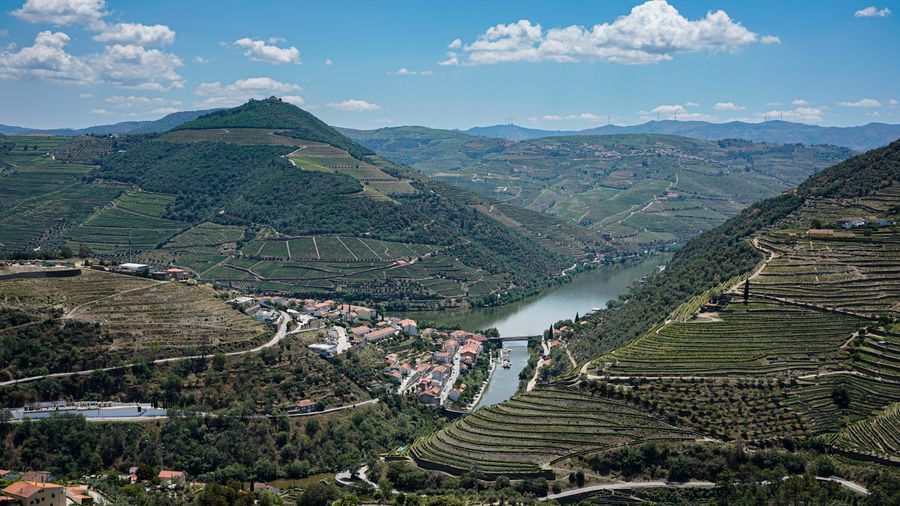
Autumn is also the only moment when everything in this region coincides. The vines turn. The white truffle comes out of the ground. The great restaurants are at full strength. The cellars are at their most welcoming, because the work is done. And the hills themselves have been a UNESCO World Heritage site since 2014, The Vineyard Landscape of Piedmont: Langhe-Roero and Monferrato10,789 hectares across six components. Pollen analysis puts winemaking on these slopes from the fifth century BC.
In twenty issues of this journal we have never sent anyone here, not even in our Italy pages. That was an oversight, and this is me correcting it.
The villages
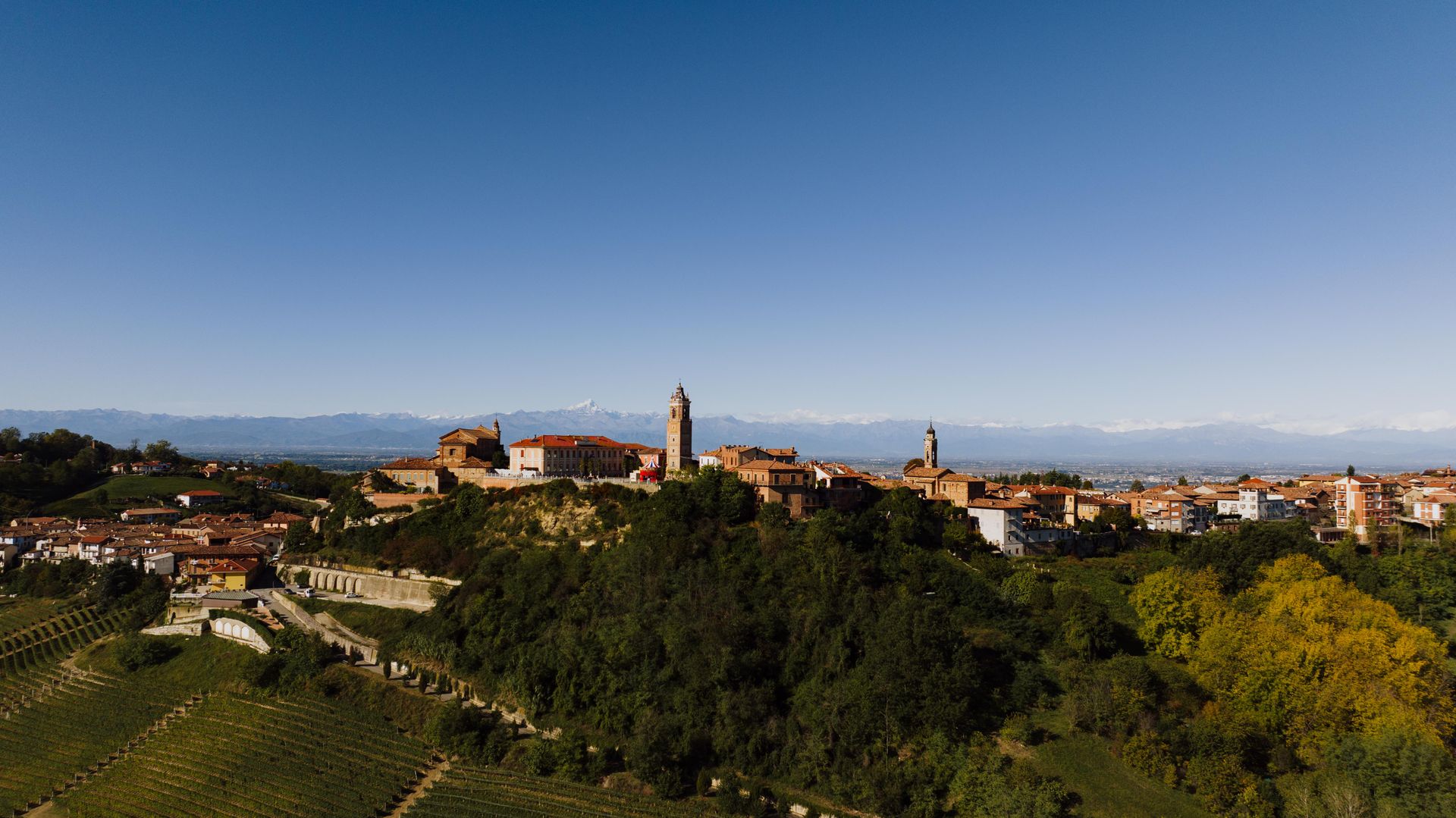
The Langhe is small: you can drive across the whole Barolo zone in forty minutes. It is made of hilltop villages that each want to be seen from the next.
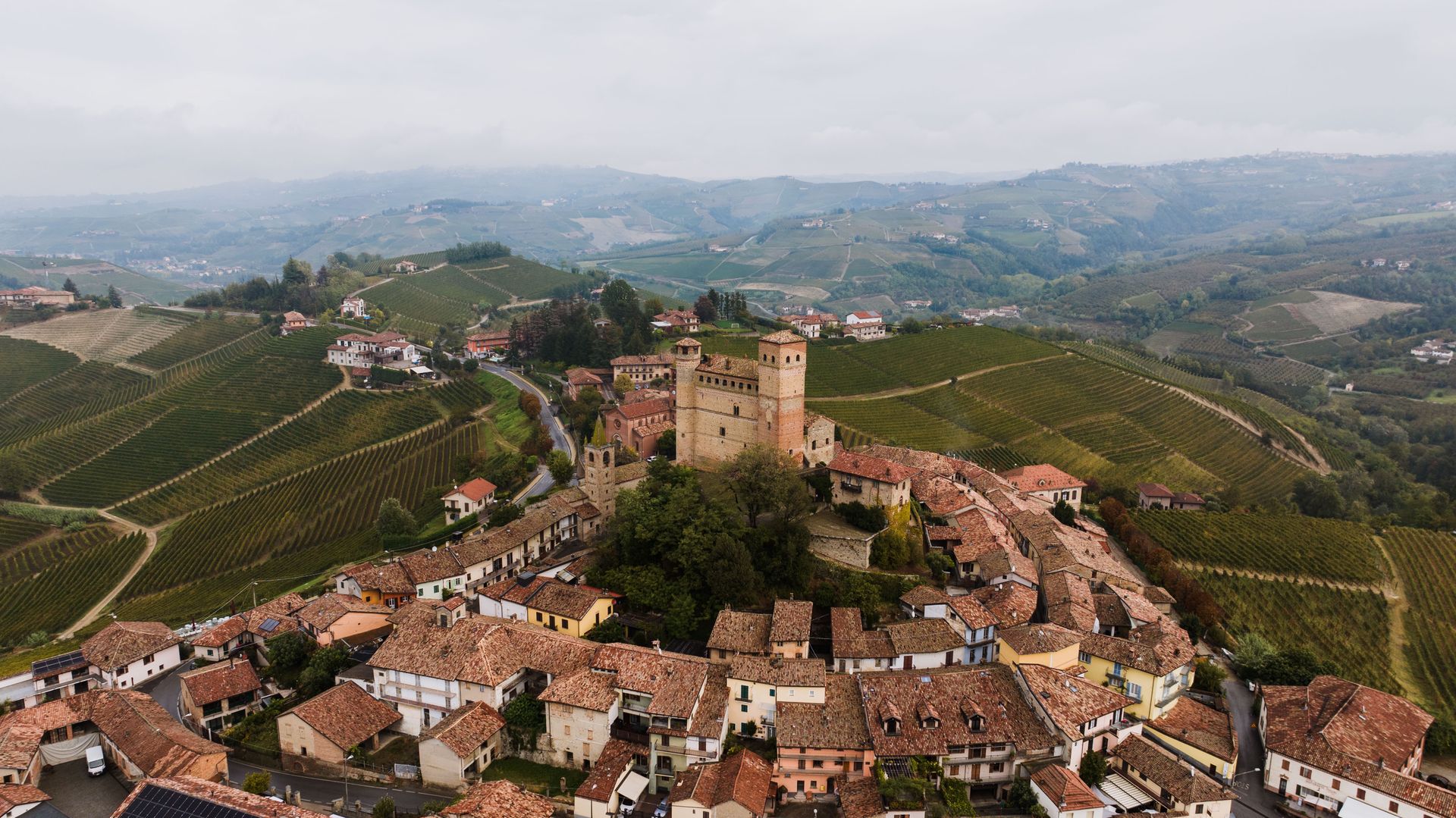
La Morra has the balcony: the whole amphitheatre of the Barolo crus opens below it, and this is where the fog photograph happens. Barolo itself is a village of fewer than seven hundred people with a castle in the middle and its name on some of the most expensive wine in Italy. Serralunga d'Alba is the most striking silhouette in the region, a castle of 1340 on a narrow ridge, the only example in Italy of a French-style keep, with the village spiralling below it like a web. It has belonged to the Italian state since 1949 and is part of the Savoy Royal Residences circuit, not, as some guides claim, a private house.
Barbaresco and Neive sit north across the Tanaro, quieter and warmer. Alba is the town everything orbits: red medieval towers, a Saturday market, and for two months of the year the greatest concentration of white truffles on earth. Bra, to the west, is the birthplace of Slow Food. One note for planning: Cheese, Bra's biennial festival, does not take place in 2026; the next edition is 17–20 September 2027.
Barolo and Barbaresco: what makes them different
Both are 100% Nebbiolo, from vineyards a few kilometres apart, and Piedmontese people will argue about them for the rest of your life.
| Barolo | Barbaresco | |
|---|---|---|
| Minimum ageing | 38 months, 18 of them in wood | 26 months, 9 in wood |
| Riserva | 62 months | |
| Released | fourth year after harvest | third |
| Area | 2,214 ha | 859 ha |
| Production | ~15 million bottles | ~5 million |
| Named crus (MGA) | 181, across 11 communes | 66 |
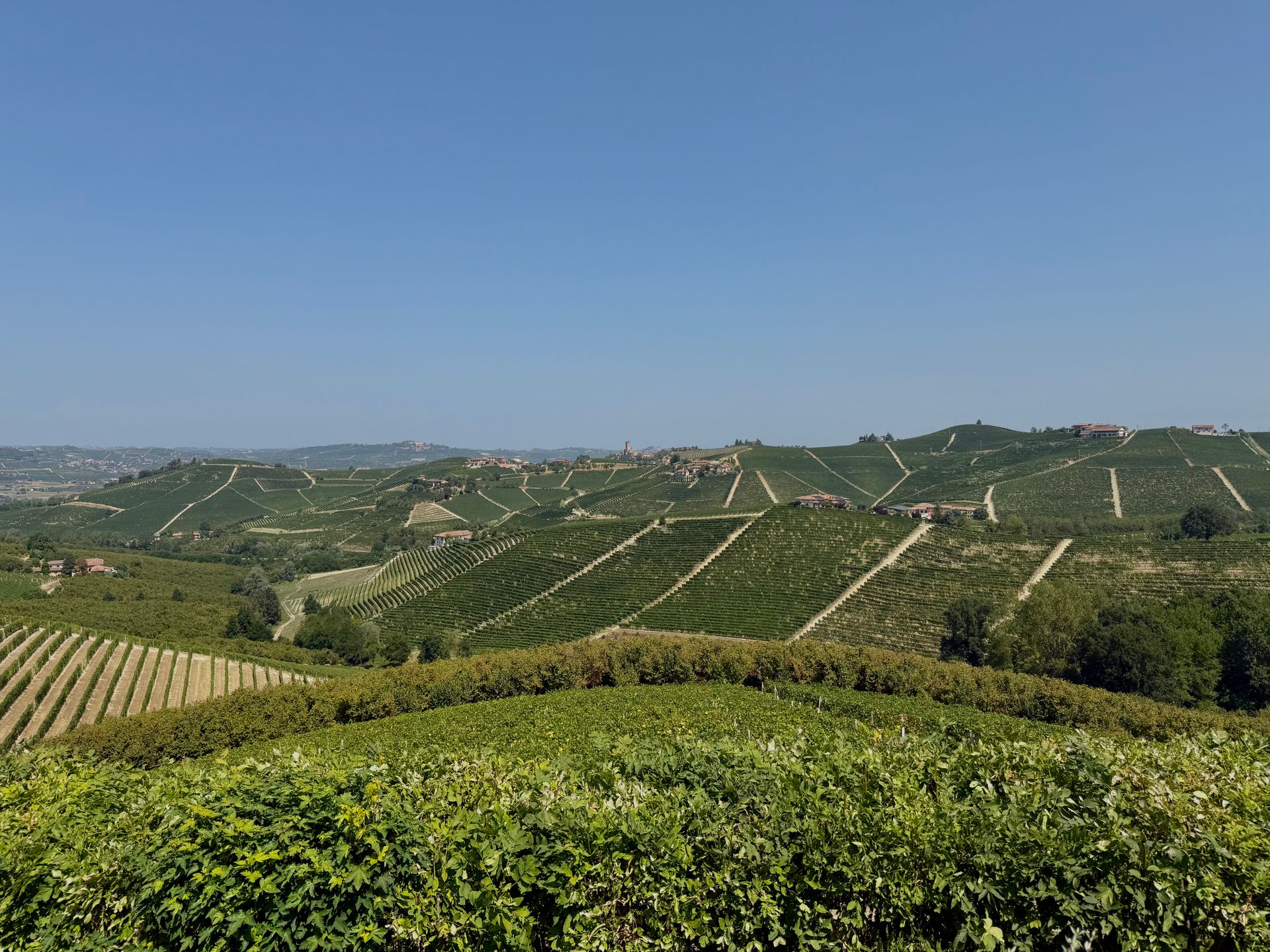
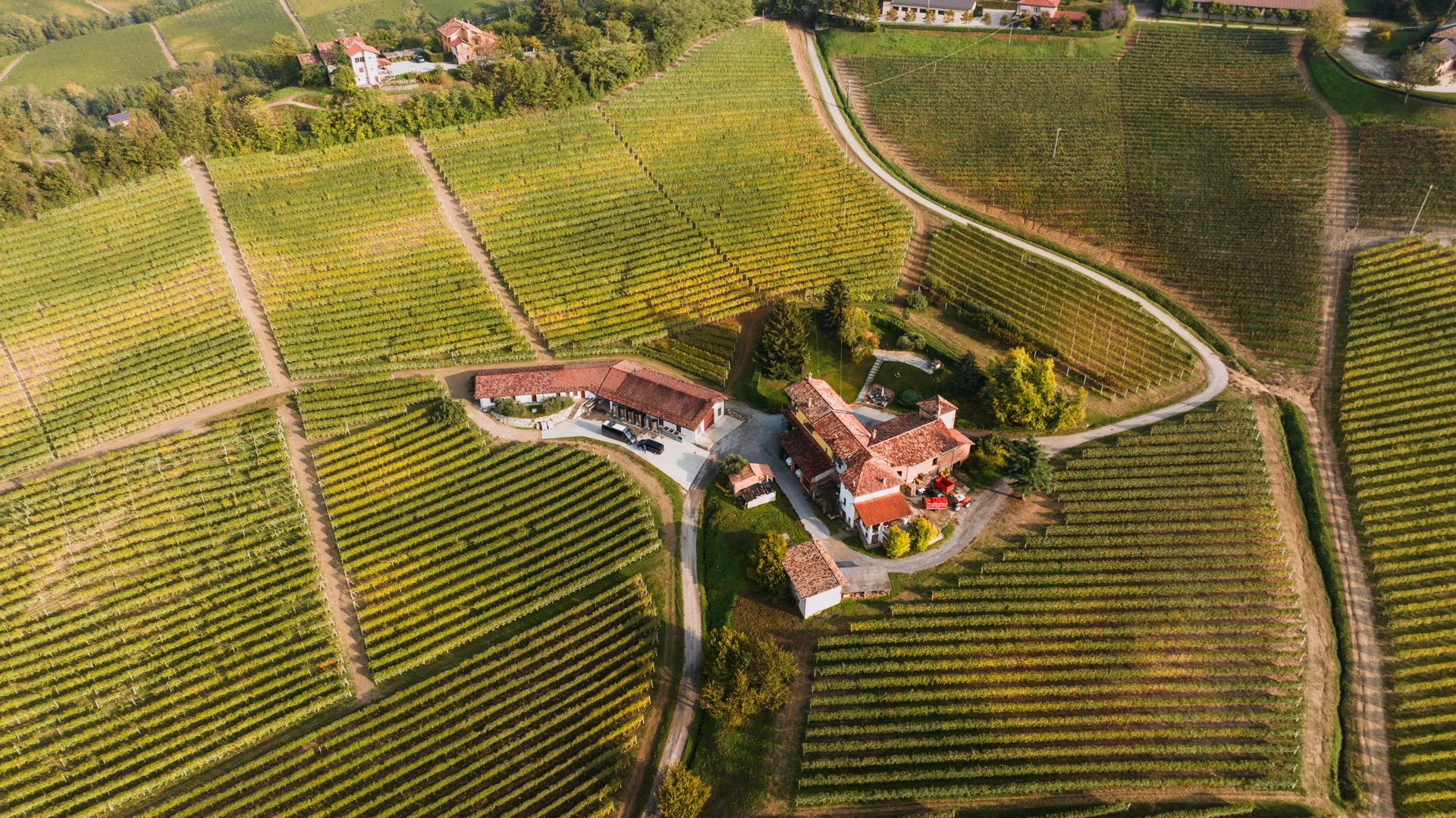
The MGA are worth understanding, because they are the reason this region rewards a serious visit. Menzioni Geografiche Aggiuntive are officially delimited single vineyards, the Piedmontese equivalent of Burgundy's climats, and essentially unique in Italy. Cannubi, Brunate, Cerequio, Vigna Rionda: each is a specific slope, and the same producer's wine from two of them, in the same year, will not taste the same. Tasting across MGA from one cellar is the most instructive hour in Italian wine.
In broad terms Barolo is bigger, slower and more austere young; Barbaresco is finer-boned and readier earlier. Anyone who tells you one is better than the other is telling you about themselves.
The white truffle of Alba
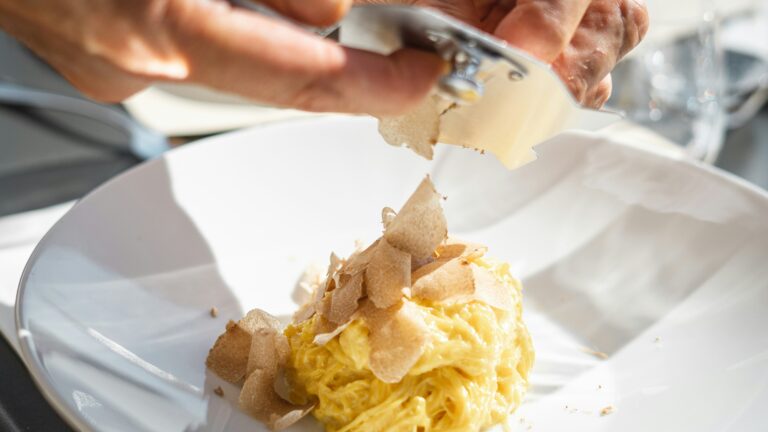
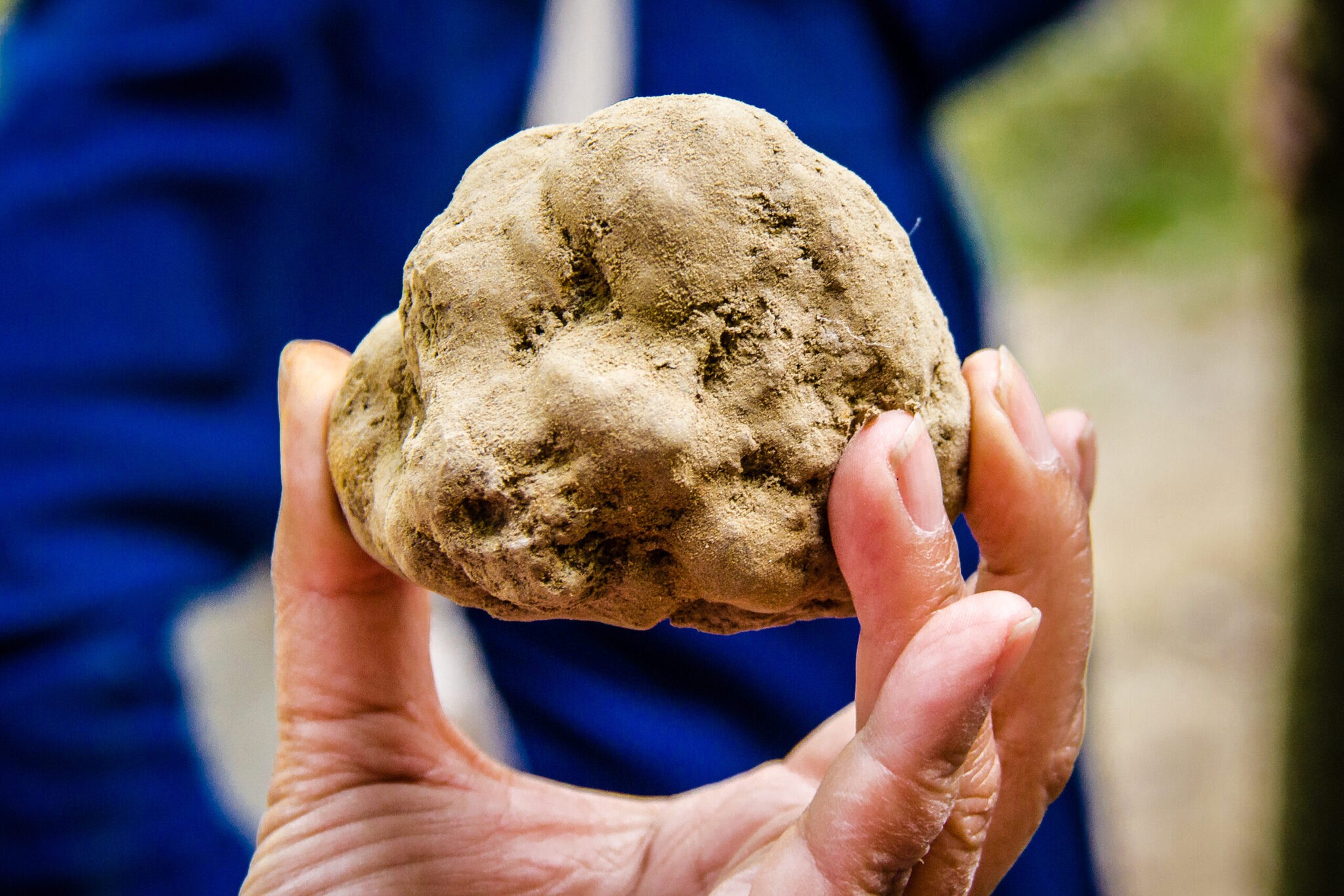
The white truffle, Tuber magnatum pico, is harvested from 1 October to 31 January, with a mandatory biological rest period through the whole of September when no one may hunt at all.
It cannot be farmed. People have tried for two centuries. The mycelium spreads readily enough, but the root associations it needs are rare, the soil requirements unforgivably narrow, and where it fruits changes every season. Every white truffle sold in Alba was found by someone walking.
The trifolau works at night, partly because the cool damp air carries the scent, and mostly for secrecy: productive spots are family property, passed down and never spoken of. His dog is the tabui, his little spade the sapin. There are about 5,000 licensed hunters in Piedmont, each of whom has passed an examination for the tesserino. And since 1880 the village of Roddi has run the Università dei Cani da Tartufo, the university for truffle dogs, now in its fourth generation: a three-week course for around €400, and a candid admission from the school that it takes three years to make a dog that is genuinely good.
The Fiera Internazionale del Tartufo Bianco d'Alba runs from 10 October to 6 December 2026, the 96th edition. The world market opens every Saturday and Sunday, 9:30am to 7:30pm, in the Cortile della Maddalena, €6 to enter, with every truffle certified by an inspection commission before it can be sold.
The World Truffle Auction is on Sunday 8 November 2026 at the castle of Grinzane Cavour, by invitation, with live satellite links to bidding rooms around the world. In 2025 it raised €502,000 for charity, and a single triple truffle of 1,009 grams went to a Hong Kong bidder for €110,000. Prices at the 2025 opening ran €2,500–3,000/kg, hit €4,000/kg within a week, and settled at €4,500–5,000 retail, five to seven times the French winter black.
For the French winter black truffle, its season, its markets and how not to be sold the wrong species, see our full truffle guide. And for the whole European map, from Alba to Teruel and Istria, we followed the truffle capitals.
Two three-star tables in one valley
This is the news that has not yet reached most American travellers.
On 19 November 2025, La Rei Natura by Michelangelo Mammoliti, at the Boscareto Resort in Serralunga d'Alba, was awarded its third Michelin star. It joins Piazza Duomo, Enrico Crippa's restaurant in Alba, which has held three since 2012. There are now two three-star restaurants within fifteen minutes of each other, in a valley of villages, and 22 stars across 16 restaurants on the hills of Alba, the Langhe, Roero and Asti, one of the most concentrated fine-dining landscapes in Europe.
Around them is the reason the stars are here: an everyday table that is one of the best in Europe. Tajarin, egg pasta cut in threads as fine as string, served under shaved white truffle and nothing else. Agnolotti del plin, pinched by hand, thirty to a portion. Vitello tonnato. Bagna cauda, anchovy, garlic and oil kept hot at the table, into which the entire autumn vegetable garden is dipped, a dish that requires the whole table to commit. Carne cruda all'albese. Bollito misto, seven cuts of boiled meat with seven sauces, wheeled to your table.
And salsiccia di Bra: a veal sausage, eaten raw, made since the sixteenth century. In 1847 King Carlo Alberto banned beef sausages throughout his kingdom to protect the Jewish community of Cherasco, who could not eat pork, and granted Bra an exemption to keep making a sausage from veal. A royal decree from 1847 is why you can eat it today. For dessert: Nocciola Piemonte IGP, the Tonda Gentile Trilobata hazelnut, generally held to be the best in the world.
Where to stay
- Il Boscareto Resort & Spa, Serralunga d'Alba. Five stars, 49 rooms, the Dogliani family, a helipad on site, and La Rei Natura downstairs. The obvious base.
- Casa di Langa, a five-star eco-resort on 42 hectares, Preferred Hotels.
- Palás Cerequio, La Morra. Eleven suites standing inside the Cerequio cru itself, owned by the Michele Chiarlo house, with a 6,000-bottle cellar.
- Relais San Maurizio, Santo Stefano Belbo. A monastery of 1619, Leading Hotels of the World.
- Relais Villa d'Amelia, Benevello. Small Luxury Hotels.
Fontanafredda, at Serralunga, is worth a visit whether or not you sleep there: Vittorio Emanuele II bought it in 1858 for Rosa Vercellana, the woman he married in 1877 after thirty years. Oscar Farinetti, who founded Eataly, owns it now. Its restaurant, Guidoristorante, holds a star.
Getting there, including from the Riviera
Monaco to Alba is 173 kilometres, about two hours fifty.
That number surprises people, and it changes what this region is. For anyone already spending time on the Côte d'Azur, which is most of our travellers, most autumns, the Langhe is a three-hour drive, not a separate trip. Two nights in Serralunga at the end of a Riviera week is entirely reasonable, and in November it is the best possible use of those two nights. Milan Malpensa is 2h10 away; Turin Caselle is the closest airport.
One caution. The Tende tunnel through the Alps, closed for eleven years after Storm Alex destroyed the road in 2020, reopened on 28–29 June 2025 after a €255 million reconstruction. It is the most beautiful way to make this drive, and it pairs naturally with our Monaco to Cannes route. It also operates on restricted hours that have changed several times since reopening, and we verify them the week of travel before routing anyone through it.
Beyond the vineyards
The Cappella del Barolo stands in the middle of the Brunate cru: built in 1914, never consecrated, and used as a tractor shelter and shepherds' refuge until the Ceretto family bought it in 1970. In 1999 they gave it to two artists, Sol LeWitt painted the exterior in bands of colour, David Tremlett did the interior. It is a working piece of contemporary art standing in a grand cru, and it is scheduled to reopen in autumn 2026. We are confirming the exact date with Ceretto before building anything around it.
At Pollenzo, near Bra, the Roman Pollentia now houses the University of Gastronomic Sciences, the first university in the world entirely dedicated to food, founded by Slow Food. And Turin is an hour away, with the Museo Egizio: the second Egyptian collection in the world after Cairo.
Piedmont in autumn is not a place you tour. The distances are too short and the days are too good for that.
You take a house or a hotel on one hill. You drive twenty minutes in the morning to a cellar where a man opens four vintages from the same slope and lets you work out why they differ. You eat tajarin at one, with something shaved over it that was underground last night. You sleep in the afternoon. And at six, when the light goes low and orange and the fog starts to come up out of the valleys again, you stand outside with a glass and watch it happen from above.
That is the entire itinerary. It is enough.
Frequently asked questions
When is the best time to visit the Langhe?
Late October and November. Nebbiolo is the last grape to ripen, so the harvest falls inside the fog season: the vines turn, the white truffle comes out of the ground, the cellars are at their most welcoming because the work is done, and the great restaurants are at full strength. It is the only moment when all four coincide.
What is the difference between Barolo and Barbaresco?
Both are 100% Nebbiolo, from vineyards a few kilometres apart. Barolo ages a minimum of 38 months, 18 of them in wood, and is released in the fourth year; Barbaresco ages 26 months, 9 in wood, and is released in the third. Barolo is bigger and more austere young, Barbaresco finer-boned and readier earlier. Barolo covers 2,214 hectares against Barbaresco’s 859.
When is the Alba white truffle fair in 2026?
The 96th Fiera Internazionale del Tartufo Bianco d’Alba runs from 10 October to 6 December 2026. The world market opens every Saturday and Sunday, 9.30am to 7.30pm, in the Cortile della Maddalena, €6 to enter, with every truffle certified by an inspection commission before it can be sold.
How much does an Alba white truffle cost?
At the 2025 opening, €2,500–3,000/kg, reaching €4,000 within a week and settling at €4,500–5,000 retail, five to seven times the French winter black. It cannot be farmed: every white truffle sold in Alba was found by someone walking.
How far is Piedmont from the French Riviera?
Monaco to Alba is 173 kilometres, about two hours fifty. That makes the Langhe an extension of a Riviera week rather than a separate trip. Turin Caselle is the closest airport; Milan Malpensa is 2h10 away.
Do you need to speak Italian?
Not in the hotels or the starred restaurants. In the small cellars, which is where the good hours happen, the grower often has no English at all, and that is precisely why we put someone in the car with you. Half of what makes a Langhe tasting worth the drive is the conversation.