
That single fact governs everything else on this page. It is why the best truffle you will ever eat will be eaten within forty kilometres of the tree it grew under, standing in a field or sitting in a room with condensation on the windows.
Much of what is written about French truffles gets the small things wrong, and with truffles the small things are expensive: a date, a region, a price, a “truffle hunt” sold in July, when there is nothing in the ground to find.
What follows is the version I use myself, for our own travellers.
When is truffle season in France?
Start here, because everything else depends on it: there is no such thing as “the” truffle. There are four commercially significant species growing in France, they ripen in different months, and they are not remotely equal.
There is also no legal opening date for the season in France. What exists is local custom, the Ban des Truffes, a ceremonial opening declared by each market town, and biological ripeness, which is the only thing that actually matters.
| Species | Sold as | Season | Peak |
|---|---|---|---|
| Tuber melanosporum | Black Périgord truffle | mid-November → end of March | mid-January → end of March |
| Tuber uncinatum | Burgundy truffle | September → mid-January | October–November |
| Tuber brumale | Musk truffle | November → March | |
| Tuber aestivum | Summer / Saint-Jean truffle | May → July | June–July |
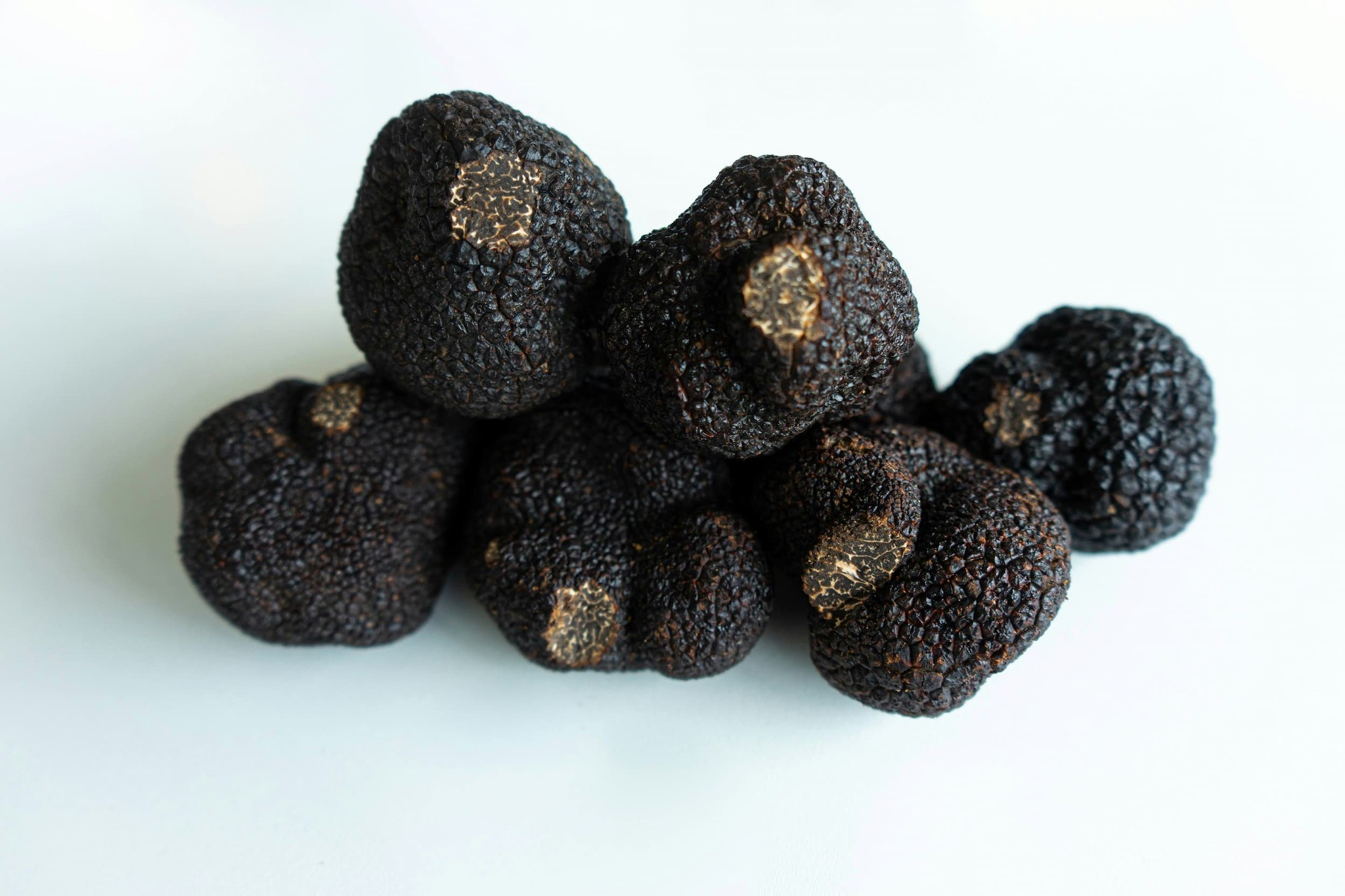
The one that matters is melanosporum. It is the black winter truffle, and it is the reason people build a trip around this. Everything written about the aroma of truffles, the reason grown adults become sentimental about a fungus, refers to this species at ripeness, meaning January to March, not November.
And the summer truffle is a different thing altogether. Tuber aestivum is a real truffle, edible and pleasant, worth perhaps a tenth of the winter black. It is also what is being served to a great many visitors in June and July who have been told they are eating truffle, and what is being "found" on summer truffle hunts. If you come to France in August and someone sells you a truffle experience, you are buying theatre with a garnish. I would rather tell you now than let you find out over lunch.
The Périgord paradox: where French truffles actually come from
Every English-language article on this subject says the same thing: Périgord is the capital of the truffle. National Geographic says it. Every travel magazine repeats it.
It has not been true for a long time.
Southeastern France, Provence and the Drôme, produces 70 to 80% of the French crop, and the Vaucluse is the leading department. The "Périgord truffle" is a species name, not an address. The great majority of the truffles sold under that name in France today grew several hundred kilometres east of the Périgord, on the limestone slopes above the Rhône.
This is not a technicality. It is the difference between a good week and a wasted one. If your objective is the real winter market season, the volume, the professionals, the negotiation, the smell that fills a village square at eight in the morning, you go to the Vaucluse. The Périgord has beautiful markets and a real tradition, and Sarlat in January is genuinely worth the trip. It is simply not where most of the crop is.
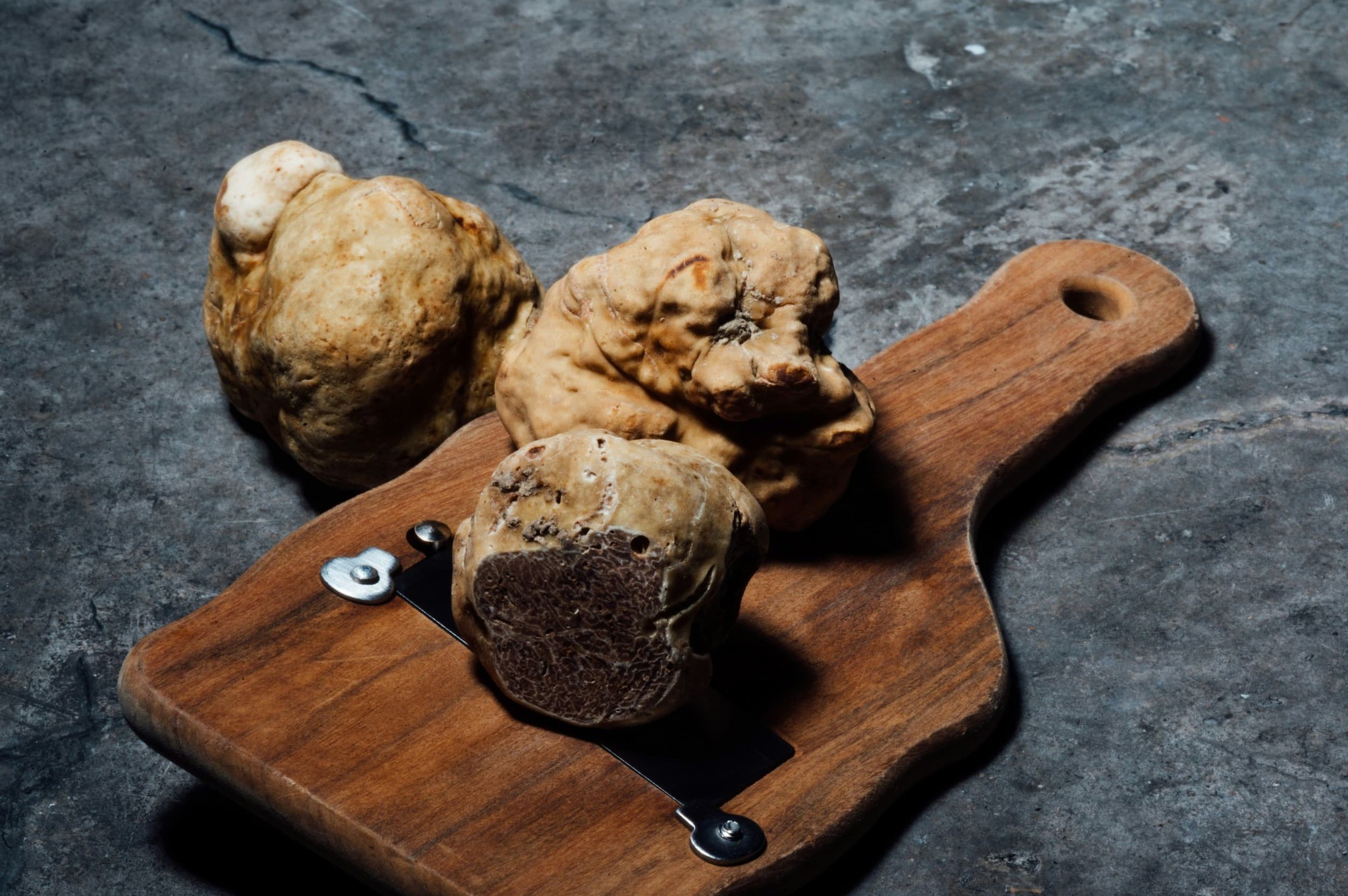
A second correction, less romantic and more useful: roughly 80% of French truffles now come from planted orchards, not wild forest. Oaks and hazels inoculated with the fungus, planted deliberately, tended for fifteen years before they produce. The solitary hunter in the wild wood is a photograph, not an industry. The people who grow truffles in France today are farmers with a very long planning horizon.
And the scale is smaller than most people imagine. France currently produces around 50 to 60 tonnes a year. In 1880, it produced 1,320 tonnes. Today's harvest is under 5% of the historic level, the phylloxera crisis, the First World War, and rural depopulation between them broke the chain of knowledge, and 18,000 hectares of new plantings across 40 departments and some 20,000 growers have not come close to repairing it.
What a black truffle actually costs
Real numbers are hard to come by, so here are the ones we plan with.
The reference price for the whole of the southeast is set on Friday morning in Carpentras, where the professional market opens at 9am in the courtyard of the old Hôtel-Dieu. The mercuriale, the official published price series, is what eight departments trade against for the rest of the week.
| Product | Price range | Source |
|---|---|---|
| Black truffle, wholesale | €150–700 / kg | Carpentras mercuriale2025–2026 season |
| Black truffle, general market | €500–900 / kg, peaks near €1,000 | French Ministry of Agriculture sector plan |
| Alba white truffle | €3,400–5,000 / kg | Alba market, 2025 season |
A note on what those numbers mean in practice: a truffle for a dinner for six is roughly 100 to 150 grams. At market you are talking about €60 to €120 of truffle for a meal that will be remembered for a decade. The extravagance of truffles is real at the kilo and surprisingly modest at the plate.
The part that surprises everyone, and saves a great deal of money: prices spike in the two weeks before Christmas, when demand arrives before the crop does, and then fall through January and February as supply comes in and the truffles get better. January and February are the best time to buy, not December. The wine trade would call this the opposite of everything they know. It is nonetheless true.
The markets: day, time, season
Truffle markets are not open-air food markets. Most last ninety minutes, several are closed to the public until a bell rings, and turning up on the wrong day means a four-hour drive for a closed square. We keep this table for our own planning. If you print one thing from this page, print this.
| Market | Day & time | Season | What it is |
|---|---|---|---|
| Richerenches (Vaucluse) | Saturday, 9am–1pm | mid-Nov → mid-March | The largest truffle market in Europe |
| Carpentras (Vaucluse) | Friday, trade from 9am, retail 8am–12pm | mid-Nov → March | Where the price is set |
| Lalbenque (Lot) | Tuesday, 1:30pm set-up, 2:30pm bell, 3pm whistle | December → March | The most theatrical |
| Sarlat (Dordogne) | Saturday, 9am–12pm | Dec → mid-March | Controlled public market |
| Sarlat, wholesale | Wednesday, 2:30pm | Nov → end of Feb | Trade only |
| Chamaret | Monday | winter | |
| Vaison-la-Romaine · Grignan | Tuesday | winter | |
| Valréas | Wednesday | winter | |
| Nyons | Thursday | winter | |
| Suze-la-Rousse · Dieulefit · Limogne-en-Quercy | Friday | winter |
Please note the correction, because most of the internet has this wrong: Richerenches is on Saturday. What happens on the third Sunday of January is the truffle Mass, which is a different event entirely. Arriving in Richerenches on a Sunday morning expecting the market is one of the more disappointing ways to spend a winter weekend.
Richerenches, in numbers. More than 700 kilos change hands in a single week, around 30% of the entire French national crop, in one village, on one morning a week, since about 1923. Growers sell out of the boots of cars along the Cours du Mistral. There is no signage and no ceremony. It is a commodity exchange that happens to smell extraordinary.
Lalbenque is the one to see if you only see one. The choreography is exact: sellers set up at 1:30pm behind a rope that physically separates them from the buyers, with the truffles waiting in baskets on car bonnets. At 2:30pm a bell opens the retail market. At 2:45 the professionals move. At 3pm a whistle blows and a flag goes up, and the wholesale trade begins. Before the whistle, no one crosses the rope. It is the most disciplined French crowd you will ever see.
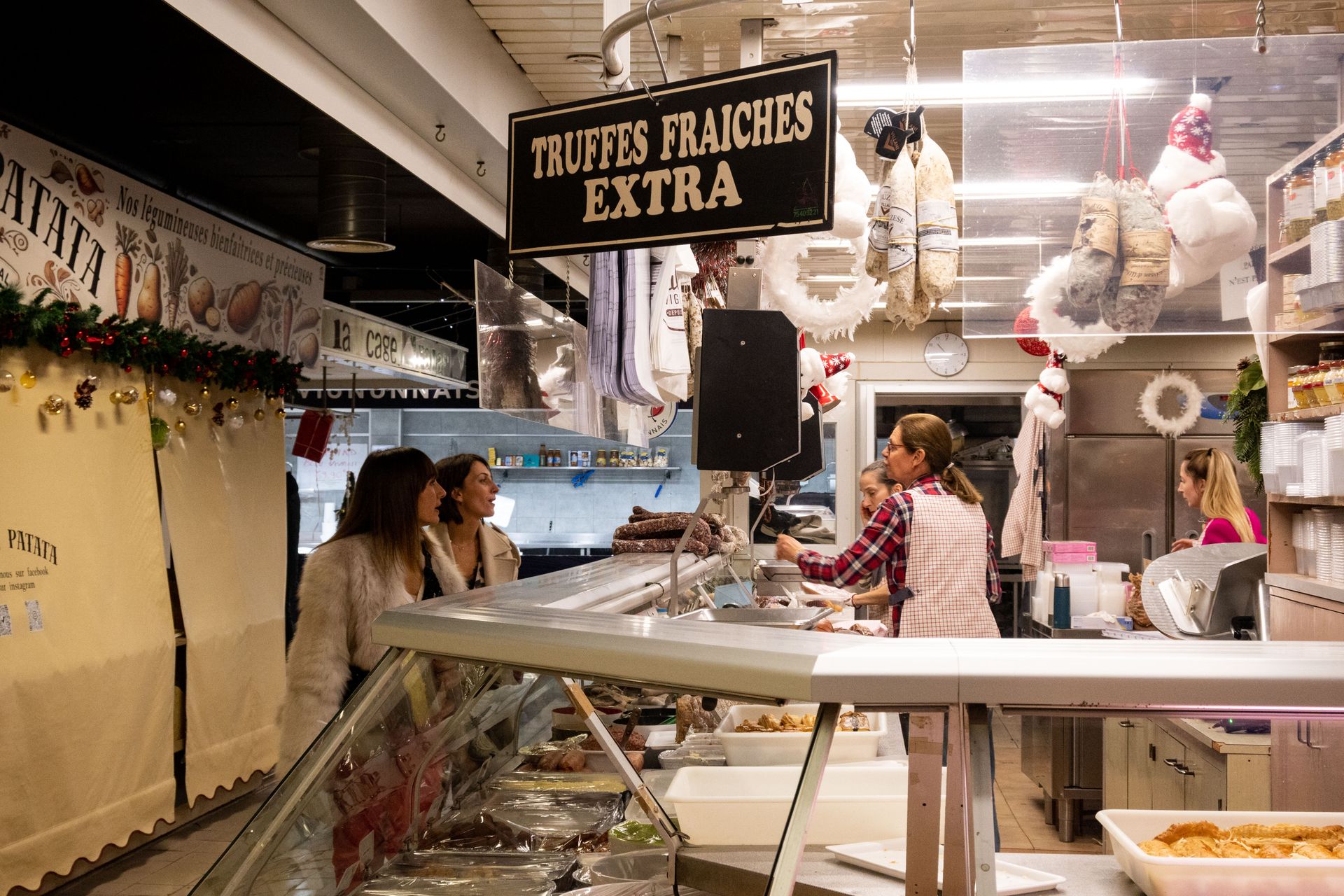
Three dates worth building a trip around
Le Ban des Truffes, Richerenches, Saturday 5 December 2026, 10am. The ceremonial opening of the season, with the procession of the Confrérie du Diamant Noir at 10:30. This is, as of this writing, the only firmly confirmed 2026–2027 date on the French truffle calendar.
La Messe des Truffes, Richerenches, third Sunday of January, 10am. Since 1952, a Mass in honour of Saint Anthony at which the offering is made in truffles. Parishioners come forward and place truffles in the collection basket instead of money. The truffles are then weighed and auctioned after the service, and the proceeds go to the parish. It is completely sincere, entirely unstaged, and one of the few religious ceremonies in France that a visitor can attend without feeling like an intruder.
La Fête de la Truffe, Sarlat, mid-January, Place Boissarie, 9am to 5pm. The best-known truffle festival in France, and the one place where the Périgord puts on its full show: growers, chefs, workshops, cooking demonstrations by people who genuinely know, and a hunt in the woods outside town you can watch. The 2026 edition ran on 17 and 18 January; the 2027 dates are not published yet and we confirm them with the Sarlat tourist office each autumn.
A word on festivals generally, since this is where most truffle-season trips go wrong. Being at Sarlat on festival weekend and being in Sarlat during festival season are two different holidays. In the crowd, you see a public market. With a grower who will take you out before the square fills and a table booked for after it empties, you see the trade. The festival is the advertisement; the week around it is the thing.
Truffle hunting: what's real and what's theatre
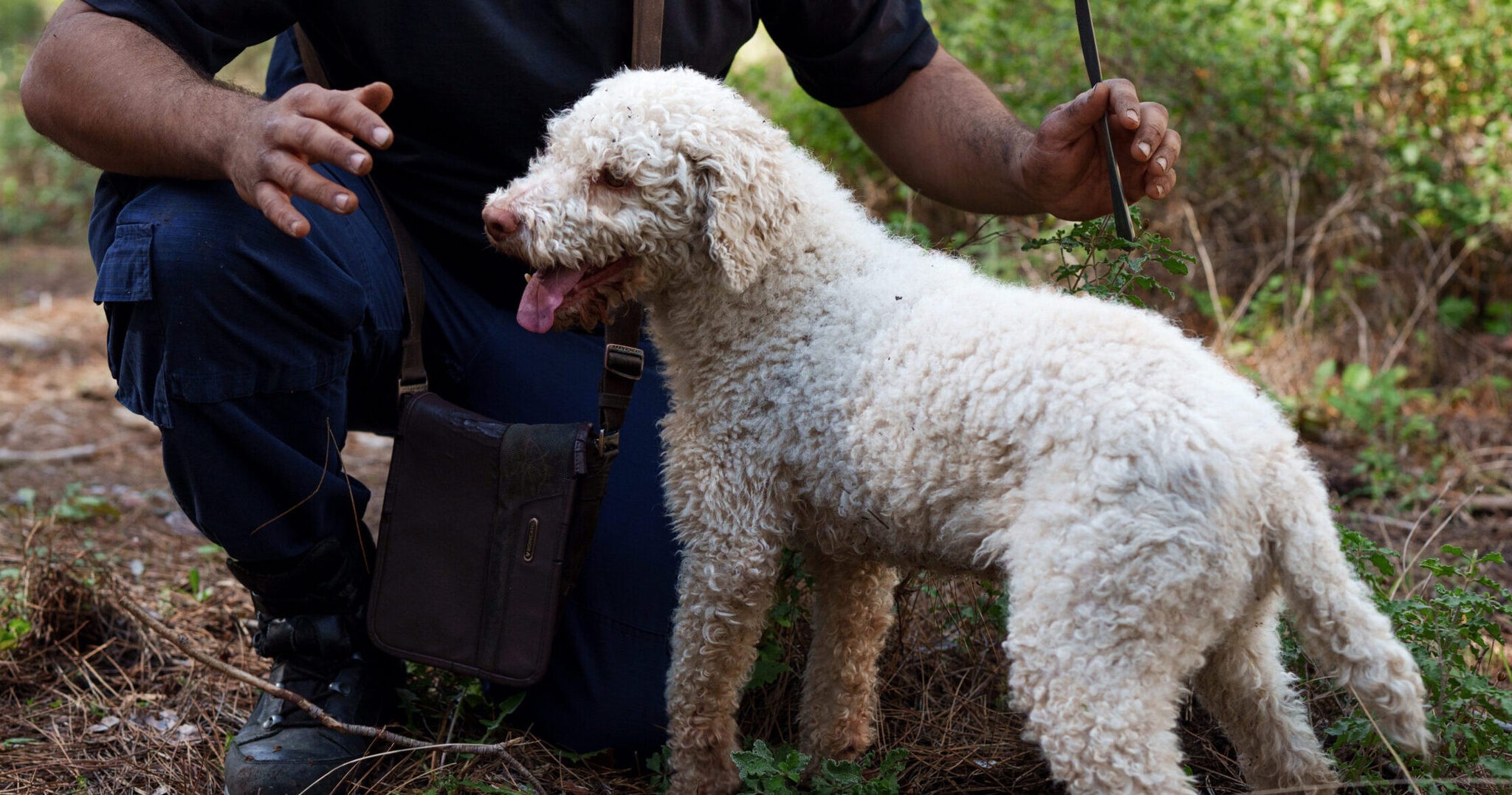
You can absolutely go out with a grower and a dog and find truffles in France. It is one of the great mornings of the year. But four facts separate a real cavage from a performance, and knowing them is how you avoid paying for the wrong one.
- A dog works for two to three hours, then it is finished. Truffle dogs tire. Concentration goes before the legs do. Any "hunt" that runs on a fixed schedule several times a day is not using a working dog at working pace.
- The hours are dawn and dusk. That is when the ground is cool and damp and the aromatics carry. A forty-five-minute hunt sold at two in the afternoon in high season is not a real cavage; it is a demonstration on a salted plot. Both can be enjoyable. Only one is what you think you are paying for.
- The dog marks and waits. A properly trained truffle dog indicates the spot and stops. It does not dig. The grower opens the ground himself with a piochon or an iron probe, takes the truffle, and closes the hole again. The soil is the asset; the truffle is this year's interest on it.
- Nobody in France has been banned from using pigs. This is the most repeated myth in the genre. It was Italy that banned truffle pigs, in 1985. France never did. Pigs went out of use because they root, tear the mycelium, damage the tree's future production, and eat the truffle, given half a second.
And the reason the pig was ever used is not what you were told. The old story is that the sow is drawn by androstenol, the boar pheromone, and is essentially looking for a mate. That has been overturned: the compound that triggers her interest is dimethyl sulphide. The pig is not in love. The pig is hungry.
How to know you're not being cheated
This is the side of the trade nobody enjoys talking about, and the side that protects you.
In 2018 the DGCCRF, France's consumer protection and fraud enforcement agency, ran a national inspection of the truffle trade. 112 establishments were checked. 57% of the products sampled were non-compliant. Seventeen formal injunctions were issued and six cases went to prosecution.
The three frauds are always the same.
Species substitution. Tuber indicum costs a small fraction of melanosporum and looks almost identical once brushed. It has very little aroma. It is sold as Périgord truffle, whole and in preparations.
Immature truffles, artificially perfumed. A truffle picked before ripeness has no smell. Treated with synthetic aroma it has a great deal, briefly, and none of it is its own.
Truffle oil. Almost all commercial truffle oil contains no truffle whatsoever. The smell is 2,4-dithiapentane, made in a laboratory. There is nothing illegal about that in itself; there is a great deal illegal about calling it truffle.
How to protect yourself, in practice
- Buy whole, never grated, never in a jar, never processed. Every fraud in the list becomes easy the moment the truffle loses its shape.
- Cut one open before you commit. A ripe melanosporum is black-brown with fine white veins running right through, marbled all the way to the centre. Uniformly dark flesh with weak veining is a warning.
- Smell it cold, from thirty centimetres. A ripe winter black announces itself across a room. If you have to hold it to your nose, it is not ripe or not what it claims to be.
- Buy on a controlled market or from the grower. At Sarlat's controlled market and at the professional markets, lots are checked. On the roadside, they are not.
- Be suspicious of a bargain. Below the mercuriale, in season, from a stranger, there is a reason.
When to come
If you take one thing from me: come in the second half of January or in February.
The melanosporum is at peak ripeness, the Christmas price spike has passed, the markets are at full volume, the growers have time to talk to you because the frantic December trade is over, and Provence in winter, bare vines, mistral, empty villages, three hours of extraordinary light in the afternoon, is at its least crowded and most beautiful.
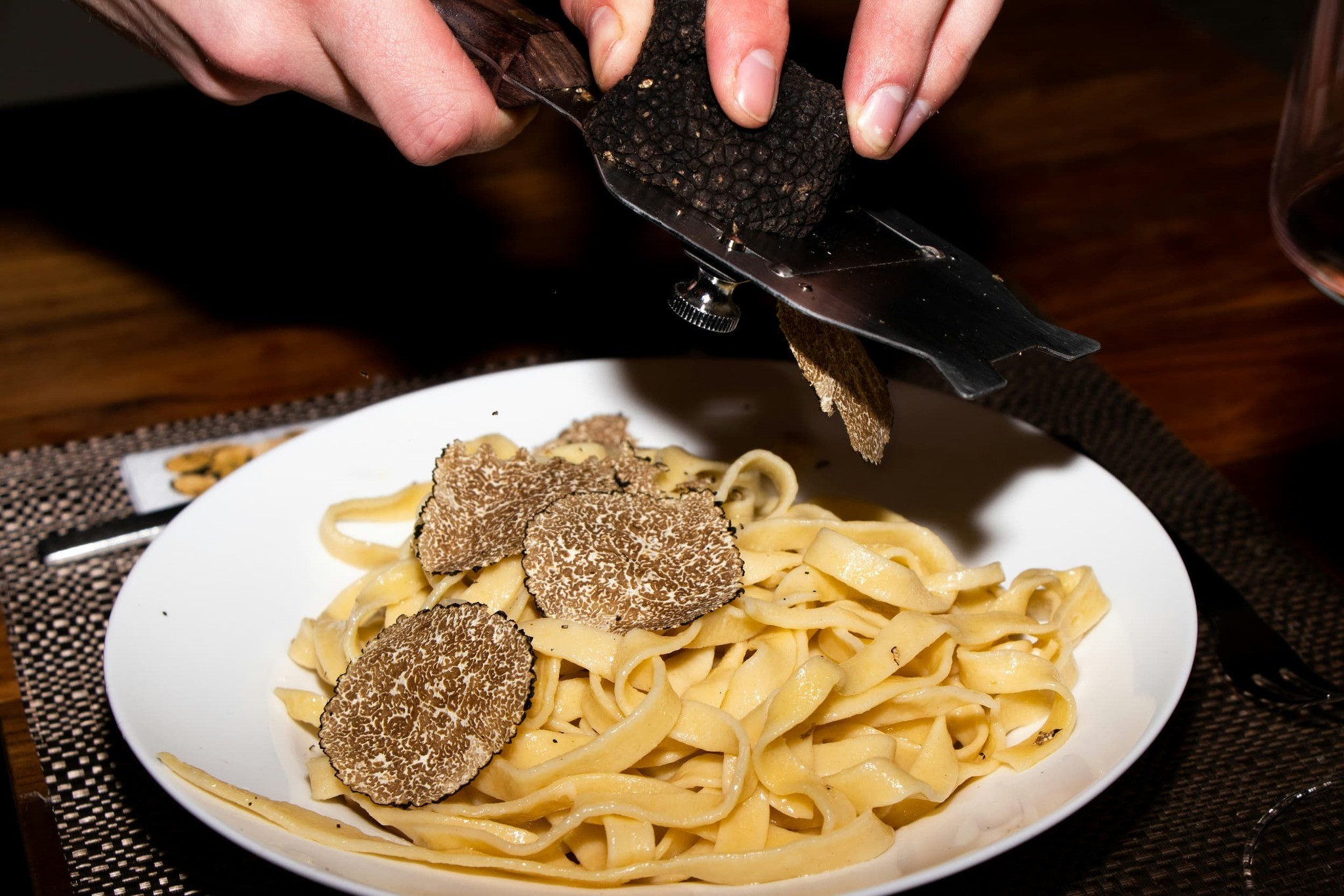
A workable shape for the week: base in the Vaucluse or the Drôme Provençale. Friday morning at Carpentras to watch the price being set. Saturday at Richerenches at nine. A dawn cavage with a grower midweek, on his land, at his hours. A long lunch afterwards where the truffle you found goes onto the table, an omelette, a plain potato, a scrambled egg, because the correct way to eat a great truffle is to put it next to something boring and get out of its way. Add Lalbenque on a Tuesday if you want the theatre, and Sarlat on a Saturday if you want the Périgord.
Then, if the appetite is properly up: the white truffle of Alba is at its peak in exactly the opposite season, October to December, five hours east. That is a different trip and a different animal, and if you want the whole map, we followed Europe’s truffle capitals from Alba to Teruel and Istria.
Three dinners worth crossing France for
Most restaurants use a truffle as garnish, or as spectacle. A few treat it as an ingredient with a philosophy, and those are worth planning a day around.
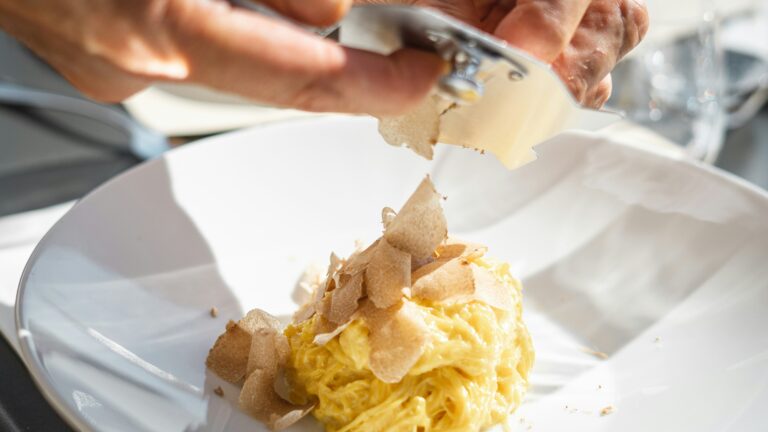
Le Vieux Logis (Trémolat, Dordogne), one Michelin star, in a sixteenth-century tobacco barn turned Relais & Châteaux. Vincent Arnould is a Meilleur Ouvrier de France, and his restraint is the point: a pasta course might be tagliatelle, butter, truffle and nothing else. He buys from the same Périgord growers you will have spent the morning with, which is the whole argument for eating here after a hunt rather than before one.
Chez Bruno (Lorgues, Var), one Michelin star, and a house that has revolved around the truffle since the 1920s. Clément Bruno built its reputation; since his death his sons Benjamin and Samuel have kept it, Benjamin in the kitchen, Samuel in the dining room. The truffle menu changes with whichever species is in season. It is not a subtle evening, and it is not meant to be.
La Beaugravière (Mondragon, Vaucluse), Bib Gourmand, on the old Route Nationale 7, run by Guy Jullien since 1976. Truffles from the Tricastin, a cream of truffle soup and a Bresse hen that people drive a long way for, and a cellar of some 28,000 Rhône bottles that is a reason to come on its own. Less formal than the starred houses and not one degree less serious.
Book all three well ahead. In truffle season the tables that matter are gone weeks before you arrive.
What a private truffle season looks like with us
You can book a group truffle hunt on any number of platforms. You will join other visitors, and you will hunt with someone who does it to pay the bills rather than because they have given a life to it. What we build instead is a private truffle season, in the Périgord, in Provence, or across both, and the difference is worth naming.
- A private hunt with a working producer. Not a part-time guide: a grower whose living comes from these trees, who sells to the markets and the chefs in this article, and who knows his ground the way you know your own street.
- Market access that is actually access. Not watching from the edge of the square. Standing with someone who knows the sellers, who can tell you what you are looking at, and who can help you buy properly if you want to.
- A table connected to your morning. Not simply a starred restaurant, but the chef who buys at the market you stood in, or the producer's own kitchen in the Périgord or in Provence, where the truffle is cooked the way his family has always cooked it.
- Private tastings, outside the performance. A tasting after service is over, a conversation with a chef when he is not in front of a room, an hour in a grower's house with no audience.
- The honest version. Some mornings you find nothing. That is not a flaw in the day; it is the day. Anyone promising you a truffle is promising you a salted plot.
And the planning is the same conversation every time: tell us which part of this actually draws you, the hunt, the trading floor, the cooking, the wine alongside it, and we will tell you honestly what is possible in the week you are looking at, which markets fall on which days, and where the money is well spent. Then we build that, a bespoke French journey rather than a truffle tour.
Frequently asked questions
What months are truffle season?
In France, the black Périgord truffle (Tuber melanosporum) runs from mid-November to the end of March, with the peak from mid-January to the end of March. The Burgundy truffle runs September to mid-January, and the summer truffle May to July. There is no legal opening date, local markets declare their own ceremonial opening, the Ban des Truffes.
Where in France can you find truffles?
Southeastern France produces 70–80% of the national crop, and the Vaucluse is the leading department. Despite the name, most "Périgord truffles" grow in Provence and the Drôme. The Périgord, the Lot and Burgundy all have genuine production and excellent markets, at smaller volumes.
Can you go truffle hunting in France?
Yes, with a grower and a trained dog, and it is worth doing. Insist on a real cavage: at dawn or dusk, on the grower's own producing land, in season, with a dog that works for two to three hours at most. Short mid-afternoon hunts in high season, and any hunt offered in summer, are demonstrations rather than harvests.
How much does a black truffle cost in France?
Wholesale on the Carpentras mercuriale, black truffles ran €150–700/kg over the 2025–2026 season. The French Ministry of Agriculture's sector plan puts the general market range at €500–900/kg, with peaks near €1,000. Alba white truffles run €3,400–5,000/kg.
When is the best time to buy truffles in France?
January and February. Prices spike before Christmas, when demand outruns supply, then ease as the crop arrives, and the truffles themselves are riper and better after mid-January.
Why can't truffles be shipped?
A truffle loses roughly 5% of its weight per day after harvest, and the aroma is largely gone within a week. It is the one luxury food that has to be eaten close to where it was found.
Is truffle oil real truffle?
Almost never. Most commercial truffle oil is flavoured with a synthetic compound, 2,4-dithiapentane, and contains no truffle at all.
How do I know a truffle is a real, ripe Périgord truffle?
Cut it. A ripe Tuber melanosporum shows fine white veins marbled evenly through black-brown flesh, right to the centre, and it announces itself by smell from across a room. The species most often substituted for it, Tuber indicum, looks almost identical brushed but has weak veining and very little aroma. Never buy truffles already grated or jarred.