
The same grapes. A shared history. And one afternoon in Paris, in 1976, that turned the whole rivalry on its head. Here is what truly sets them apart — from the label to the soil to the glass.
Two worlds, one bottleFrance and California sit at the top of the wine world, and they are more closely related than most drinkers realise. The same grapes grow in both. The techniques crossed the Atlantic more than a century ago, carried by Frenchmen who wanted to make Bordeaux in the Napa sun. What separates the two is quieter, and far more interesting than the old "Old World versus New World" cliché.
Marie spent fifteen years married to a Burgundy winemaker, and arranges private tastings on both sides of the cellar door. What follows is the comparison she gives her travellers before they taste — the differences worth knowing, and the ones worth tasting for yourself.
France vs California, Side by Side
The broad strokes. Every rule below has its exceptions on both sides of the Atlantic.
| France | California | |
|---|---|---|
| Named after | The place — its appellation | The grape, and the winery |
| Climate | Cooler, temperate | Warmer, more sun |
| Alcohol | Usually 12.5–14% | Often 14–15.5% |
| Acidity | Higher, fresher | Lower, rounder |
| Soils | Limestone, clay, gravel | Granite, sandstone, volcanic |
| Taste | Mineral, savoury, restrained | Ripe fruit, generous, supple |
| Guiding idea | Terroir and tradition | Innovation and technology |
| The label tells you | Where it is from | What grape, and who made it |
Same Grapes, Different Names
California's modern wine industry took shape in the 19th century, and it looked to France from the start. Captain Gustave Niebaum cemented it in 1879 at his Bordeaux-style Inglenook estate in Napa, planting cuttings carried from Europe's most famous vineyards: Cabernet Sauvignon, Chardonnay, Pinot Noir, Merlot. With the vines came the vocabulary — French terms for the grapes, the cellar work, the tasting itself. One grape stands apart: Zinfandel, Croatian by origin and rare in France, behind some of California's most distinctive reds.
The deeper difference is how each names a wine. A French bottle is named for its appellation — the legally defined patch of ground it comes from, on the belief that the place makes the wine. A Californian bottle is usually named for its grape and its producer. Harlan Estate Cabernet Sauvignon and Kongsgaard Chardonnay tell you the variety and the hand behind it. Burgundy's Domaine de la Romanée-Conti tells you a single walled vineyard that is, in itself, an entire protected appellation; Château Rayas tells you a single estate within Châteauneuf-du-Pape. To learn how the French system actually works, our guide to French wine is the place to start.
Climate & alcoholClimate in the Glass: Alcohol & Acidity
California's heat ripens grapes further, and riper grapes carry more sugar — which ferments into more alcohol. Napa and Sonoma Cabernets commonly reach 14.5 to 15.5%. French wines from cooler regions — Burgundy, the Loire, Champagne, Alsace — usually sit between 12.5 and 14%, though warmer vintages have nudged them up in recent years.
The same warmth lowers acidity. California wines tend to feel softer and rounder, which is part of why newcomers find them so easy to like. French wines from cool ground keep a brighter, more savoury freshness — the quality that lets a glass sit down at the table and stay there through the meal. Neither is sweeter as a rule; both are dry. The difference is ripeness, and the edge that acidity gives.
TerroirTerroir: What the Soil Decides
In France the idea of terroir goes back to the medieval monks of Burgundy, who noticed that the same grape gave a different wine a few rows apart. Terroir is soil, yes — its minerals, texture and depth — but also climate and the angle of the sun on a given slope. California, shaped by figures like Robert Mondavi, leaned instead toward technology and precision in the cellar.
Yet the ground still speaks on both sides. Burgundy's limestone gives a wine its mineral, almost stony line; Napa and Sonoma's granite, sandstone and volcanic soils give reds a fuller, riper fruit — blackberry, cherry, fig. Many French wines, grown on mineral-rich terroirs, lean the other way, toward smoke, leather, tobacco and graphite. And the neat divide breaks down on closer look: plenty of Californians farm by terroir, and plenty of French houses work like laboratories, as the documentary Mondovino showed. The same two philosophies live on both sides of the Atlantic.
Taste & foodAt the Table: Taste & Food Pairing
Set the two beside each other and the contrast is immediate. A California red arrives with ripe fruit first, soft tannins and a generous, open feel. A French wine holds back, leading with structure, acidity and a savoury, mineral note that unfolds more slowly. Neither is the better glass; they ask for different food, and different moods.
A French wine
Higher acidity makes it the more flexible at the table — it cuts through butter and fat and refreshes the palate between bites. A red Burgundy or a Northern Rhône with roast poultry and mushrooms; a Chablis with oysters; a Champagne, against all instinct, with the whole meal.
A California wine
Ripeness and weight want food with the same generosity. A Napa Cabernet with a grilled ribeye; a barrel-aged Chardonnay with roast chicken or lobster. Or simply on its own, by the fire, where its open fruit needs nothing else to carry it.
Paris, 1976The Judgment of Paris: When California Won, Blind
For a long time the assumption was simple: the greatest wine could only be French. Then, in May 1976, a British merchant named Steven Spurrier staged a blind tasting in Paris. Nine French judges — sommeliers, critics, restaurateurs — tasted California against France without knowing which was which. The result, now known as the Judgment of Paris, is wine history: a Stag's Leap 1973 Cabernet topped the reds, and a Chateau Montelena 1973 Chardonnay won the whites. Both bottles now sit in the Smithsonian's National Museum of American History.
One judge, mid-tasting, praised a wine as unmistakably French — it was a Napa Chardonnay. The story became the film Bottle Shock, but its real weight was quieter: it freed winemakers everywhere from the idea that geography alone decided greatness. The rivalry that followed has been a generous one. It is also, for a traveller, the most interesting reason to taste the two side by side.
Good to knowCalifornia vs French Wine: Common Questions
Is French or California wine better?
Neither is better — they answer different desires. French wine, grown in cooler regions, tends to be higher in acidity, more restrained and built around the table, which is why it pairs so easily across a meal. California wine, grown in warmer sun, is riper, fuller and more fruit-forward, generous on its own or with bold food. The right one depends on the moment, not the map.
Why is California wine higher in alcohol than French wine?
Warmer climate. California's sun ripens grapes further, raising their sugar, and more sugar converts to more alcohol during fermentation. Napa Cabernets often sit at 14.5–15.5%, while French wines from cooler regions like Burgundy, the Loire and Champagne usually fall between 12.5% and 14%.
Is California wine sweeter than French wine?
Not usually sweeter — most California wine is dry — but it is riper and lower in acidity, so it can taste softer and rounder. French wine's higher acidity gives it a fresher, more savoury edge that some read as drier.
What is the difference between an appellation and a varietal wine?
A French appellation names the wine after the legally defined place it comes from — Chablis, Pauillac, Châteauneuf-du-Pape — on the principle that the place shapes the wine. California more often names a wine after its grape (Cabernet Sauvignon, Chardonnay) and the winery that made it. One tells you where, the other tells you what and who.
Which pairs better with food, French or California wine?
French wine's higher acidity makes it broadly more food-flexible, cutting through rich dishes and refreshing the palate between bites. California's riper, fuller style shines with grilled meats and robust flavours, or simply on its own. Both pair beautifully — the difference is the kind of meal.
Taste it for yourselfThe difference is easiest to taste side by side
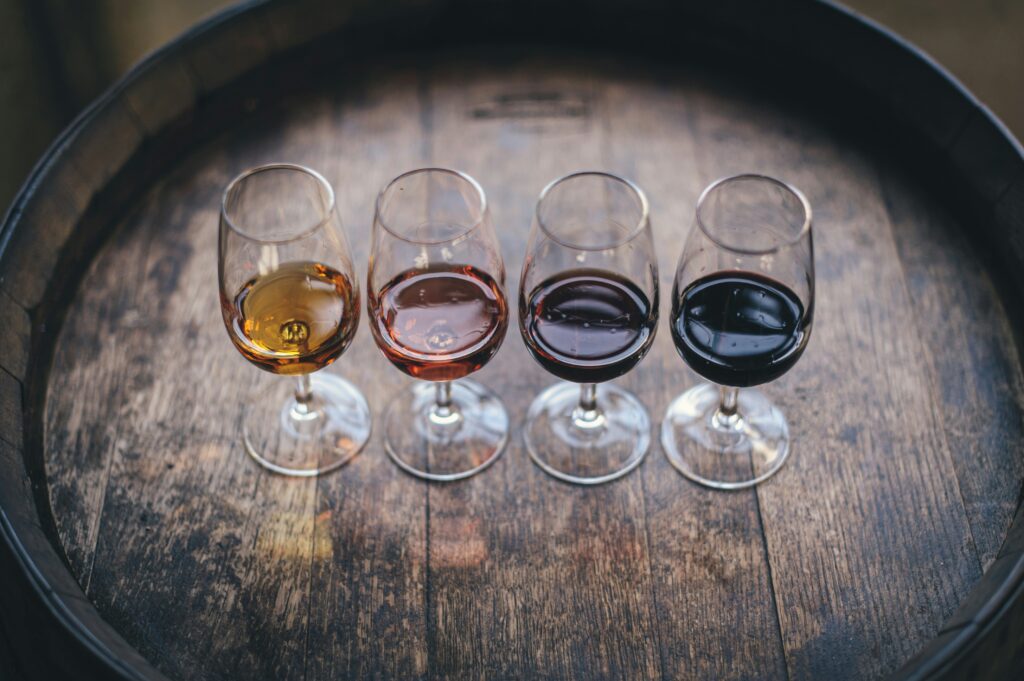
You can read about acidity and terroir, or you can stand in the cellar where the wine is made and taste what the words point at. Marie arranges private tastings across Burgundy, Bordeaux and the Rhône — with the growers themselves, not the gift-shop counters. The door is open when you are.
Write to Marie Written by Marie Tesson Founder · Journeys of a Lifetime