
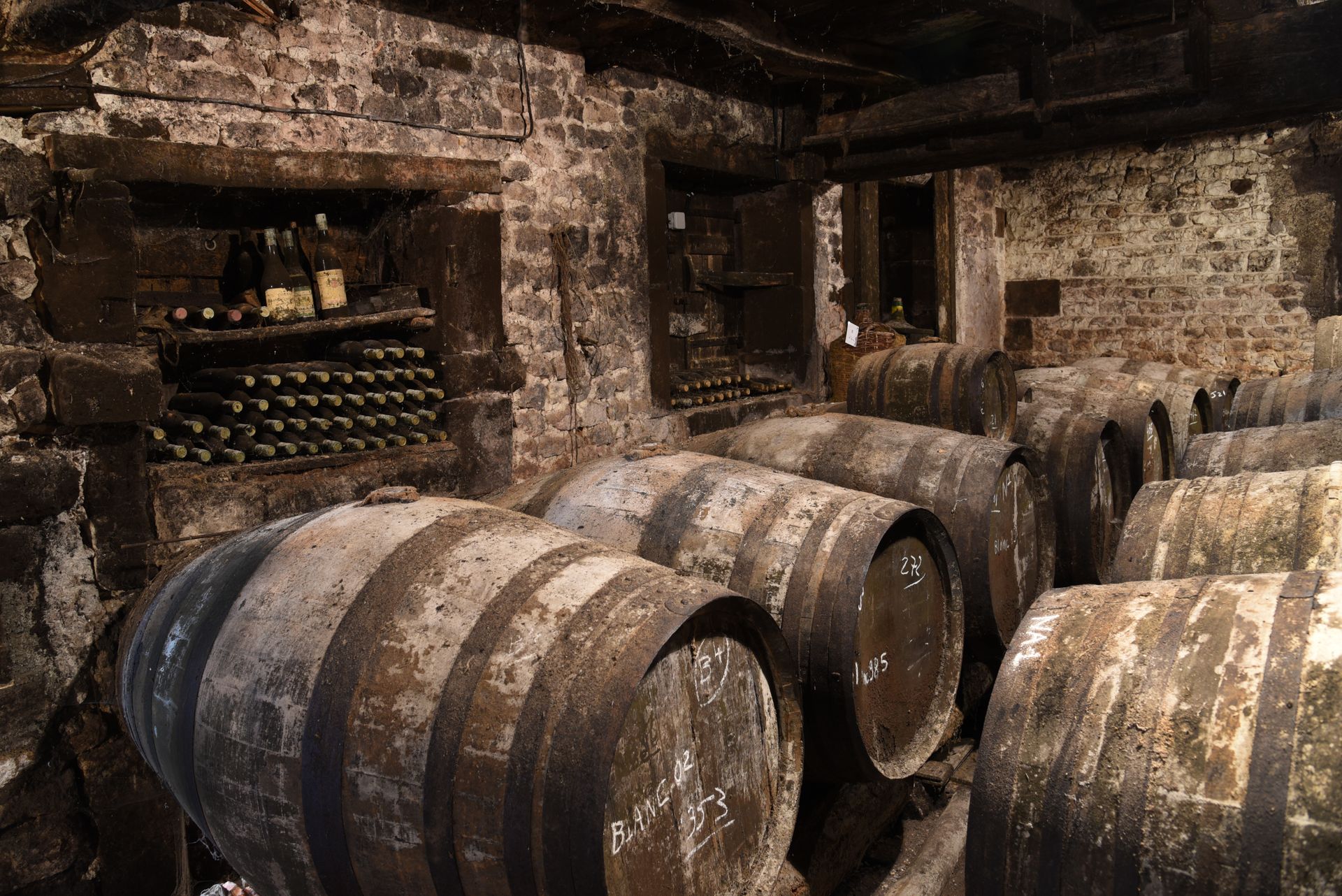
What runs out of that column tonight will be ready around 2066.
He knows he will not be there to drink it. Nobody in the room will. They do it anyway, six weeks a year, every winter, and almost no one outside France has heard of it.
What is Armagnac?
Armagnac is France's oldest recorded spirit, a grape brandy distilled in Gascony, in the southwest, since at least 1310. It is made in a single continuous distillation through a copper column still, aged in oak, and unlike almost every other brandy in the world it is routinely bottled as a single vintage, from a single year's harvest. It is produced in tiny quantities: roughly 3.7 million bottles a year, from 537 growers.
Armagnac vs Cognac: the real differences
Ask an American to name a French brandy and you will get Cognac. Ask a Gascon and you will get a look. The two are usually called cousins, which is polite, and wrong: they are made differently, in different places, at a wildly different scale, and they taste like it.
Armagnac was here first, by nearly two centuries. In 1310 a prior named Vital Dufour sat down in Eauze and wrote, in Latin, a list of forty things this Aygue Ardente, this burning water, was good for. It is the first written trace of the spirit in France. Cognac had not started yet.
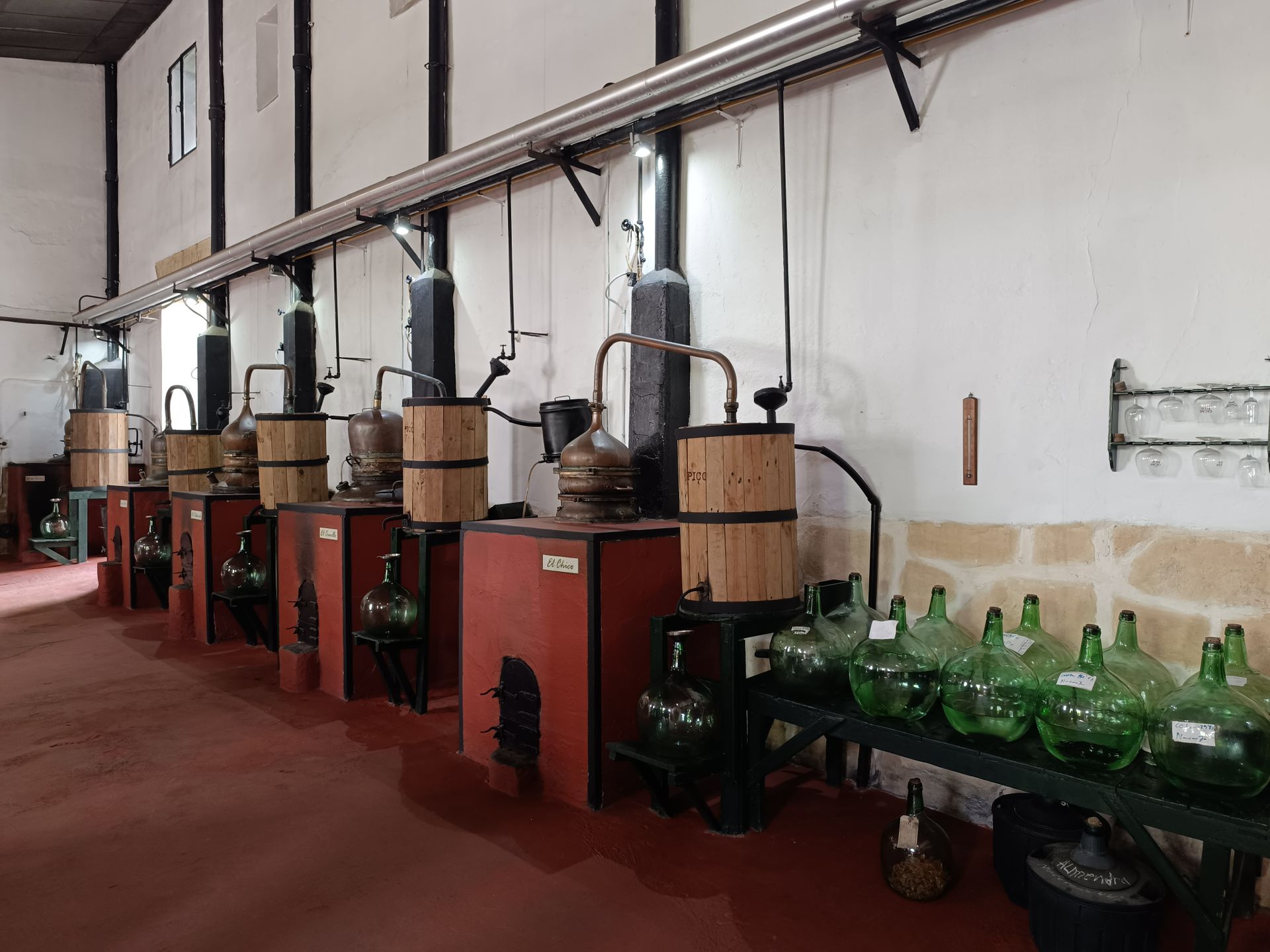
One heating, not two. Cognac is distilled twice, in a pot still, in batches. Armagnac is distilled once, continuously, in a column still, a tall copper alambic armagnaçais with seven to nine plates, through which the wine descends while the vapour climbs. More than 95% of all Armagnac is made this way. The single pass is the whole point: it leaves things in.
A lower strength off the still. Armagnac comes off between 52% and 72.4% ABV. Cognac typically comes off above 70%. That difference in strength is a difference in what survives, the lower you distil, the more of the wine's original character stays in the liquid. It is why young Armagnac tastes earthy, plummy, faintly of the soil it came from, where young Cognac tends to be cleaner and more floral.
A vineyard 48 times smaller. This is the number that reframes everything.
| Armagnac | Cognac | |
|---|---|---|
| Vineyard area | 1,838 ha | 87,648 ha |
| Stills in operation | 70 | ~3,000 |
| Bottles per year | 3.7 million | 143.6 million shipped |
| Growers | 537 |
Cognac sells in about ten days what Armagnac sells in a year. There is no marketing budget behind Gascony. There is no equivalent of the four great Cognac houses. There are farmers.
The vintage. Vintage-dating, a bottle from one single harvest year, and nothing blended in, is Armagnac's specialty. It is how Gascony has always sold its brandy, and it is the reason a Gascon estate can pour you 1962 and 1978 side by side and let you argue about which was the better autumn.
La Flamme de l'Armagnac: the six weeks the stills are lit
Distillation begins as soon as the wine has finished fermenting, usually late October, and the law gives producers until 31 March of the following year to finish. Most are done by early February. In between, in a scattering of villages across the Gers and the Landes, the region does something that has no real equivalent anywhere in European wine or spirits: it opens the doors.
The French Ministry of Culture, which inscribed Armagnac distillation on the national inventory of intangible cultural heritage on 24 July 2020, a designation almost no spirit in France holds, describes the practice in a single sentence that tells you everything about how this is done:
Distillers distil continuously, 24 hours a day, for several weeks, taking turns in pairs or in teams.
Twenty-four hours a day. Once a column still is running, stopping it costs you the batch and hours of reheating, so it does not stop. Someone is always awake. Which is how an agricultural obligation turned, over generations, into a winter social season, a long-standing Gascon tradition of hosting the neighbourhood around the working still, because someone had to be there anyway and it might as well be everyone.
That is what La Flamme de l'Armagnac is. Not a festival dropped into a region, but a rolling series of nights that follow the stills from village to village between October and February, one estate at a time. Doors open, the alembic runs in front of you, and dinner is served in the barrel cellar for around €40 a head: foie gras, lamb, Côtes de Gascogne poured without ceremony. There are light walks through the vines, flea markets of old vineyard tools, concerts in the cathedral at Eauze.
Confirmed dates, 2026 season
| Date | Where | What |
|---|---|---|
| 24–25 October 2026 | Labastide-d'Armagnac | Armagnac en Fête25th edition, official opening of the campaign |
| 7–11 November 2026 | Domaine de Bilé, Bassoues | The still runs from Saturday afternoon to Wednesday midday; open 9am–7pm |
The full 2026–2027 Flamme calendar is published on armagnac.fr each October. Everything after mid-November is confirmed village by village as the harvest comes in. That is the honest answer to "can we book this in July?": you can plan the week, and we confirm the estate once the region does.
Inside a distillation night
You arrive after dark because everything here happens after dark. The barn is lit from one end. The alembic is the size of a small tree, pure copper, blackened at the base where the fire sits, and it is making a sound you feel more than hear, a low steady work, like a boat engine idling.
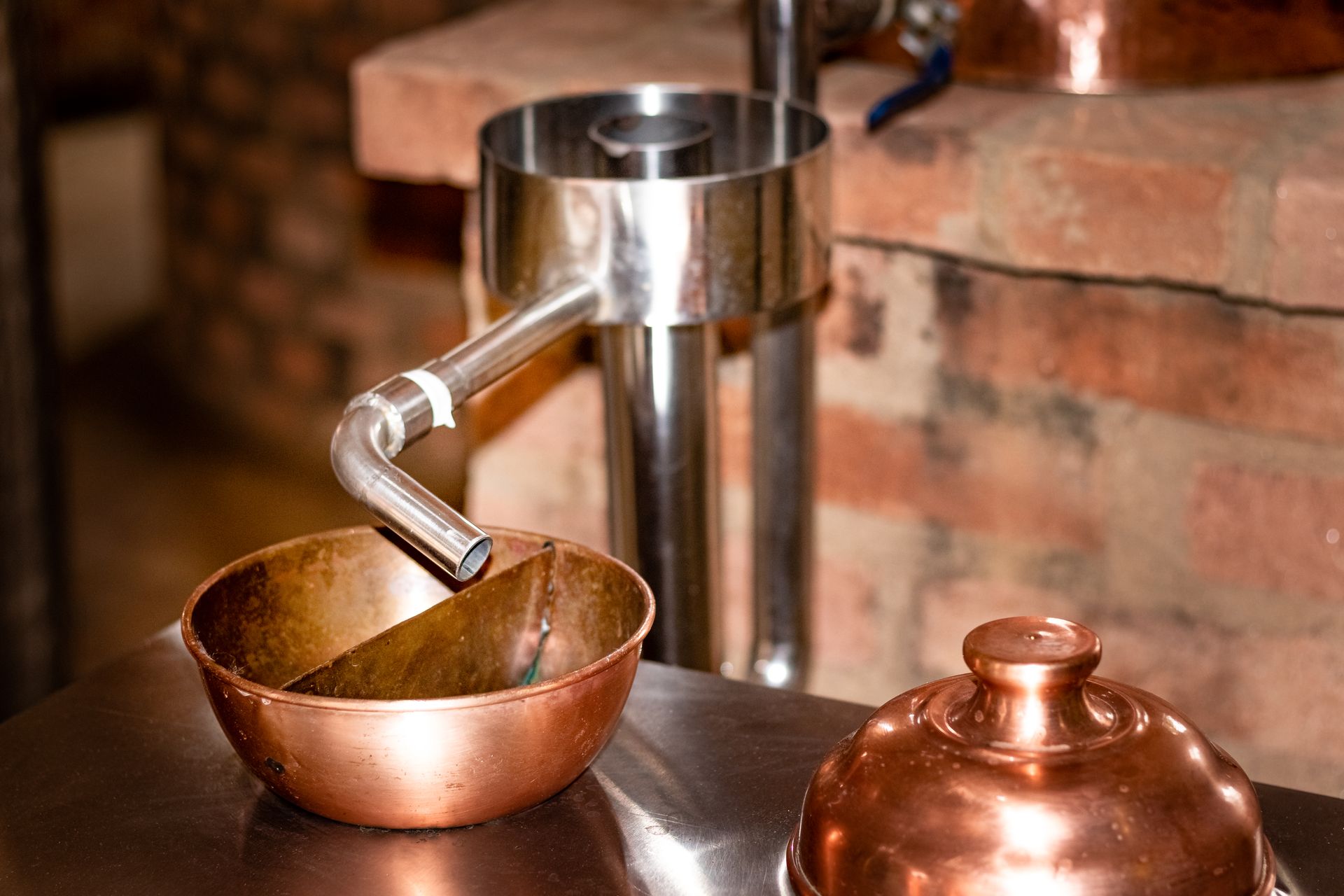
The wine goes in at the top, thin and sharp and completely undrinkable, around 9% alcohol, deliberately made without sulphur. It falls through the plates. The vapour rises against it. Somewhere in that quiet exchange the alcohol and the aromatics leave the wine, and at the bottom of the swan's neck a clear thread runs out into a wooden tub, warm, at somewhere near 60%.
Someone hands you a taste in the hollow of your palm. That is the local way to do it: the heat of your hand opens it. It is astonishing and slightly violent. Plum, quince, warm earth, and underneath a fine bitterness that in forty years will have become the thing people write cheques for.
Then you eat. Long tables, garbure, duck, the estate's own bottles down the middle of the table with no one keeping count. At some point someone will make a brûlot: Blanche d'Armagnac heated with sugar and set alight, the flame running blue and then yellow across the surface of the bowl. It is a party trick and a ritual at the same time, and everyone stops talking to watch it.
The men working the still that night will still be there at four in the morning. So will the fire.
The travelling distillers still exist. Fewer than a hundred stills are still active in Armagnac, against something like a thousand at the beginning of the twentieth century. A number of those left are bouilleurs ambulants, portable alembics that go from cellar to cellar through the winter, with teams working in shifts around the clock, adjusting wood and flow by ear. The house of Delord was founded in 1893 by exactly such a man: Prosper Delord, who carried his still from farm to farm. His descendants still bottle under his name.
The three Armagnacs
The appellation has been in place since 1936, and it splits into three zones that do not taste alike.
| Zone | Soil | Character | Villages |
|---|---|---|---|
| Bas-Armagnac | Sables fauves, tawny sand | The most sought-after. Lighter, fruitier, more perfumed. Known as l'Armagnac noir for the dark pines that cover it. | Labastide-d'Armagnac, Nogaro, Panjas |
| Ténarèze | Clay and limestone | Firmer and more structured, built for very long ageing. At fifteen years it is often still finding itself. | Condom, Montréal-du-Gers, Fourcès |
| Haut-Armagnac | Limestone | Floral and lighter, l'Armagnac blanc. Historically the largest zone, now the smallest in production. | Auch |
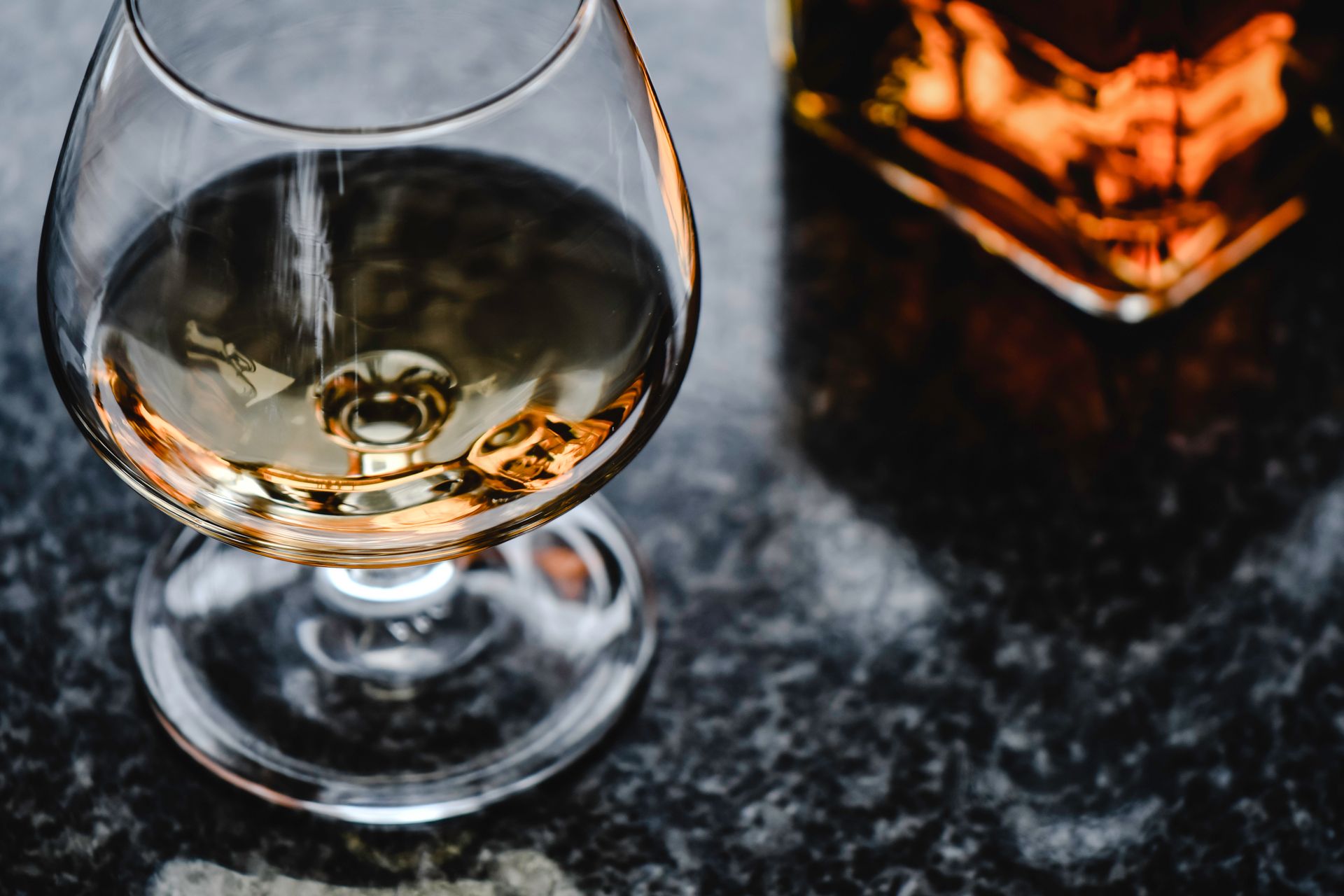
The capital of the whole thing is Eauze, which holds the title by Napoleonic decree of 1802.
Blanche d'Armagnac is the outlier: unaged Armagnac, no wood at all, an appellation in its own right since 2005. It comes from what growers always kept back for their own kitchens, and it is approved lot by lot by a tasting panel, a rule that exists for no other French spirit. Cold, it tastes of pear and white flowers, and it is the best argument in France against the assumption that a clear spirit is a young mistake.
Why Armagnac is vintage-dated, and how to drink your birth year
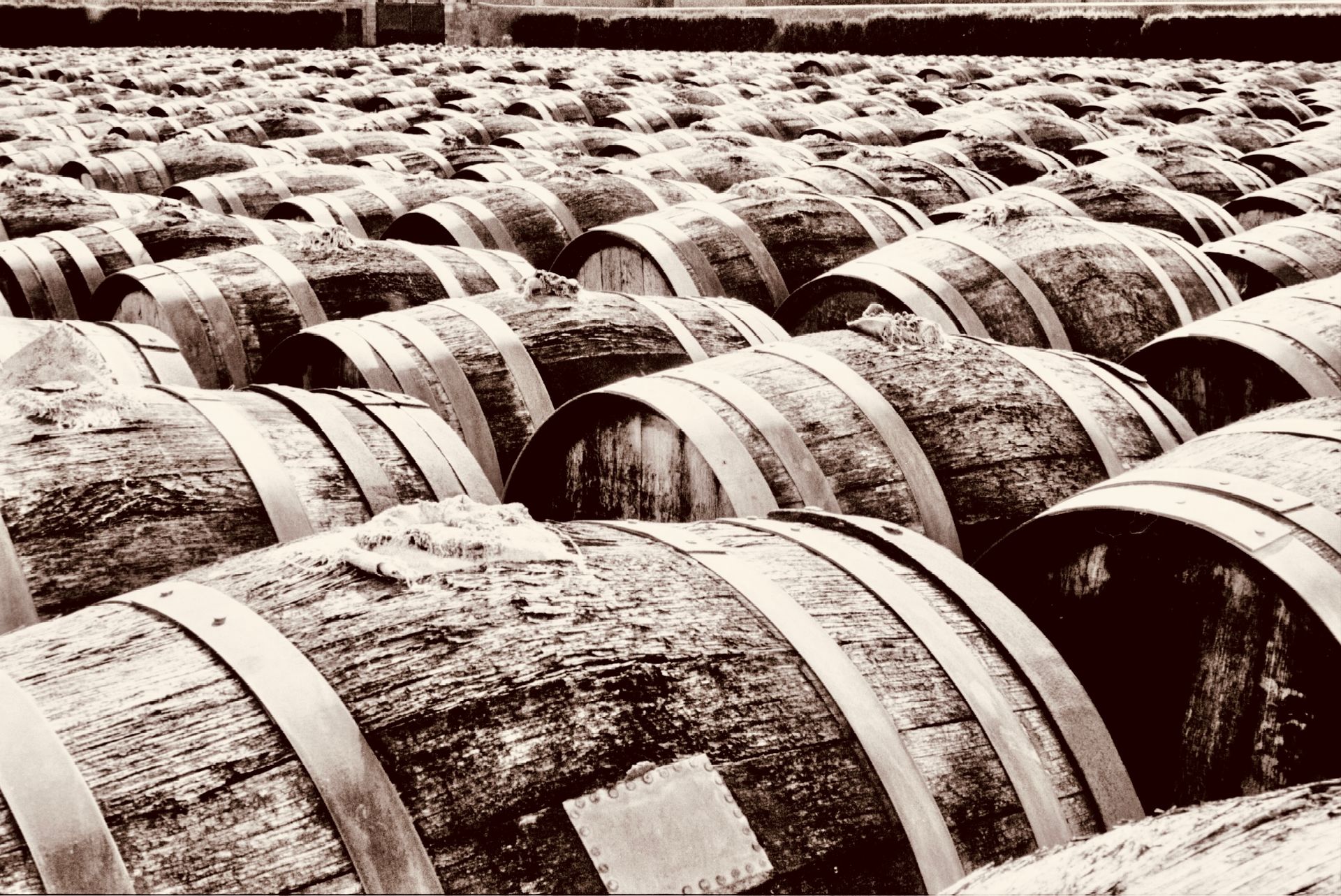
A vintage Armagnac carries one year and one year only: the year the grapes were picked. To be sold as a vintage it must have aged at least ten years, and in practice most are far older. Nothing is blended in to correct a difficult season, which means a 1973 is a document, it tells you what that autumn in Gascony was actually like.
This is the reason Gascony can do something no other spirits region can do at scale. Castarède, founded in 1832, keeps vintages running from 1893 to 1999. Château de Laubade goes back to 1900. If someone at your table was born in 1948, there is a bottle of 1948 in a cellar an hour from Auch, and it can be on the table that evening with their name on the label.
For scale: a bottle of Castarède 1893, 70cl, currently runs about €5,420. Most birth-year bottles from the last sixty years are a small fraction of that. This is, quietly, one of the least expensive ways in France to put something genuinely rare in front of a guest.
Gascony in autumn: what else is there
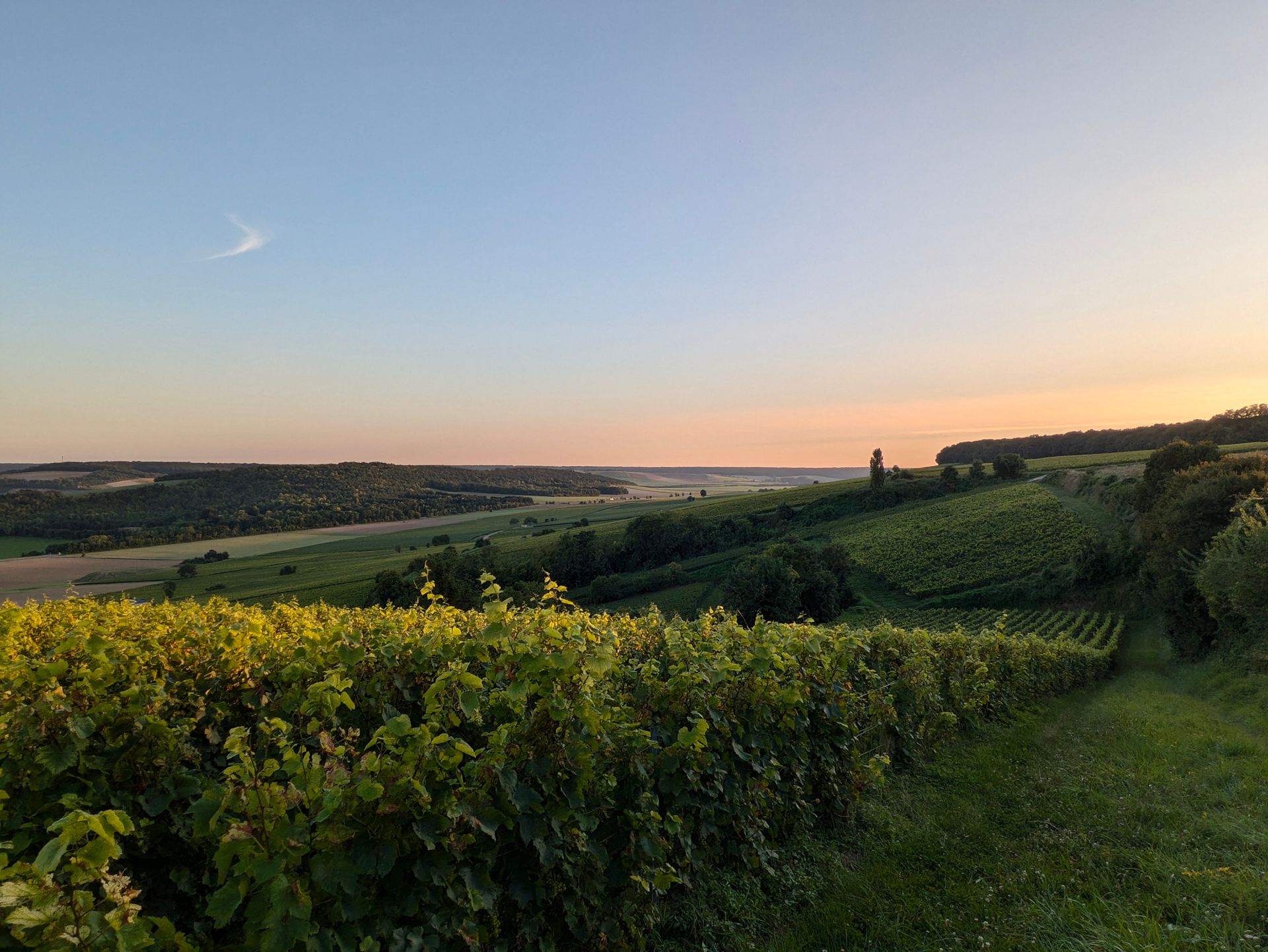
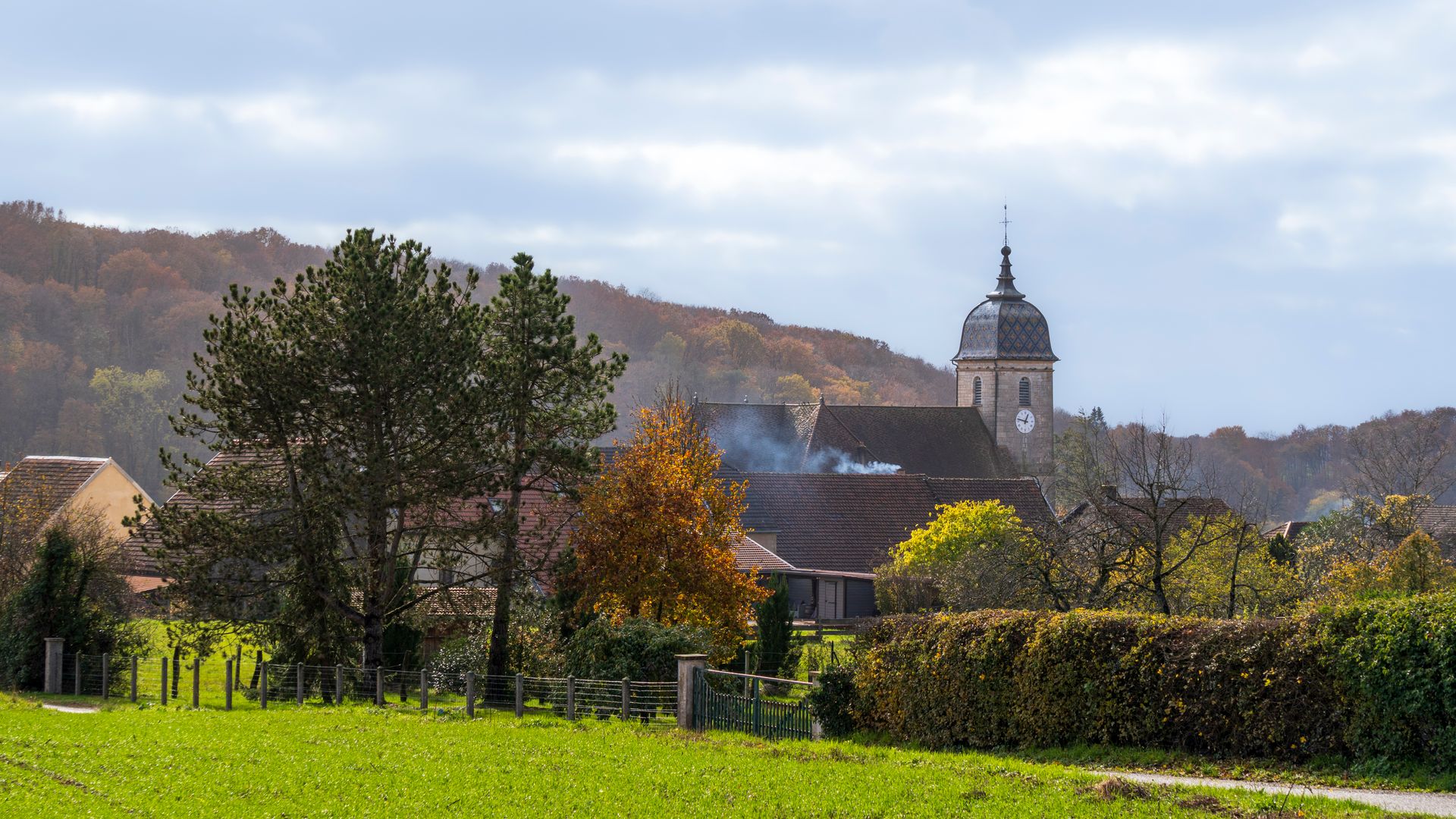
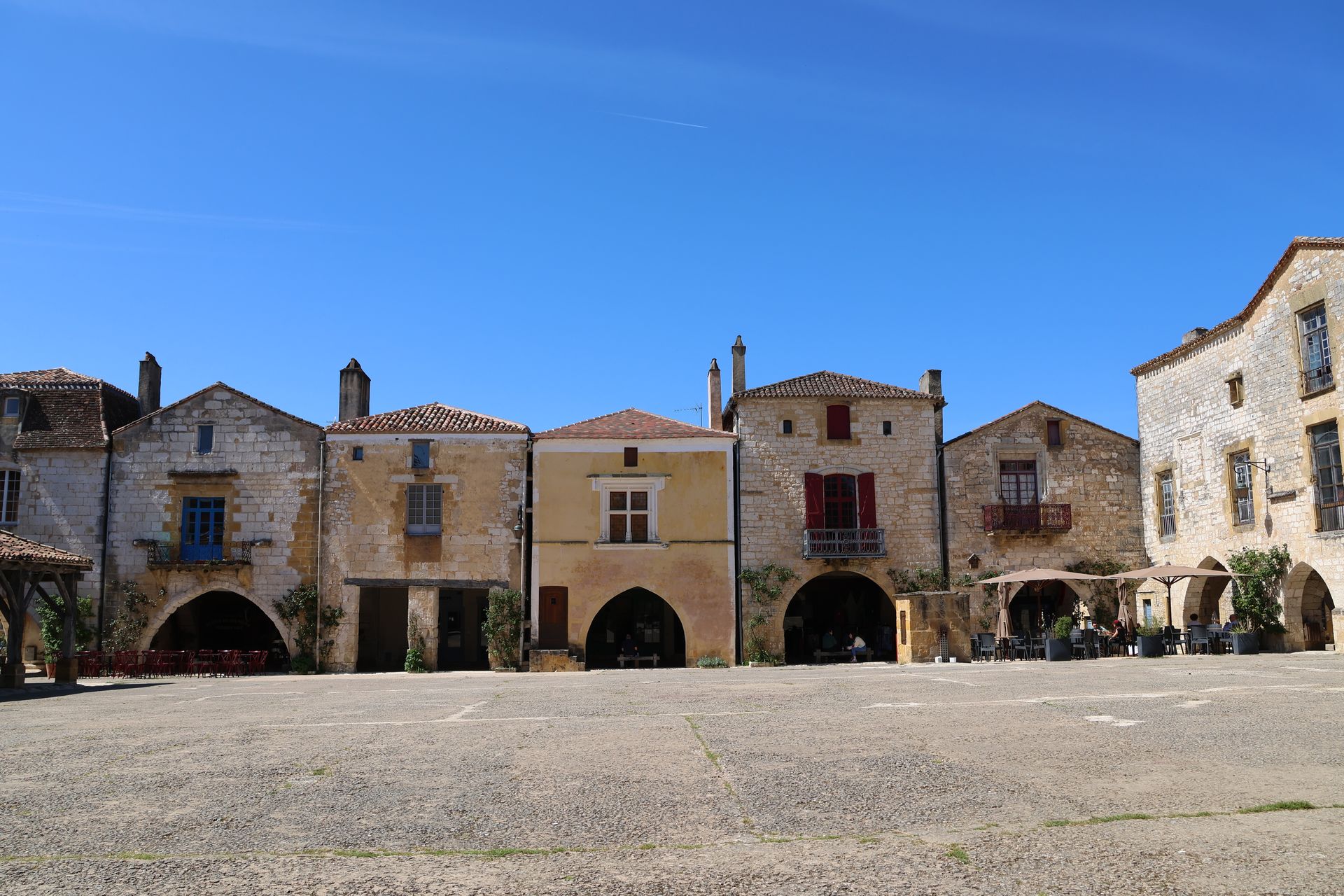
Gascony, the Gers, in Occitanie, in November is empty in the way that half of France used to be. Sunflower fields cut back to stubble, hilltop bastides with their arcaded squares, fog in the valleys until ten in the morning.
Eauze has the cathedral of Saint-Luperc and a museum built around one of the great Gallo-Roman finds in France: the Trésor d'Eauze, 28,000 pieces, buried in the third century and not touched again until 1985. Fifteen kilometres away, the villa of Séviac spreads over 6,500 square metres with more than 600 square metres of mosaics still in the ground.
The bastides, Labastide-d'Armagnac, Fourcès with its circular square, Montréal-du-Gers, are thirteenth and fourteenth-century new towns, laid out on a grid by people who thought they were building the future.
Lupiac is where Charles de Batz de Castelmore was born, around 1613, at the château de Castelmore. Dumas renamed him d'Artagnan. The real man was a Musketeer captain who personally arrested Louis XIV's superintendent of finances, Nicolas Fouquet, the single most delicate arrest of the century, handed to him because he was the one man the king trusted to make it without drama.
And the table. Gascony eats the way it distils: slowly and without apology. Garbure, the cabbage-and-duck soup thick enough to stand a spoon in. Confit. Foie gras, which this region has essentially always made, and, from December, the black winter truffle. Wild wood pigeon in season. Croustade, apples under sheets of pastry pulled so thin you can read through them, flamed with Armagnac at the table.
Visiting: estates, museums, how to get there
These are the estates we know receive visitors properly, with cellars worth the drive.
Château de Laubade (Sorbets), founded 1870, the Lesgourgues family since 1974, 80 hectares in a single block, close to 3,000 casks across nine cellars. Three tiers of visit, from a walk-through to a serious vertical tasting. It also has the best story in the appellation: before the Lesgourgues, Laubade belonged to Joseph Noulens and his wife, Jeanne Paquin, the Parisian couturière, the first woman to run a great fashion house, who dressed the Belle Époque and then came here.
Château Garreau (Labastide-d'Armagnac), Carole Garreau, fourth generation, and the Écomusée de l'Armagnac attached to the estate: eleven stills including one from 1919 and one from 1932, plus a reconstruction of a distilling apparatus 3,500 years old. Next door, a seventeenth-century Gascon barn holds a thousand vineyard tools.
Domaine d'Espérance (Bas-Armagnac), 50 hectares, a guest house on the property, an hour and a half from Bordeaux.
Domaine de Bilé (Bassoues), one of the confirmed Flamme stops for November 2026.
The Musée de l'Armagnac in Condom is the reference collection, though its winter opening hours are narrow and it closes in January, in the middle of the distilling season, which is a very Gascon piece of scheduling. We check it before building anything around it.
Where you actually stay
I will be direct about this, because it matters more than a brochure would admit: the Gers has no five-star hotel and no Michelin-starred restaurant. What it has instead are private châteaux, properties taken over in full, with a cook, for a few nights. That is genuinely the better version of this trip, and it is how we run it.
For guests who want a great hotel at one end of the week, Gascony sits within easy reach of Bordeaux, Biarritz and Toulouse, and the combination, three nights of grand hotel, three nights of a Gascon château and a still running at midnight, is the trip most of our travellers end up wanting.
Frequently asked questions
What is Armagnac made from?
White wine grapes, mainly Ugni Blanc, Baco, Folle Blanche and Colombard. The wine is fermented without sulphur, kept low in alcohol, and distilled within weeks of the harvest.
Is Armagnac stronger than Cognac?
Off the still, no, Armagnac comes off lower, between 52% and 72.4% ABV, against Cognac's typical 70% and above. Both are bottled at similar strengths. The lower distillation strength is why Armagnac tastes fuller and more rustic.
What does "Bas-Armagnac" mean? Is it lower quality?
No, the opposite, generally. Bas means lower in altitude, not lower in grade. Bas-Armagnac is the western, sandiest zone and the most prized of the three.
When can you see Armagnac being distilled?
Between late October and 31 March, with most estates finishing by early February. The Flamme de l'Armagnac open nights run through that window; the season's full calendar appears each October.
How old is Armagnac before it's sold?
A minimum of one year in oak, counted from 1 April after the harvest. A vintage-dated Armagnac requires at least ten years. Most estates release theirs far older.
Can you buy an Armagnac from your birth year?
Yes, and this is one of the few places in the world where it is straightforward. Vintages back to the 1890s exist commercially; anything from the last sixty years is generally obtainable, and can be personalised.
The people distilling in Gascony this winter are making something they have accepted they will never taste at its best. The 2026 will come into its own around 2066. They will hand it to their children with instructions.
There is no way to hurry it, no way to buy your way past it, and no version of it that can be flown to you. You go in November, you stand in the barn, and you drink something distilled the year you were born by someone who is now dead, poured by their grandchild, who is watching the fire.