

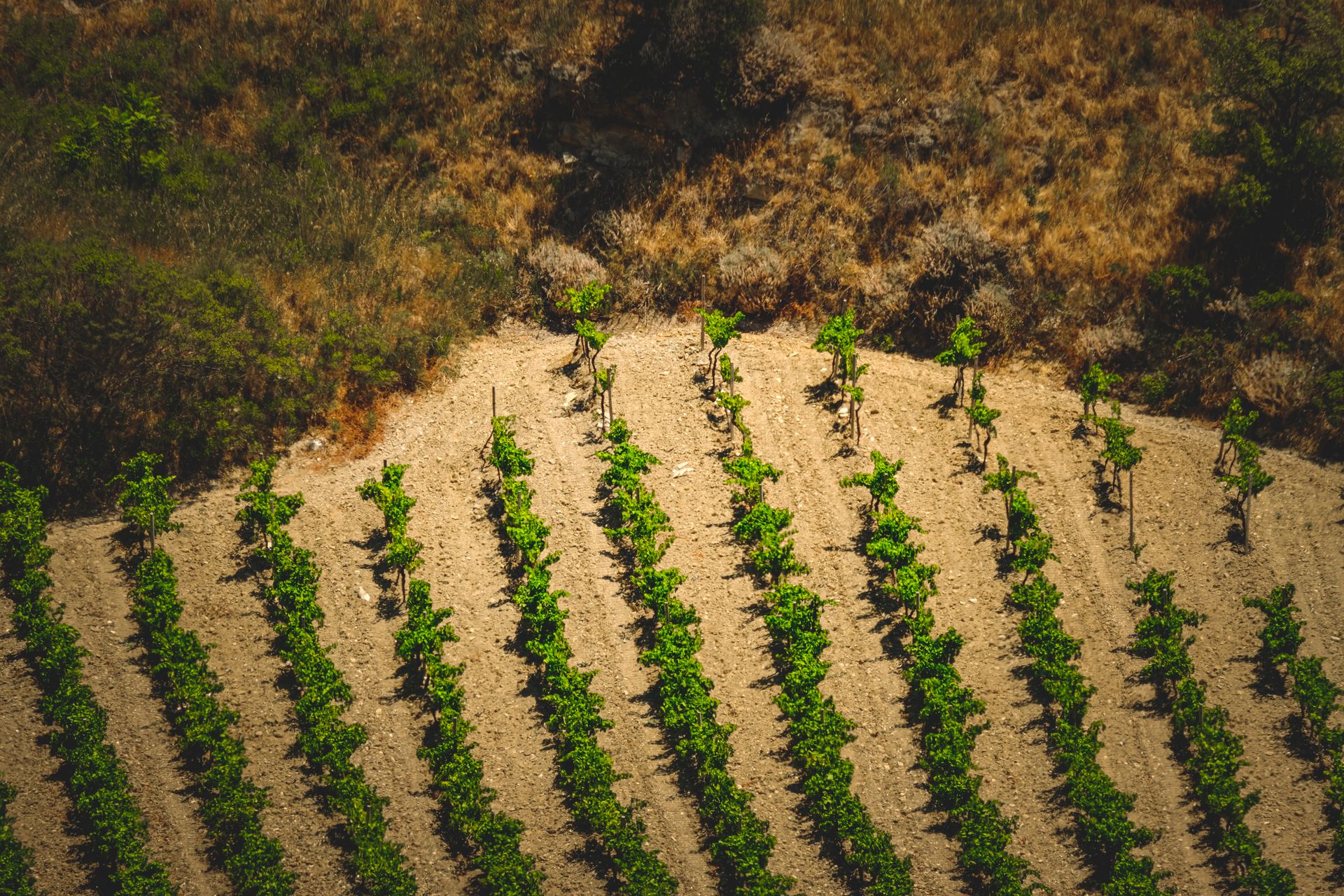
The Rhône River is more than a ribbon of water slicing through one of France’s most celebrated wine regions. It is the architect of terroirs, the spine of a vibrant history, and the thread that ties together the diverse vineyards stretching from the alpine foothills to the Mediterranean. Over millennia, its mighty flow has carved landscapes, carried commerce, and infused life into the Rhône Valley’s identity, leaving its unmistakable imprint in every vineyard and bottle.
Let’s journey alongside the Rhône and uncover how its geological, historical, and cultural influence shapes one of the world’s most fascinating wine regions.
Geological Influence: A Tapestry of Terroirs
The Rhône’s story begins in the glacial peaks of the Swiss Alps, where its waters are born, charging southward to meet the Mediterranean. Along the way, it has carried and deposited an intricate patchwork of soils, sculpting terroirs that now define the wines of the valley.
Granite in the North: A Foundation for Elegance
In the Northern Rhône, the river has exposed ancient granite bedrock, forming the steep, terraced vineyards of Côte-Rôtie and Hermitage. This granite soil is poor and well-drained, forcing the vines to dig deep for nutrients, which in turn concentrates the flavors of the grapes.
- Winemaking Impact: Granite lends a striking minerality to Syrah, giving it precision, structure, and age-worthiness. It’s this combination of soil and grape that makes Northern Rhône Syrahs some of the most celebrated in the world.
- Anecdote: In the 1800s, wine merchants called Hermitage “liquid granite.” This term underscored not only the wine’s durability but also its prestige, exemplified by Napoleon’s reputed fondness for Hermitage, which he reportedly carried on campaigns to sustain morale.
Galets Roulés in the South: The Stones of Ripeness
Moving into the Southern Rhône, the river left behind its most famous signature: galets roulés. These smooth, rounded stones—especially prevalent in Châteauneuf-du-Pape—are more than a geological quirk; they are a vital part of the terroir.
- Role of Galets: By absorbing heat during the day and radiating it back at night, the stones create a warming effect that helps Grenache ripen fully, even in cooler years. This contributes to the region’s hallmark richness and intensity.
- Did You Know?: Some galets in Châteauneuf-du-Pape weigh up to 10 kg, making vineyard work physically demanding. Local legend says these stones were deposited by ancient floods, a “gift” from the Rhône.
Clay and Limestone: Balancing Power with Freshness
Throughout the valley, clay and limestone soils add another layer of complexity. In Gigondas and Vacqueyras, these soils provide excellent water retention, ensuring the vines thrive even in dry years. They also impart freshness and structure to Grenache-based blends, offering a counterpoint to the boldness of Châteauneuf.
- Interesting Fact: Some vineyards sit just meters apart yet produce dramatically different wines due to subtle shifts in soil composition—a testament to the Rhône’s intricate geological legacy.
Historical Significance: A River of Trade and Transformation
The Rhône River is as much a historian as it is a geologist, carrying the stories of empires, religions, and revolutions along its banks.
Roman Legacy: Amphorae and Empire
The Romans, ever pragmatic, saw the Rhône as a natural highway, perfect for transporting wine amphorae to Mediterranean ports. By the 1st century BCE, Rhône wines were flowing into Roman villas across the empire, praised for their quality and longevity.
- Archaeological Evidence: Excavations near Vienne uncovered Roman amphorae stamped with seals from the Rhône Valley, evidence of an ancient trade network that helped establish the region’s reputation.
- Legacy in Practice: Modern Rhône winemakers still use Roman techniques, like terracing, in steep vineyards, blending ancient wisdom with contemporary innovation.
The Papacy’s Golden Age: Prestige and Propaganda
In the 14th century, the papal court in Avignon elevated Rhône wines to new heights. The Rhône River became the conduit for transporting barrels of Châteauneuf-du-Pape to royal courts across Europe, securing its reputation as a wine of prestige.
- Historical Anecdote: Local lore recounts how medieval monks at Tain-l’Hermitage cultivated vines on the steep slopes, believing the Rhône carried divine blessings downstream. Today, those same vineyards produce wines celebrated worldwide, with some still managed by families tracing their lineage back to those monks.
- Prestigious Transport: In 1377, Pope Gregory XI, preparing to return to Rome, sent an entire fleet of Rhône wines ahead of him. He famously wrote that the Rhône “flowed not just with water, but with liquid gold.”
The Rhône in Modern Winemaking: A Legacy Sustained
Today, the Rhône River continues to inspire and influence. Winemakers honor its legacy by crafting wines that reflect the terroirs it shaped, embracing both tradition and innovation. Modern Rhône winemakers are also increasingly adopting sustainable practices to preserve the river that defines their craft.
- Sustainability Efforts: From biodynamic farming in Châteauneuf-du-Pape to eco-conscious water management near Tavel, winemakers are balancing heritage with the need for environmental stewardship.
Andrew Jefford captures this beautifully: “The Rhône River is not just a geographical feature; it’s the spine of the valley’s winemaking identity, connecting past and present in every sip.”
Tasting the River
Standing on the banks of the Rhône, it’s impossible not to feel its pull. This river has shaped landscapes, sustained civilizations, and given birth to some of the world’s most extraordinary wines. Tasting a Rhône wine is akin to a journey through time and space. The minerality of a Côte-Rôtie Syrah evokes the cool granite cliffs underfoot, while the bold ripeness of a Châteauneuf-du-Pape Grenache speaks of sun-drenched galets soaking up Mediterranean warmth.
Each sip tells a story—of rivers carving the earth, hands tending vines, and centuries of tradition poured into a glass. From the granite cliffs of Hermitage to the galets-strewn vineyards of Châteauneuf, the Rhône flows not just through the land, but through history, connecting the past to the present, and the earth to the glass. It is, in every sense, the lifeblood of a region.