
Some places are beautiful all year.
In summer, they begin to perform.
There is an hour, in the places worth travelling for, when the day softens and the visitors who came for the afternoon drift back toward their buses, hotels and ships. The light goes long and gold. The stone gives back the heat it took all day. And the truest version of the place, the one almost no one waits for, begins to appear.
Across Europe, summer has a way of turning places into stages. Cities, palaces, cloisters, islands and cliffside gardens stop being things to look at and begin to hold something. Some of them are famous because, for a few weeks each year, the great festivals fill them with music. But a festival is public, ticketed, shared. What follows here is quieter: the same extraordinary places, and a few that no festival has ever touched, held privately after the doors have closed.
These are not concerts you buy a seat to, or dinners that can be booked from a list. They are evenings built in the hours the crowds leave behind: five private arrangements, each real, none improvised, and none repeatable on your own.
Off Positano: a voice over the Sirenuse
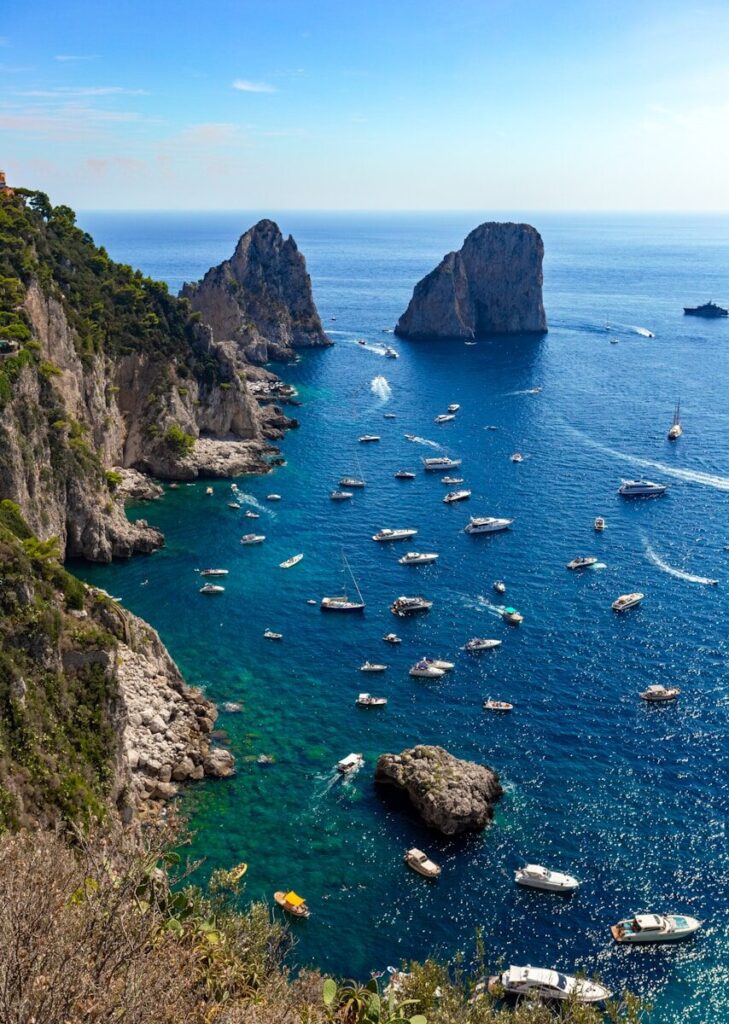
Between Positano and Capri, three small private islands rise from the water. Tradition has long placed the Sirens here, on the rocks known as Le Sirenuse: the voices that pulled sailors off course, the song Ulysses had himself tied to the mast to hear and survive. The modern name, Li Galli, belongs to the same legend. In the twentieth century, the islands became entwined with the world of dance: Léonide Massine bought them in the 1920s and built his retreat here; Le Corbusier later worked on the villa and its terraces; Rudolf Nureyev made the archipelago his private refuge decades later.
The evening begins in the late afternoon, when the day boats have turned for home and the water between the islands and the coast has gone quiet again. A classic wooden gozzo carries you out from Positano, about twenty minutes across water that shifts from turquoise to a deeper blue as the light drops. Dinner is served on board, the courses arriving as the islands become black silhouettes against the last of the colour, while the lights of Positano begin to stack up the hillside behind you. The night air comes off the sea in long, cool breaths. There is no ambient sound but water.
At some point, another boat appears in the dark. A soprano, carried out from shore, begins to sing across the open water. A voice travels differently at sea: it fills the space without seeming to come from one fixed point, as though the water itself were carrying it. It is the Sirens’ song made literal, in the waters where tradition set the myth, for no audience but your table, with no walls to hold it and no programme it belongs to. A voice over still water at night is one of the oldest sensations there is. On the Sirenuse, it feels less like a performance than a return.
Ravello: the cliff stage in its quiet hour
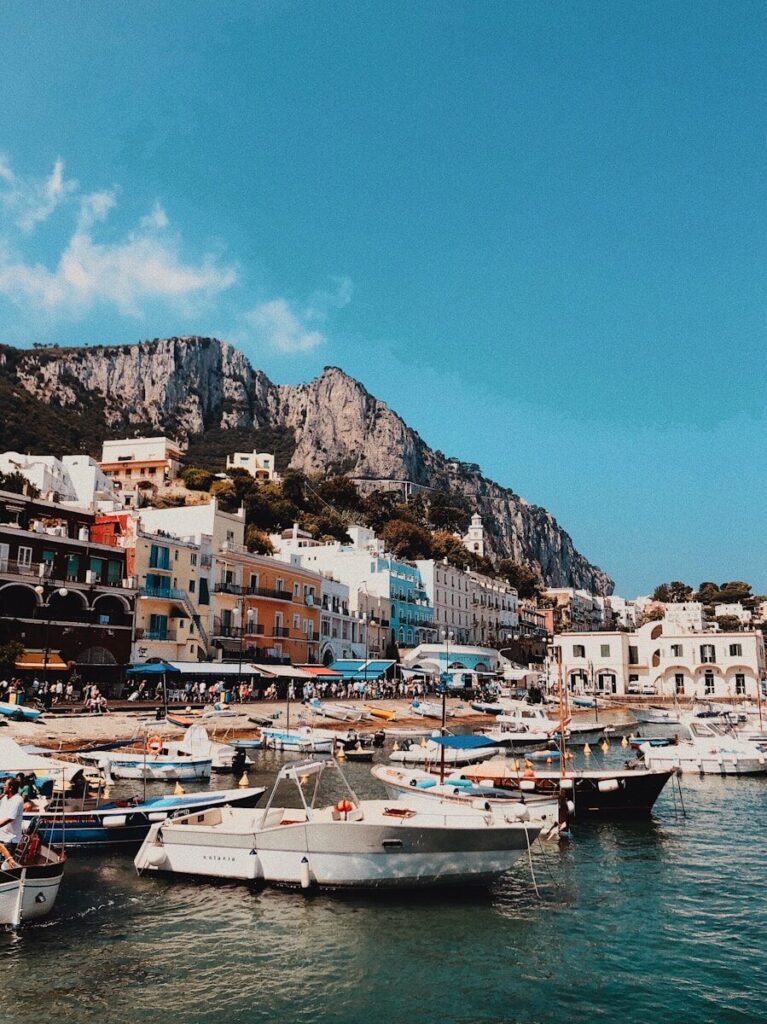
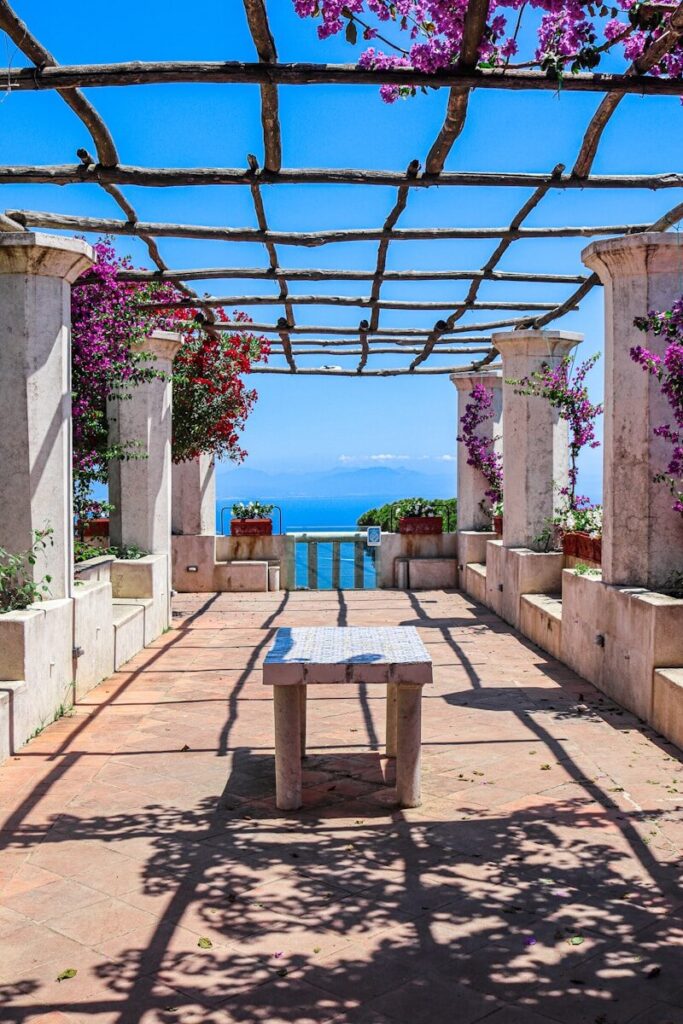
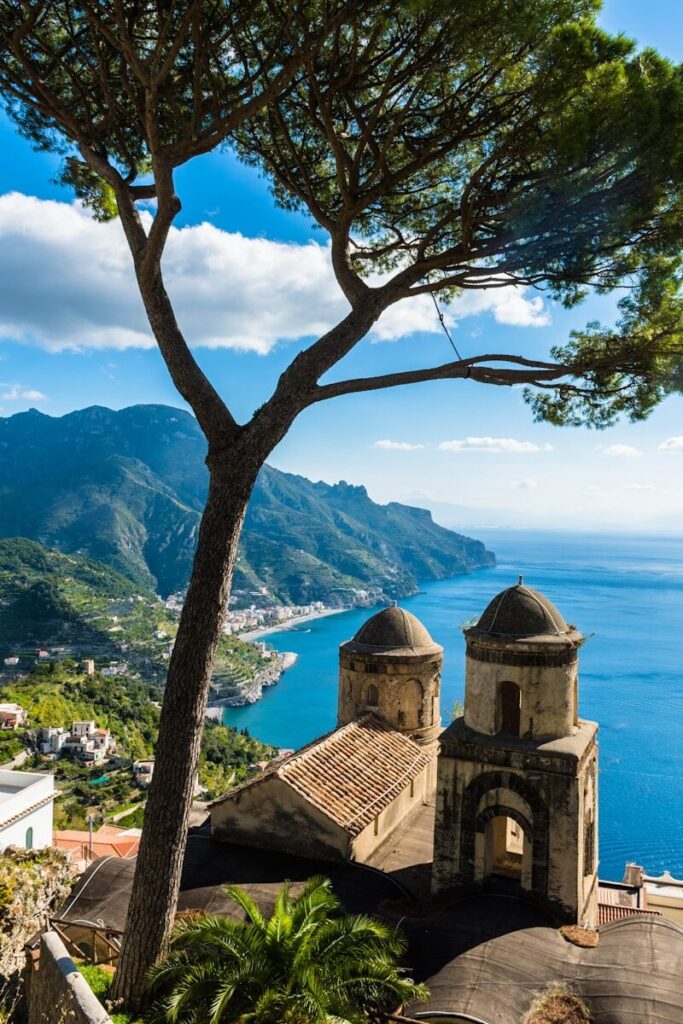
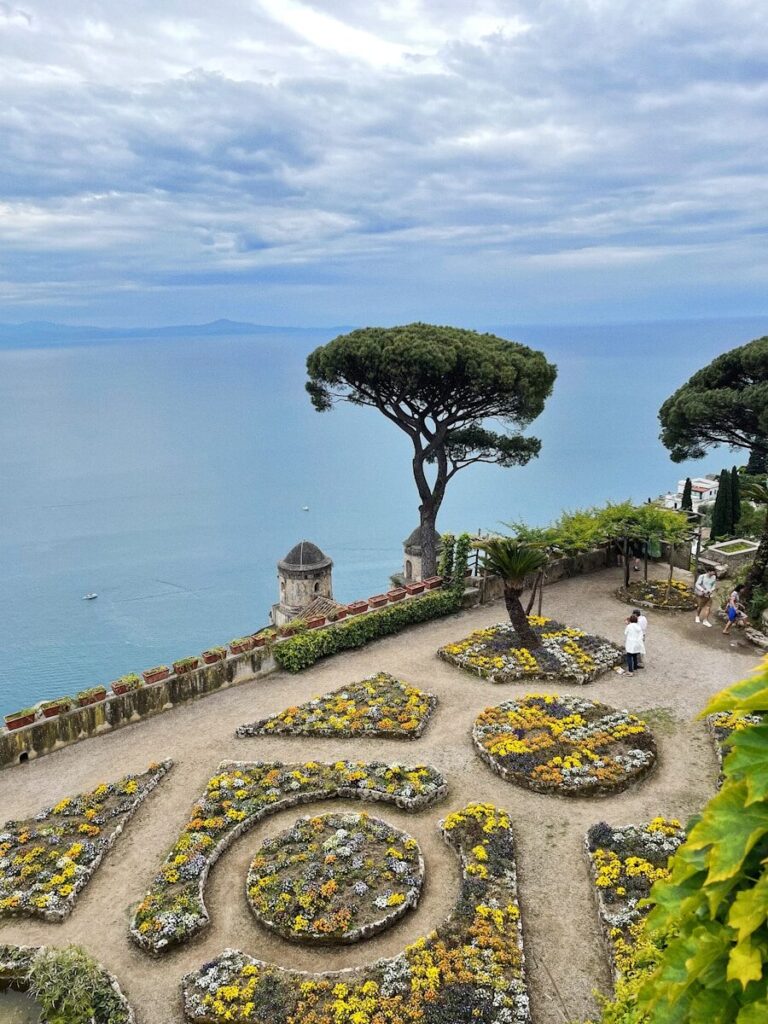
High above the coast at Ravello, the gardens of Villa Rufolo end in a terrace that looks straight out over the sea, a platform with nothing beyond it but the long drop to the Tyrrhenian. For a few weeks each summer, this becomes one of the most storied stages in southern Italy, the cliff-edge setting where the Ravello Festival builds its season. Wagner walked these gardens in 1880 and found in them the enchanted garden of Klingsor for Parsifal, his last opera. Ravello has been bound to music ever since.
The festival is the public version. On an evening when the stage is not in use, after the villa closes to visitors and the gardens go quiet, the same terrace becomes something else. The light at the end of a Ravello summer day is particular: horizontal, amber, catching the sea below and the headlands to the west, while swallows rise from below the parapet and work the warm air before dark. On those evenings, we hold the villa for a single table, with a small ensemble playing on the same stone the festival uses, for no one but the people gathered there. What the festival offers as spectacle, the empty garden offers as proximity: the stone, the sea, the last light going out behind the coast.
Afterwards, dinner moves a few steps to a private terrace wrapped in lemon and orange trees, the fruit still on the branch, their scent stronger after dark. The coast below becomes a string of lights, silent from this height, as though you have drifted free of it.
Anacapri: Villa San Michele after the gates close
Higher still, above Anacapri, stands Villa San Michele, the house the Swedish physician and writer Axel Munthe built at the edge of a cliff falling away toward the Bay of Naples, where the remains of an imperial Roman villa still sit in the garden. Munthe arrived on Capri in the 1880s, fell in love with the site, and spent years making a house that was less a residence than a belief: that beauty, light, air and the sound of the sea could do what almost nothing else could. He wanted it open to the sun and wind, like a Greek temple, with light everywhere.
In the garden, on the balustrade above the drop to the water, sits an Egyptian sphinx, more than three thousand years old, its back to you and its gaze trained on the bay. It was already ancient when Munthe chose it for this place. In the afternoon, visitors come to stand beside it and look where it looks. By early evening they are gone, the gates have closed, and the sphinx returns to the role it performs best: a silent, unhurried gaze at water and sky.
You move through the villa and its colonnade in the last of the light, the pergolas throwing long shadows across stone still warm underfoot, the bay visible between the arches as it turns amber, then copper, then the deep blue that comes just before dark. A small ensemble plays in the garden as the sky changes, the sound carrying across the terrace and out toward the water. At some point, Naples lights up across the bay, far off and silent, spread wide in a way the city never looks from within it. The sphinx keeps its back to you the whole time. That is part of the point. The fuller picture of the coast below is in our guide to southern Italy.
Dubrovnik: a voice in the cloister
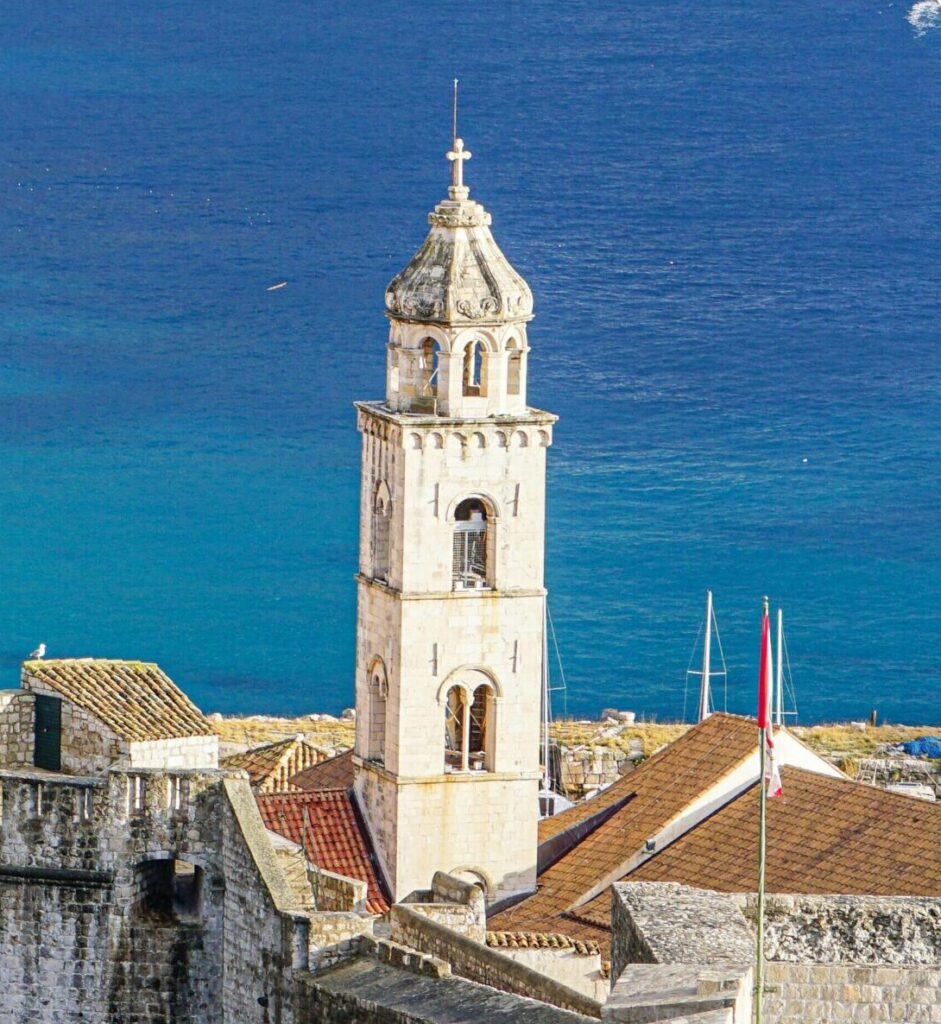
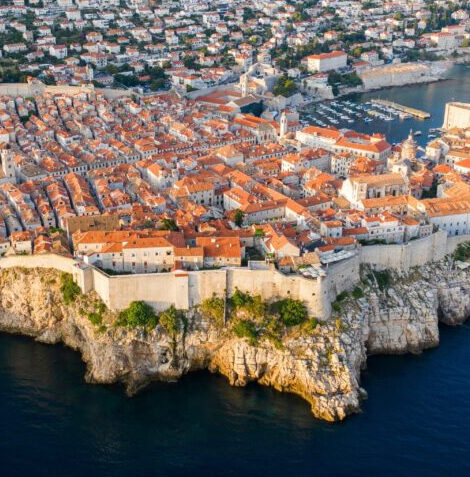
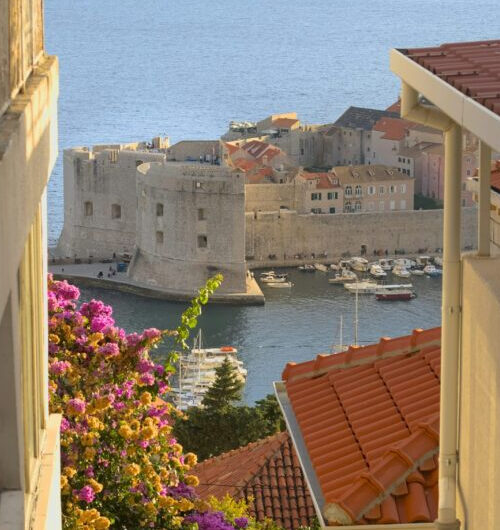
Dubrovnik gives itself fully only after dark. The day belongs to everyone, but by early evening the harbour clears, the ships have gone out past the headland, and the Old Town settles back into what it has always been: walled, marbled, lamplit, almost still. The streets empty slowly, the afternoon crowd pulling back toward hotels and restaurants beyond the walls, and for a few hours the city becomes less a monument than a listening chamber.
Klapa is the traditional multipart singing of Dalmatia, usually carried by a small group of voices in close harmony, with no need for instruments. The old songs are about the sea, love, homeland, memory and loss. UNESCO recognised the tradition in 2012, though it existed long before anyone thought to formalise it. It was never made for a concert hall. It belongs to the spaces where voices gather and return: stairwells, courtyards, chapels, cloisters, anywhere stone knows what to do with sound.
We work to arrange for a klapa to sing for one table inside the cloister of the Dominican monastery, after its gates have closed for the night, the singers ranged beneath the arches where this music feels almost inevitable. Six voices, no microphones. The stone picks up the harmonies and holds them, distributing them around the walls so that the sound does not come from a direction; it seems to come from the cloister itself. Then a late dinner in the quiet of the Old Town, the city at last belonging to the people who chose to stay.
Vienna: the Eroica behind closed doors
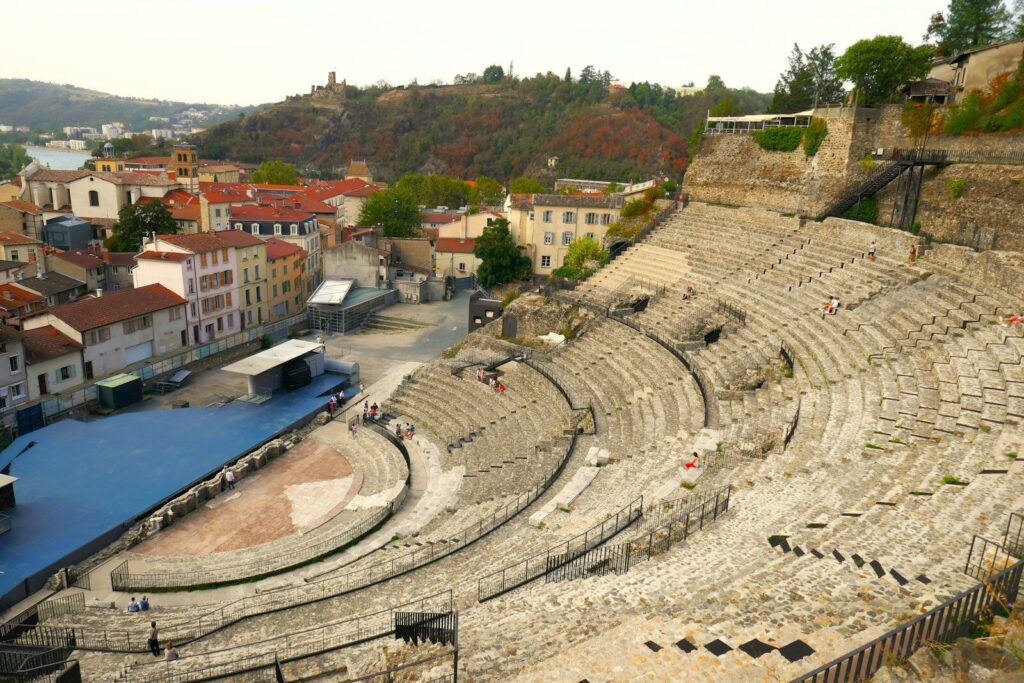
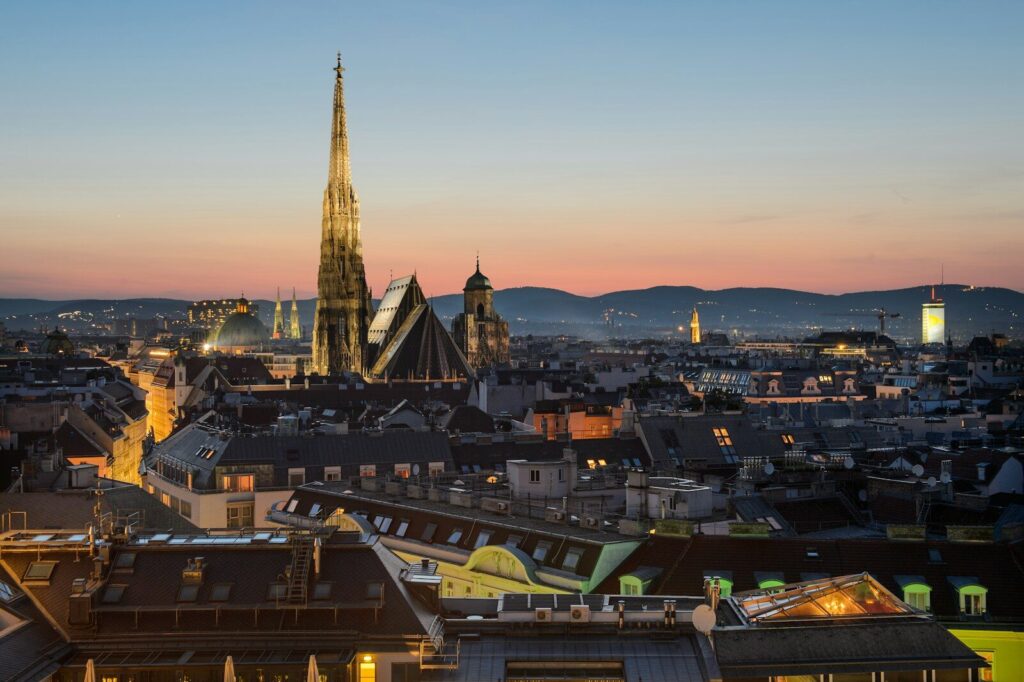
In the heart of Vienna, a few steps from the Albertina, stands Palais Lobkowitz, a Baroque palace whose street facade gives little away. Inside, beyond the museum rooms and theatre memorabilia, is a single hall: parquet floor, frescoed ceiling, tall windows facing a courtyard. It is called the Eroica-Saal, and the name is not decorative.
At the beginning of the nineteenth century, this was the private palace of Prince Franz Joseph von Lobkowitz, one of Beethoven’s great patrons. Lobkowitz set the hall up for concerts, and Beethoven was a regular guest in the house. His Third Symphony, originally conceived under the shadow of Napoleon and later dedicated to Lobkowitz, became the work that gave the room its name. Before the Eroica entered public life, it was heard here in private circles: not as a museum piece, not as a monument, but as something new, difficult, immediate and unfinished in the minds of its listeners.
The palace is now the Theatermuseum, and the Eroica-Saal still keeps the intimacy of a private room rather than the distance of a hall. When a quartet tunes there after hours and the first notes begin, the space does something particular: it takes the sound and keeps it close. There is no stage in the grand sense, no separation between you and the instrument. The ceiling fresco looks down. The windows are dark. The city is outside, but the room feels sealed from it. The fuller picture of the city around it is in our guide to Vienna.
How it works
Every arrangement described here depends on access, timing and trust: water around private islands after dark, festival stages on the nights they sit empty, gardens after their gates have closed, cloisters when the city has gone quiet, a historic music room outside museum hours. These are not amenities. They are the result of long conversations with the people who hold the keys, and of being known as the kind of company that brings them the right guests.
The festivals fill some of these places for a few weeks each summer, and they are worth seeing in their own right; we wrote about the season’s best in our guide to Europe’s summer festivals. But the evenings above are the other thing: what happens when the programme is over and the place is allowed to become itself again. The day belongs to everyone. We work in the hours after.
If one of these hours speaks to you, the rest is a conversation.