
You came for the view.
You stayed because someone knew when to feed you.
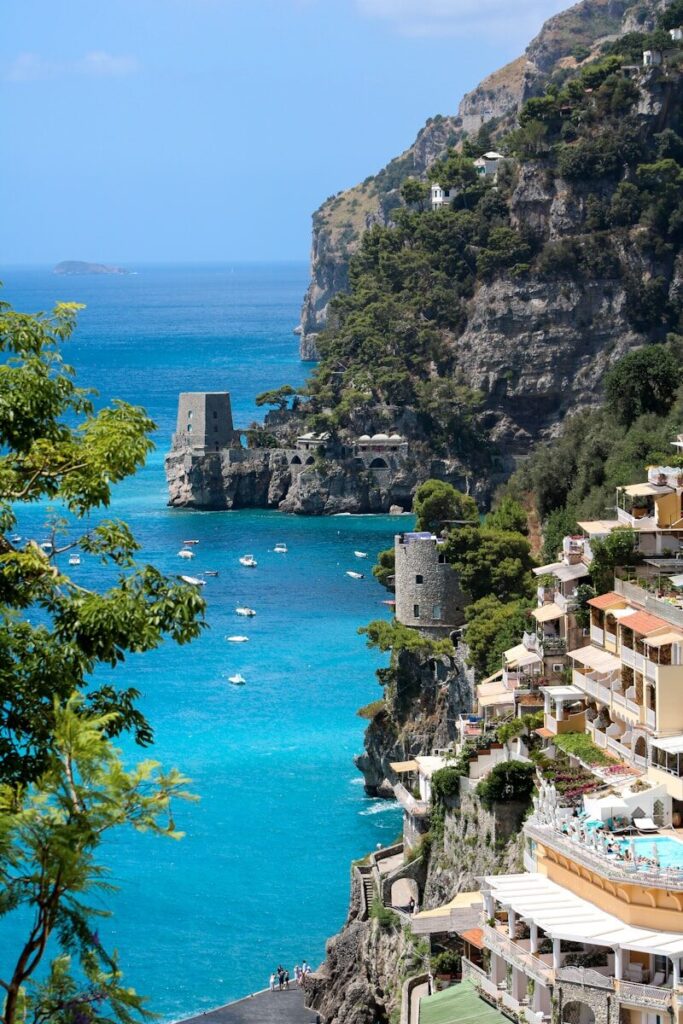
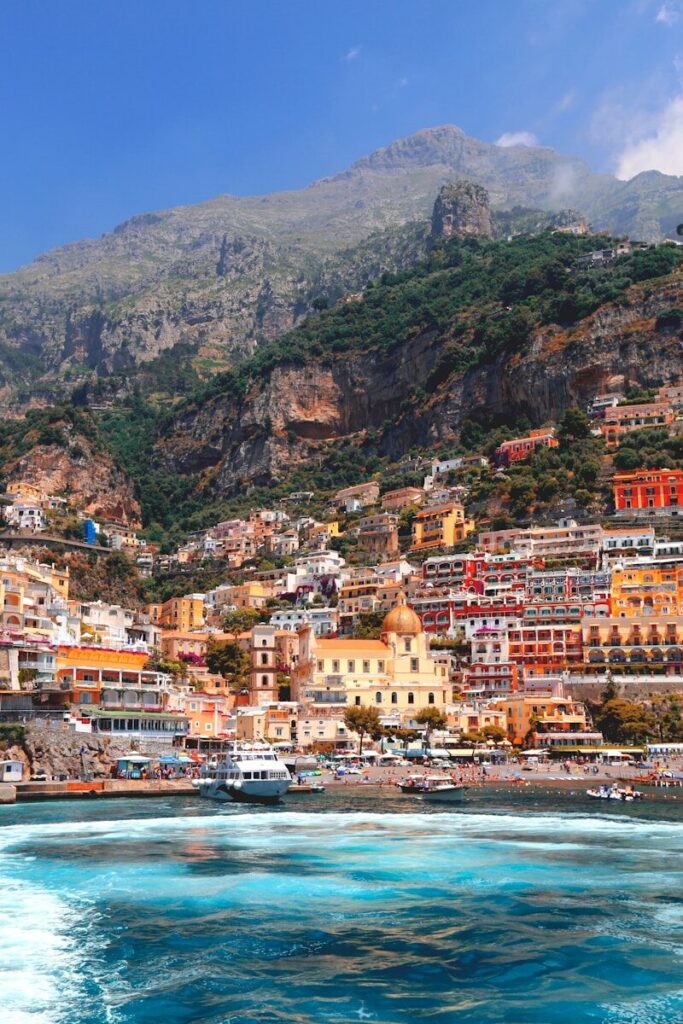
The stretch between Salerno and the islands has been photographed as much as almost any coastline in Europe. The hairpin above Positano. The lemon terraces stacked into the cliffs. The white houses falling into impossible blue. Travelers come once, take the picture from the same overlook everyone else uses, eat where the hotel recommended, and leave thinking they have understood something.
They have understood the postcard.
The coast is not a destination. It is a schedule. Each village holds an hour. Each hour holds a meal. The people who know it best plan their summer around being in the right kitchen at the right time, and the difference between a week of beautiful photographs and a week that means something is almost entirely a question of who is opening the door for you.
This is the sequence we work with. Four anchors, four hours, four ways into a coast that hides its real life from anyone who arrives without an introduction.
Amalfi, the morning the saint runs up the steps
Most travelers visit Amalfi during the day, when the cathedral steps are crowded with photographs and the cafés below the duomo hum with espresso. They miss what happens once a year, in late June.
The town wakes early to honor Sant’Andrea, the apostle whose relics have been kept in the crypt of the cathedral since the thirteenth century. The story locals tell is from 1544: a storm rose at the precise moment Barbary pirates were about to sack the town, and the people credit the saint with the rescue. Nearly five centuries later, the procession is still kept. The silver bust of the patron is carried out of the crypt and through the streets in the late afternoon, then down to the sea for a blessing of the waves. Fishing boats follow him into the harbor. The bells of the duomo answer from the cliffs.
The moment people remember is the climb. After the statue is brought back ashore and through the streets, the bearers stop at the foot of the long flight that leads up to the cathedral. Then they run. Carrying the saint, in full vestment, up the sixty-two steps of the monumental staircase, at full speed, while the town shouts and the brass band plays. The bearers wear red. The crowd packs the Piazza Duomo from edge to edge. It happens twice a year, in summer and in late autumn on the saint’s feast day. The summer version is the one with the warm air, the long evening light, the fireworks on the sea afterward, and the local fleet illuminated in the bay.
The ritual in its current form began only after the war — it started as a protest by the bearers against a bishop who tried to suppress the seaside procession — but the cathedral above the square is older than most of what stands on this coast. Amalfi was a maritime republic before Venice was. The duomo was rebuilt in the ninth century and rebuilt again in the thirteenth. The crypt below it, which is where the saint’s relics rest, is a single low-vaulted room of dark marble and silver that smells of incense and damp stone year-round.
What you do afterward depends on who is opening the door. The square empties faster than people expect once the bearers reach the top. Most visitors return to their hotels. The version of the evening we build is different: a private terrace in the hills above Amalfi, walking distance from the duomo but high enough that you can see the bay below as the boats begin to light up. Local fish, picked from what came in that morning. A bottle of the white wine grown on these same cliffs — Furore Bianco, Costa d’Amalfi DOC, vines clinging to terraces above the sea. Long enough at the table to watch the fireworks at sea start somewhere around eleven. Long enough to still be there when they end.
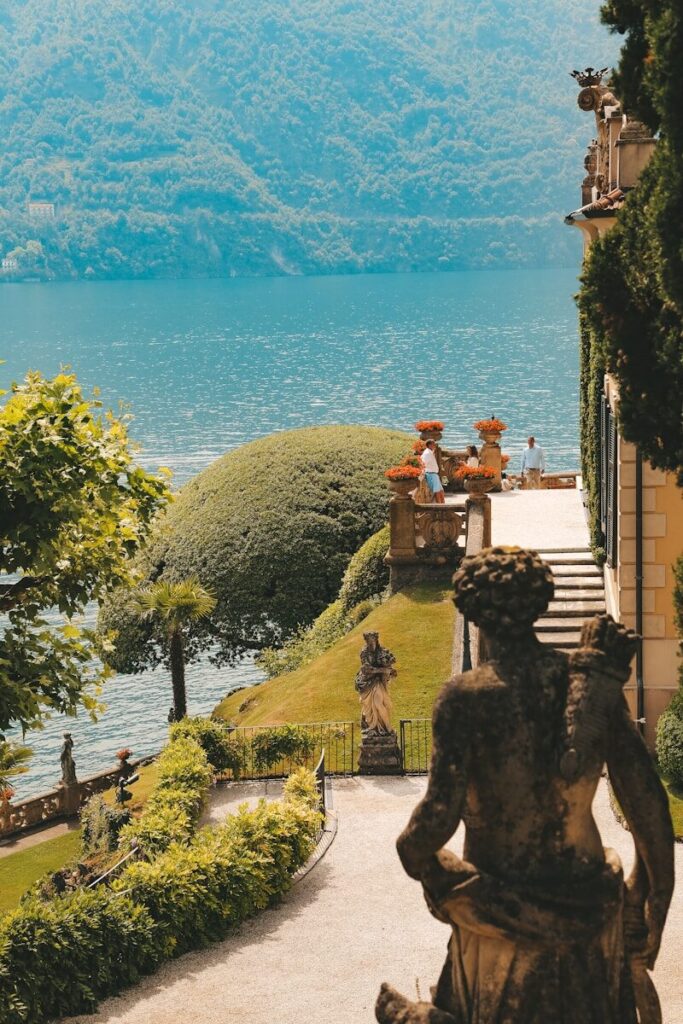
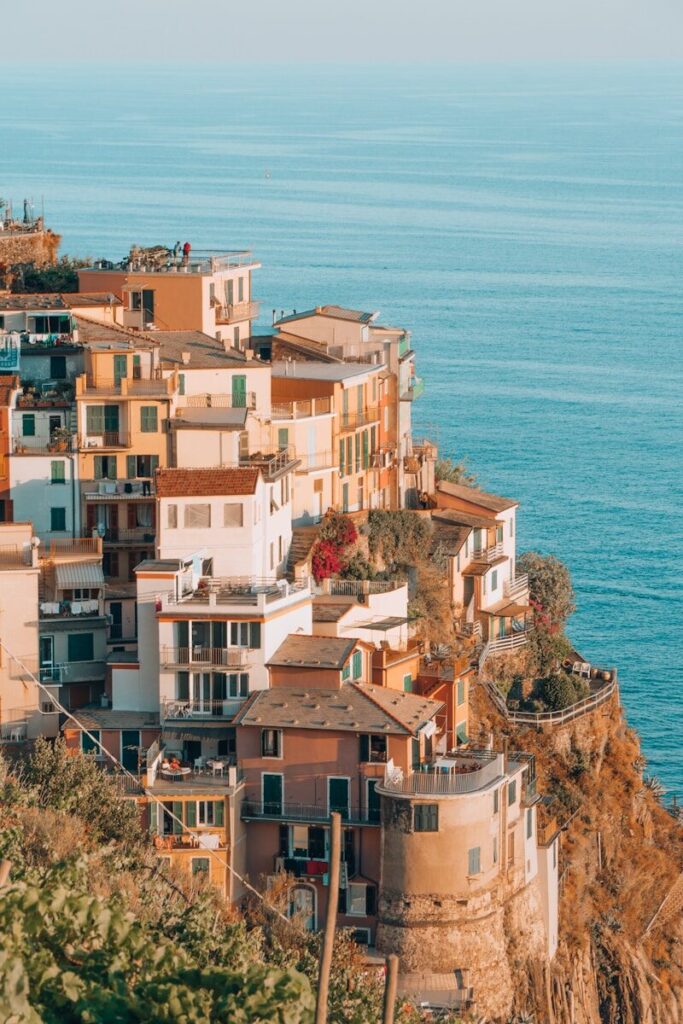
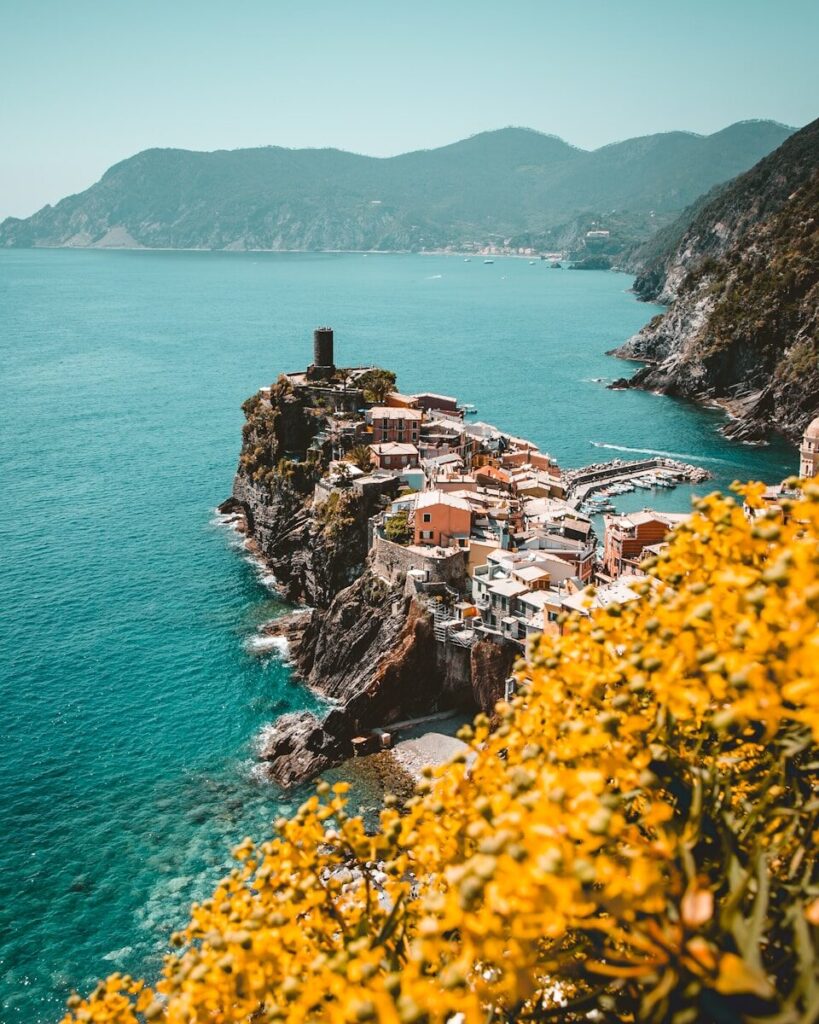
Cetara, before the boats come back
Twenty minutes east of Amalfi by car, the fishing village of Cetara is smaller, quieter, and, for one specific product, more important than any town on the coast.
Cetara has under two thousand residents. It has a watchtower, a small harbor, and a fleet that still goes out at night for anchovies. The boats use the cianciolo — a large circular purse net, mechanically closed — and they fish the waters off the Salerno coast from late March through mid-July. The fish are brought in, gutted and beheaded by hand, layered head-to-tail in chestnut casks called terzigni with coarse sea salt, weighted with a wooden disc and sea stones, and left.
Months pass. Then years. The minimum maturation for proper umami development is three years. Through that time, a clear amber liquid rises slowly to the surface and pools, and a small hole at the base of the cask is opened periodically to let it out. That liquid is colatura di alici. It is the direct descendant of garum, the fermented fish sauce of ancient Rome, produced in stone tanks across the empire and exported everywhere. When Rome fell, the tradition mostly died with it. Cetara is one of the few places in the Mediterranean where it never broke.
Colatura di alici di Cetara became the first Italian seafood product to receive PDO recognition from the European Union. The protection is strict: anchovies must be caught within twelve miles of the Salerno coast, the entire process from salting to bottling must happen inside the village, and the casks must be chestnut. There are roughly four serious producers in town who carry the designation.
Early summer is the moment to be there. The boats are still bringing in fresh anchovies, the casks are still filling, and the cellars smell of brine and damp wood and the metallic edge of the sea. A producer will pull a thin thread of colatura onto a piece of bread and ask you to taste it. Then onto a strand of linguine cooked in unsalted water, dressed with garlic, parsley, good oil, and a few drops of the sauce itself. That is the dish that put Cetara on the food map. It is not on most menus outside the village because no producer makes enough colatura to ship widely. The annual production of the entire DOP is small. By comparison, a single mid-sized Champagne house produces more revenue in a week.
What we arrange is a morning at the harbor before the boats come back, a visit to one of the family cellars with the producer himself, and a long lunch built around the catch — at a restaurant on the harbor where the owner sources directly from the boats we just watched dock. The Salerno coast unfolds from the terrace. The afternoon disappears. It is the kind of access that sits at the heart of our Italian itineraries.
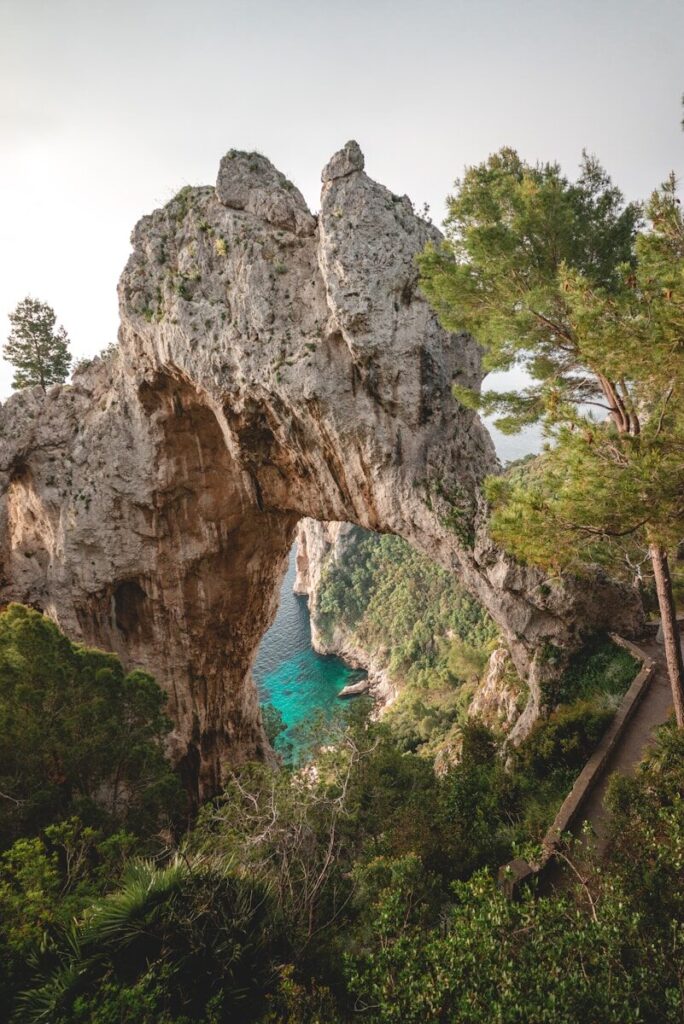
Capri, after the day-trippers leave
Capri is misunderstood by people who only see it between eleven and four.
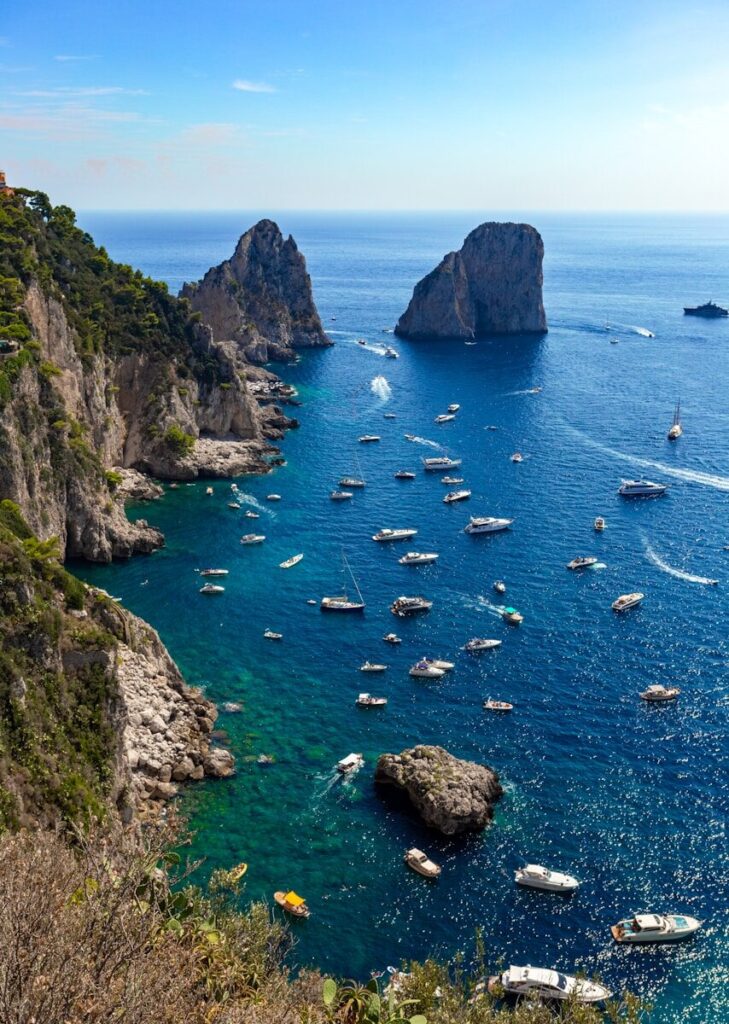
They take the funicular up from Marina Grande. They cross the Piazzetta — the tiny square that everyone calls just “la Piazzetta” because there is no other in the world quite like it. They take the same photograph from the same angle of the Faraglioni, the three limestone sea stacks shaped by ten thousand years of wind and wave. They walk the Via Camerelle past the Gucci windows. They take the last ferry back to Naples at five. And they leave thinking they have seen Capri.
They have seen the day shift. The island has a night shift, and the night shift is the island.
The trick on Capri is reverse timing. Most yachts pull anchor and head back toward the mainland around four-thirty. The last public hydrofoil leaves Marina Grande not long after. By six, the funicular slows, the day crowd thins, and the Piazzetta begins to belong to the people who live here and the people who stay. The four cafés that share the square set out their evening tables. The little Town Hall clock tower above the square chimes the hour. The light goes from white to gold.
This is when the aperitivo circuit begins. It is not a list of bars. It is a loop, walked slowly, that the residents have been walking for three generations. A spritz on one terrace, a glass of Falanghina on another, a long pause at a third while you decide whether you are going to dinner at nine or ten. The locals call it being “in Piazzetta.” It is not an activity you book. It is an hour you keep.
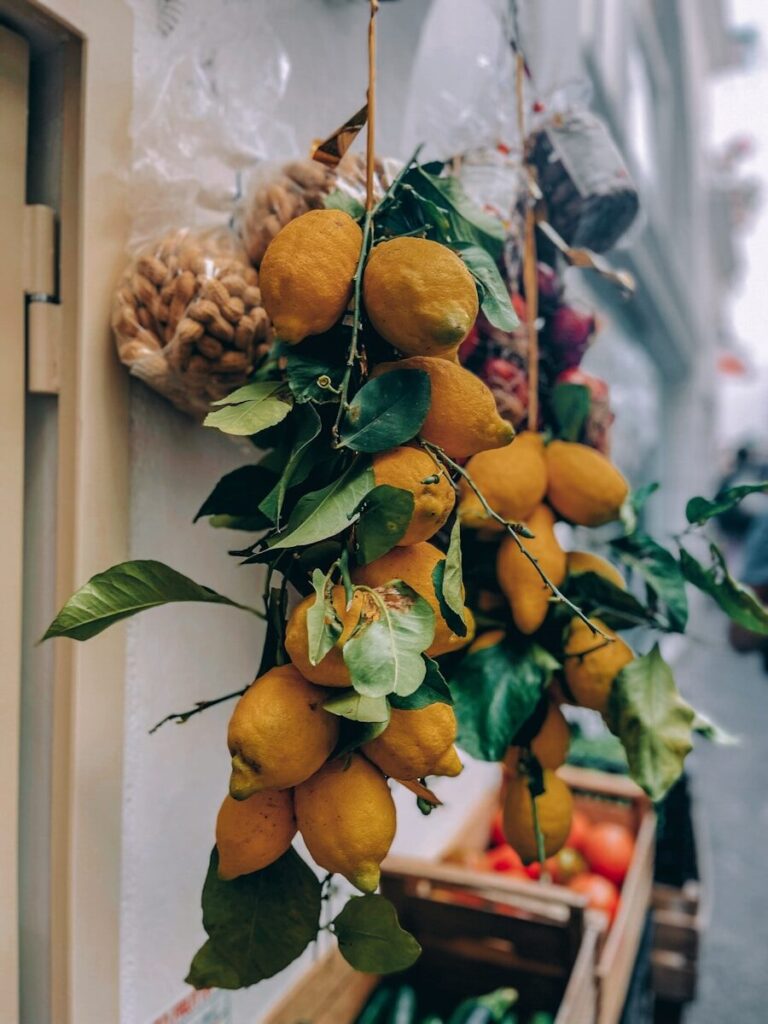
The dinners are by reservation and they have a hierarchy. La Fontelina, the beach club tucked at the base of the Faraglioni, serves lunch only — but the lunch is one of the genuine institutions of the Mediterranean, with white linen umbrellas pegged into the rocks, chilled Vermentino in ice buckets, and a stretch of the sea that has been swum by everyone from Jackie Onassis to most of the European industrialist class. Da Paolino, in a lemon grove inland, is the dinner you come to Capri for — the tables sit under hanging lemons heavy enough to graze your hair, and the food is what a grandmother would cook if her grandmother had also been good at it. Aurora, in the village, is where the writers go.
Then the night opens. Anema e Core, just off the Piazzetta, has been running since the mid-eighties. It is technically a taverna, in practice a private club with a guitarist who plays Neapolitan songs until four in the morning while the room sings along. The door is small and unmarked. You do not get in without a reservation, and the reservation is not the same thing as access — the room beyond the room is where the night actually is. The crowd is the crowd: shipping families, Roman politicians, the occasional French actor, a few visitors who got there through the right person. People who have been coming since the eighties are at the same tables they sat at in the eighties.
What we suggest, for travelers who have done Capri the wrong way before, is to invert the day. Sleep in. Take a long morning at the hotel. Go inland, to Anacapri — the quieter, higher village on the western side of the island, where the day crowds rarely make it — for a long lunch at a family farm. Tomatoes, mozzarella from the mainland that morning, rabbit cacciatore if you ask in advance, a bottle of something local. Sleep through the afternoon. Be in the Piazzetta by seven. Dinner at ten. Anema e Core after midnight. Walk home through streets that are still half-full at three.
That is the island. The view of the Faraglioni is included, but it is not what you came for.
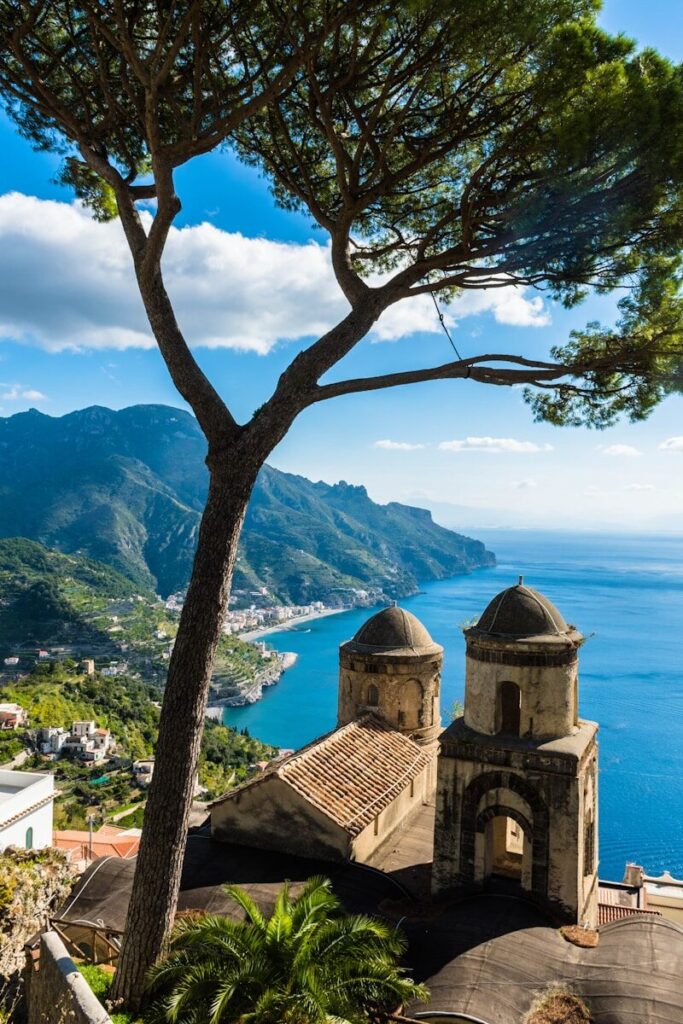
Ravello, the summer the cliff becomes a stage
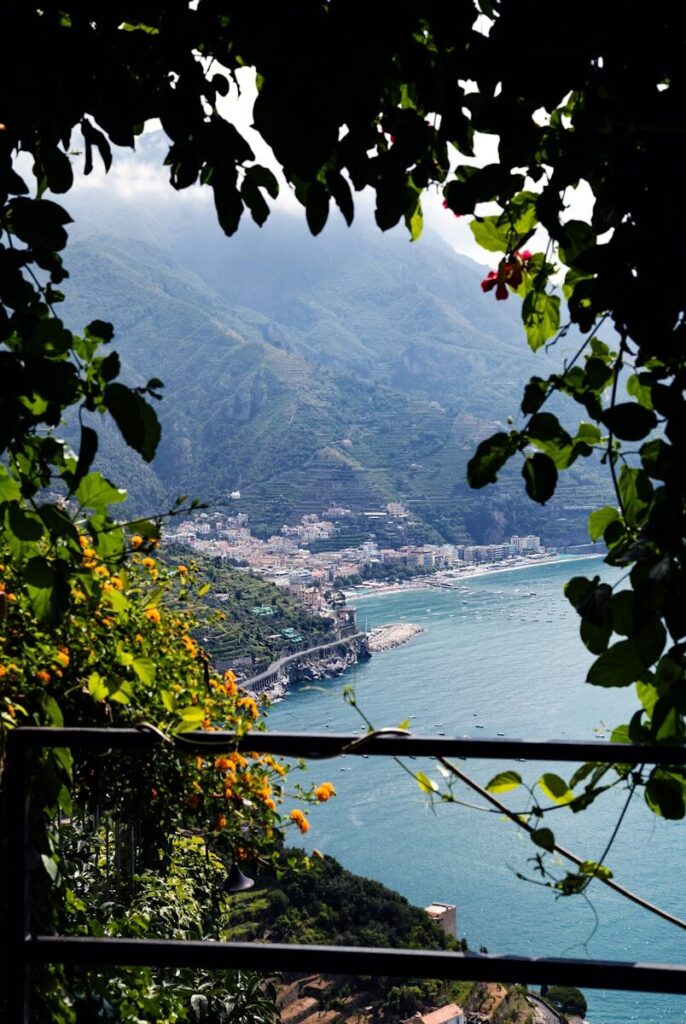
Up the cliff from Amalfi, the village of Ravello sits at fifteen hundred feet above the sea, and one specific Wednesday afternoon in the late nineteenth century, Richard Wagner walked into the gardens of Villa Rufolo and stopped breathing for a moment.
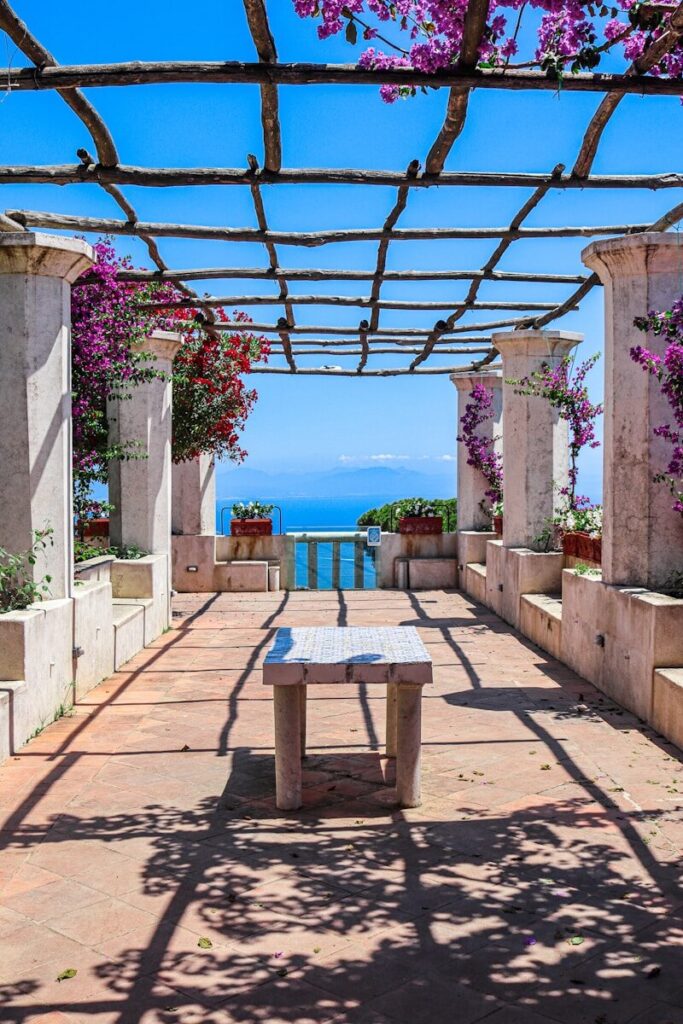
He was sixty-seven. He had been working for years on Parsifal, his final opera, and he had been struggling with the visual setting for the second act — the magic garden of the wizard Klingsor, where the hero is tempted and the world he knows comes apart. Standing in the gardens at Villa Rufolo, with the medieval tower, the exotic foliage planted by the Scottish botanist Francis Reid, the cypresses and umbrella pines, and the sea falling away thirteen hundred feet below, Wagner found what he had been looking for. He wrote in the guestbook of the Albergo Palumbo that evening: Klingsors Zaubergarten ist gefunden — Klingsor’s magic garden has been found. He died three years later.
Every summer since the early fifties, the gardens have hosted what is now the oldest music festival in Italy after the Maggio Musicale Fiorentino. The season runs from early July through early September. The program rotates each year: major orchestras, symphonic repertoire, baroque, opera in concert, jazz, a visual art exhibition in the villa itself. The signature event is the Concerto all’alba, the dawn concert — the audience climbs to Villa Rufolo before sunrise, sits in the dark, and the music begins as the sky changes color over the Gulf of Salerno.
The stage at Villa Rufolo is famous and unusual. It is built outward from the cliff edge on a steel armature so that the orchestra plays with the sea directly behind them, twelve hundred feet down. The audience faces the orchestra and the sea at the same time. The light moves across the performance — gold at the start, blue, then deep blue, then black. There is no other concert venue like it in Europe. People who have heard a Wagner program here describe it the way people describe certain meals: as something that happened to them, not something they witnessed.
The festival itself is bookable. The tickets are real tickets, sold on the festival website, in clear price tiers. That is not the part that requires us. The part that requires us is what happens after.
When the concert ends, the audience disperses down the narrow lane into the village. Most of them go to their hotels. A few find dinner in town. What we arrange, when the calendar allows it, is a private table on a terrace that opens onto the same view — the same gulf, the same cliff drop, the same stage now empty and dark below. Pasta with the small zucchini that grow on the hills behind Ravello. Pezzogna, the local sea bream, baked under salt. White peaches sliced into a glass of Fiano. The musicians sometimes still in the gardens, packing slowly, in the long quiet that follows a performance. The valley below is already dark. It is the hour the day finally lets go.
What this coast actually is
The Amalfi Coast is not a sequence of beautiful villages. It is a sequence of meals, each one tied to a producer, a season, a saint, or a stage. You do not understand it by visiting. You understand it by knowing when to be where, and by sitting down with the right people once you arrive.
Amalfi when the saint runs. Cetara on a morning while the boats are still running. Capri at eleven at night in the Piazzetta. Ravello on a summer evening with the orchestra behind you and the sea behind them.
The work is keeping that calendar. The work is the relationships that make those tables open. That is what we do. The same logic — knowing the producer, the family, the table — runs through every Mediterranean itinerary we build.