
There is a category of place that does not exist for tourism. It exists for itself, for the thing it does, the thing it grows, the thing it has always been, and it opens briefly, on its own schedule, with no particular interest in whether you have made the journey to be there. If you arrive at the right moment, it is overwhelming. If you miss it, there is nothing to be done. Come back next year.
These are not the gardens of brochures and garden centres. They are not designed to be visited. They are fields where flowers are harvested before heat destroys them, ruins where roses have reclaimed a medieval city, a painter’s obsession that the whole world has photographed but almost nobody has actually seen. What they share is a window, precise, seasonal, non-negotiable, that opens in April and May and then quietly closes again.
This month, five of them.
Grasse: the rose that makes N°5
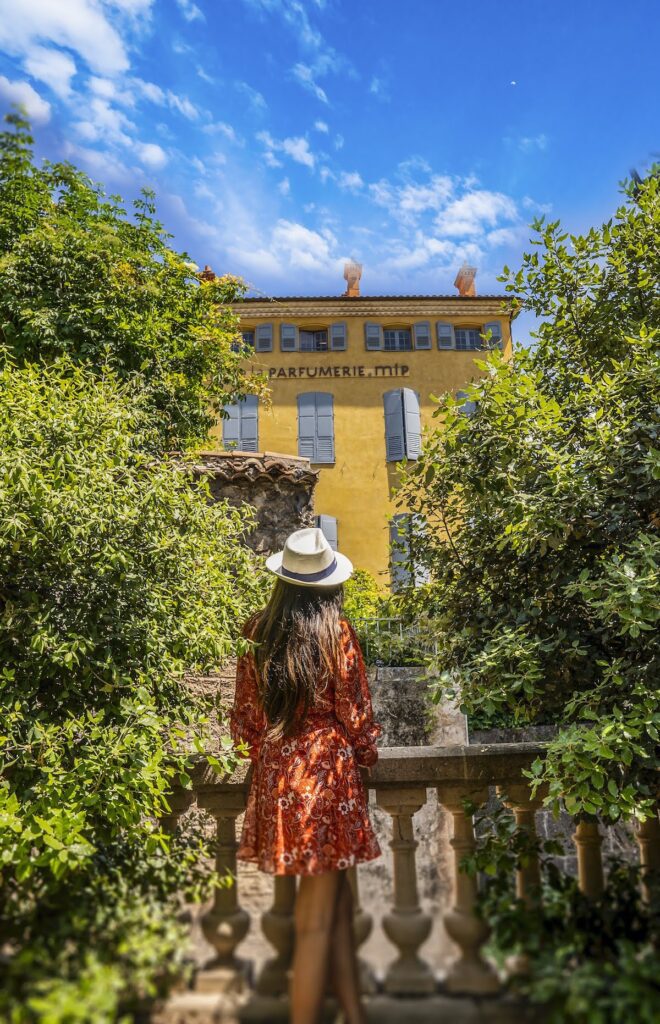
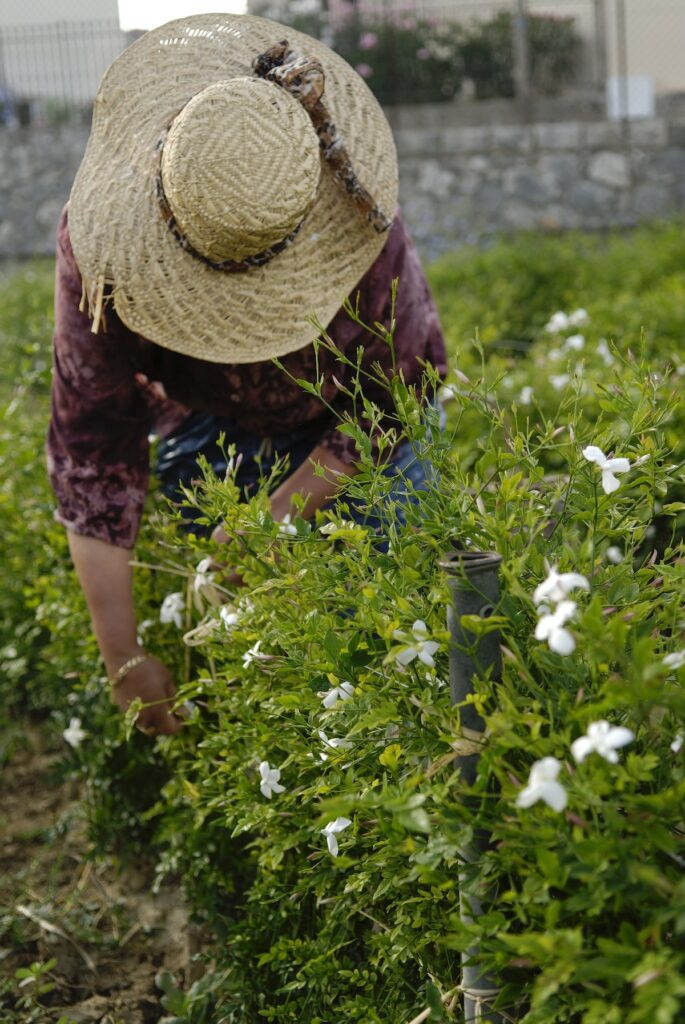
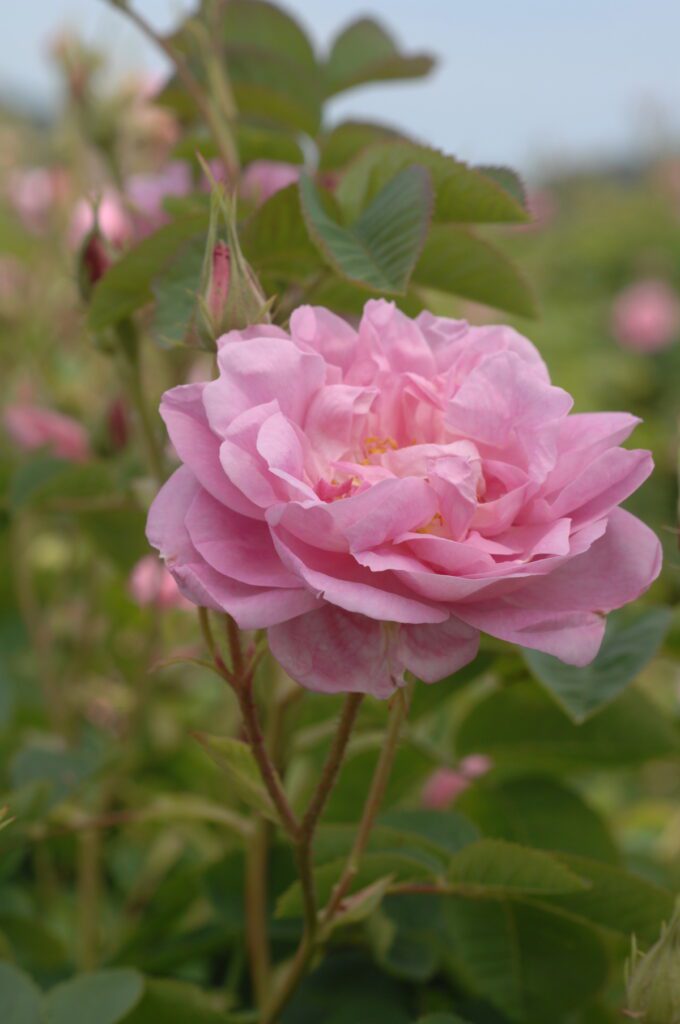
In the hills above Cannes, on a slope that catches the morning light before the valley heats up, Chanel owns a series of small farms growing the Centifolia rose (the May rose) for the production of No. 5 and No. 19. The harvest lasts three weeks. It is done entirely by hand, by teams working from first light until ten in the morning, because the heat that follows destroys the fragrance compounds within hours of their peak.
The roses do not look like what florists sell. They are blowsy, extravagant, deeply perfumed: a flower that exists entirely for its scent and has been cultivated in this valley for centuries. The quantity required is staggering. It takes roughly 500 kilograms of petals, around a million flowers, hand-picked, to produce a single kilogram of absolute, the concentrated essence that forms the heart of the perfume. A kilogram of Grasse rose absolute sells for upwards of five thousand euros; the rarest harvests, considerably more. The math tells you everything about why this valley still exists.
Chanel’s Domaine de Manon is not open to the public. Neither, for the most part, are the other perfume house fields. But Grasse itself, the town that has been the world capital of perfumery since the seventeenth century, offers something in 2026 that it has not offered before. This year marks the 100th anniversary of the Fragonard perfumery, a family-run house whose three generations have worked these same hills through every disruption the twentieth century produced. The anniversary brings with it a programme of exceptional behind-the-scenes access: to the factory, to the historic workshops, to a process of distillation that predates modern chemistry and still produces better results.
For those who want to go further, to understand not just the history but the alchemy, Grasse has a handful of independent master perfumers who take private clients through the process of creating a scent from scratch. Not the watered-down “create your own perfume” spa experience sold at luxury hotels, but a genuine working session with someone whose vocabulary for smell is as precise as a sommelier’s vocabulary for wine, and whose understanding of the Grasse terroir runs decades deep. You leave with something that does not exist anywhere else in the world and never will again.
The May rose harvest runs from late April through mid-May, depending on the season. The hills around Grasse in those weeks, the air carrying what can only be described as the concentrated memory of every French perfume you have ever encountered, are worth the journey on their own terms.
Giardino dell’Iris, Florence: the competition nobody watches
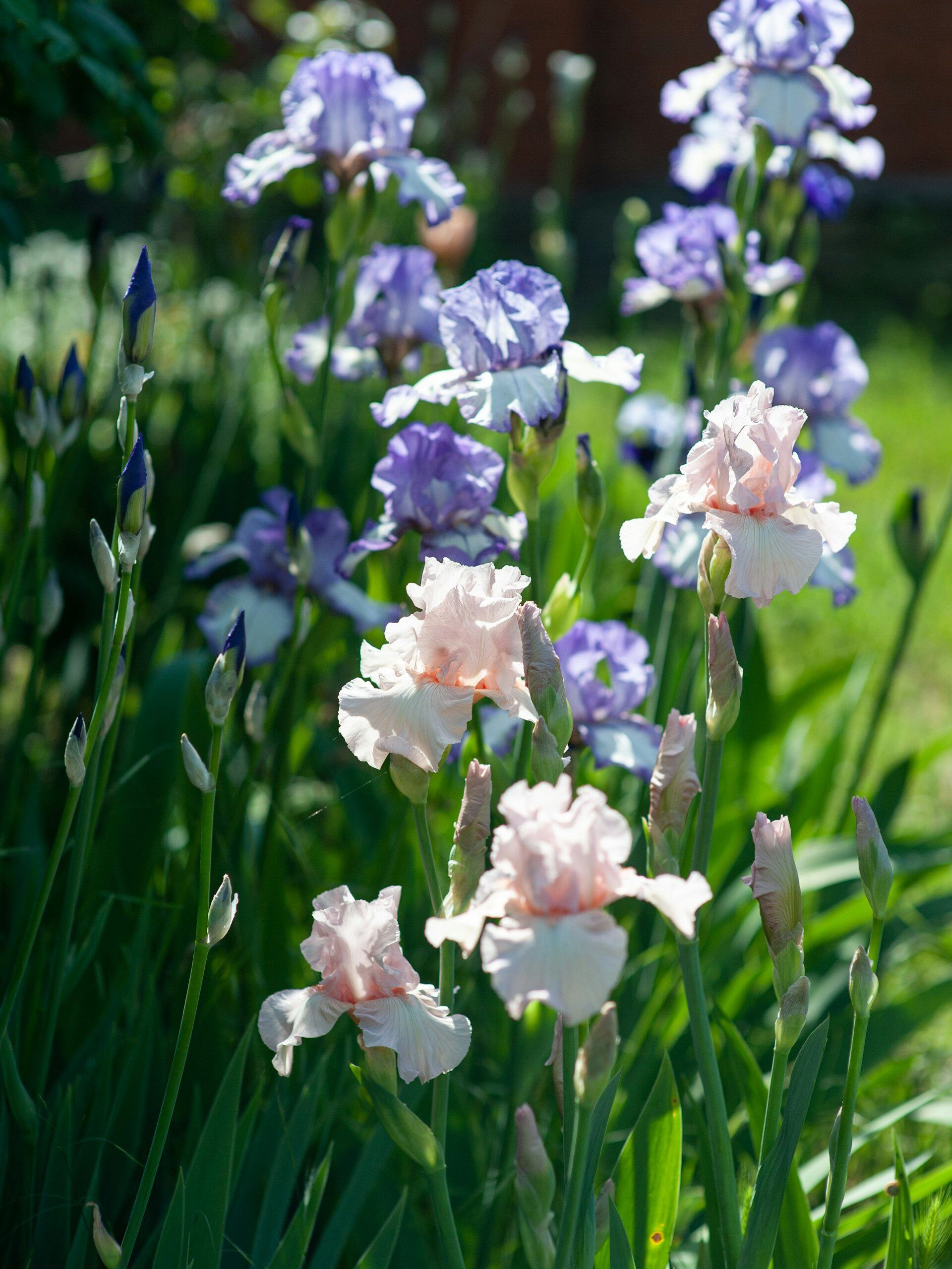
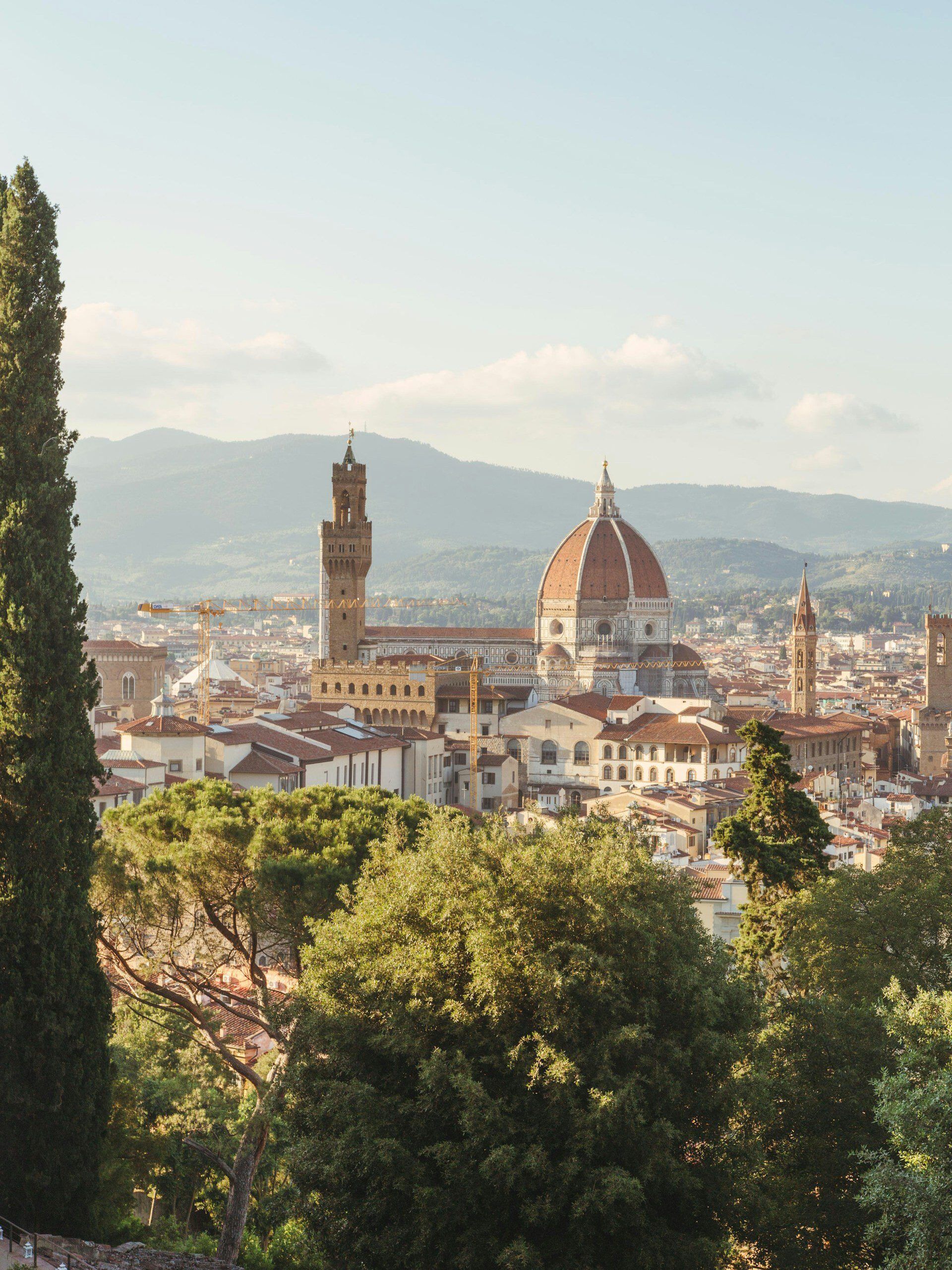
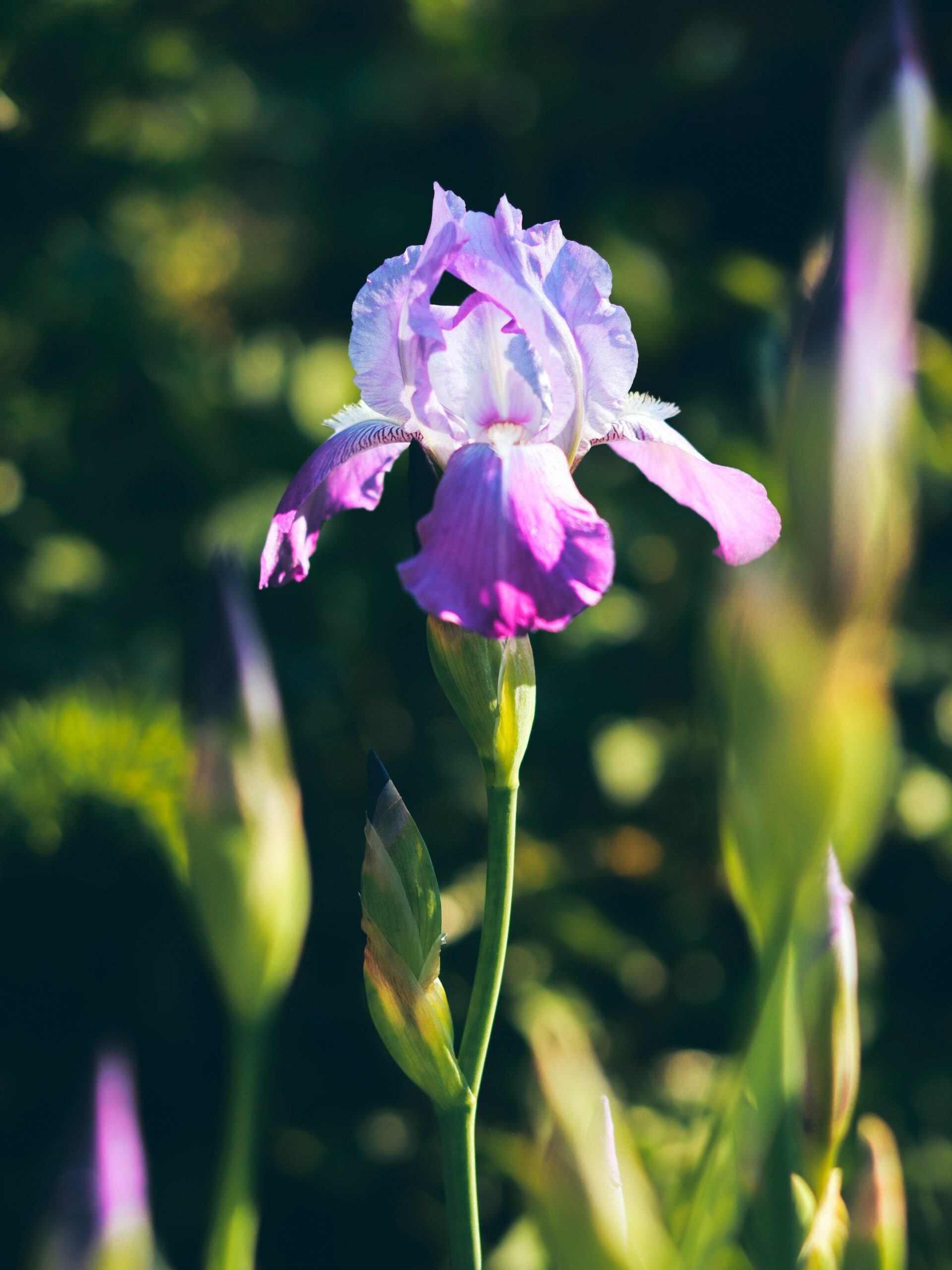
On the hillside below Piazzale Michelangelo, on a terrace that looks across the Arno to the dome of the cathedral, the Italian Iris Society opens its competition garden for the month of May and nothing else. The garden exists because Florence has been at the centre of iris cultivation since the Medici, and because the dried root of the Florentine iris, the giaggiolo, is still harvested in Tuscany for the perfume industry, supplying the same ateliers that buy Grasse rose absolute. The city’s symbol is a stylised iris. The connection is not decorative.
The garden opens on the first of May and closes on the last. During those thirty days, growers from across Italy and beyond submit their cultivars for judging, and the hillside holds several hundred varieties in simultaneous bloom. The colours run from white through every register of purple and blue to a near-black that seems impossible for a living flower. The fragrance on a warm morning is considerable.
Entry is free. There is no gift shop. The garden is not staffed for tourism; it is staffed for a competition. You are welcome to walk through it while the judging happens around you, and nobody will explain anything unless you ask. That quality, a serious horticultural event conducted in public with complete indifference to whether you find it interesting, is increasingly rare and worth seeking out on those terms alone.
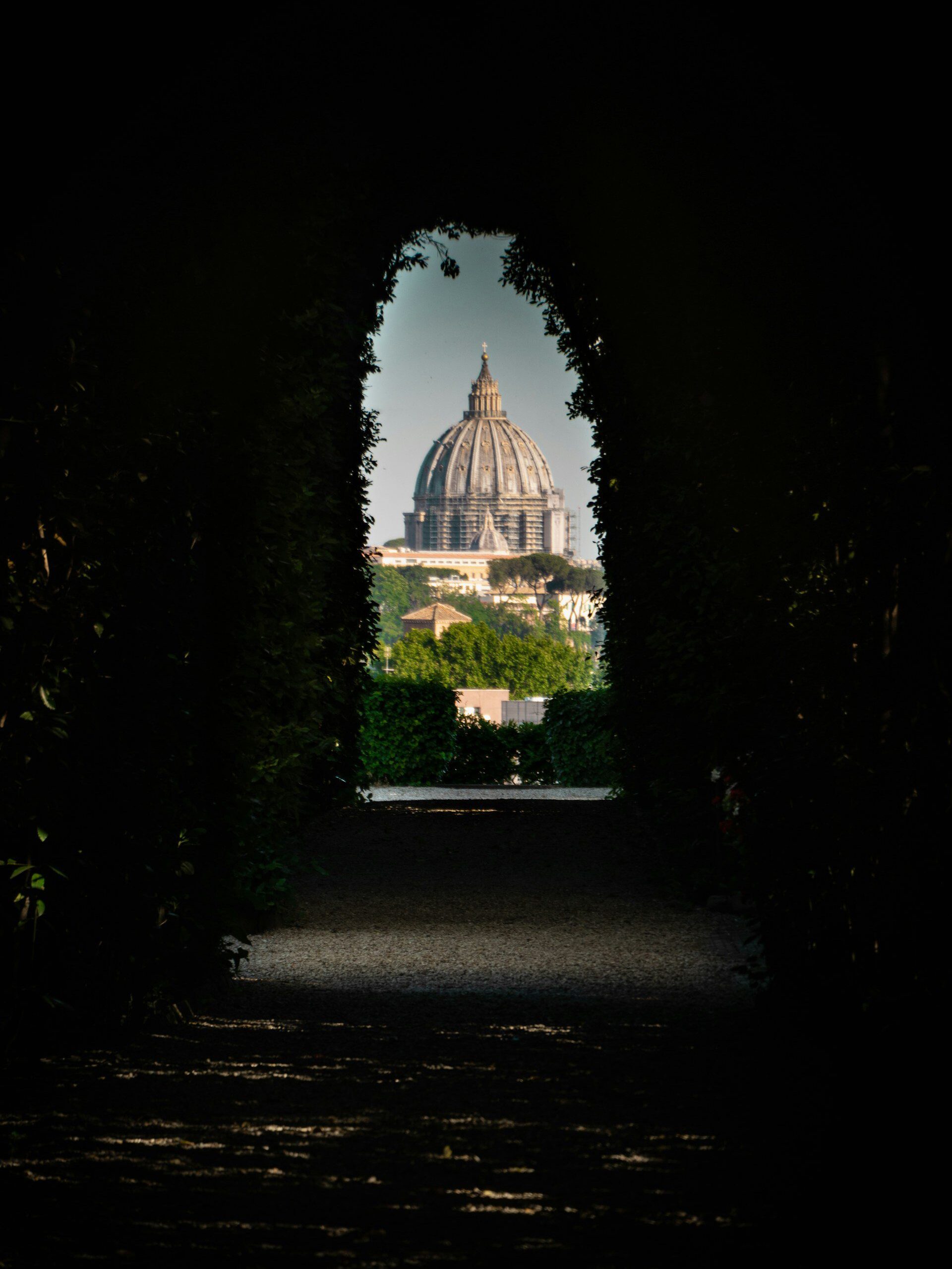
Ninfa: the garden that opens fifteen days a year
An hour south of Rome, in the Pontine hills, there is a garden that should not exist.
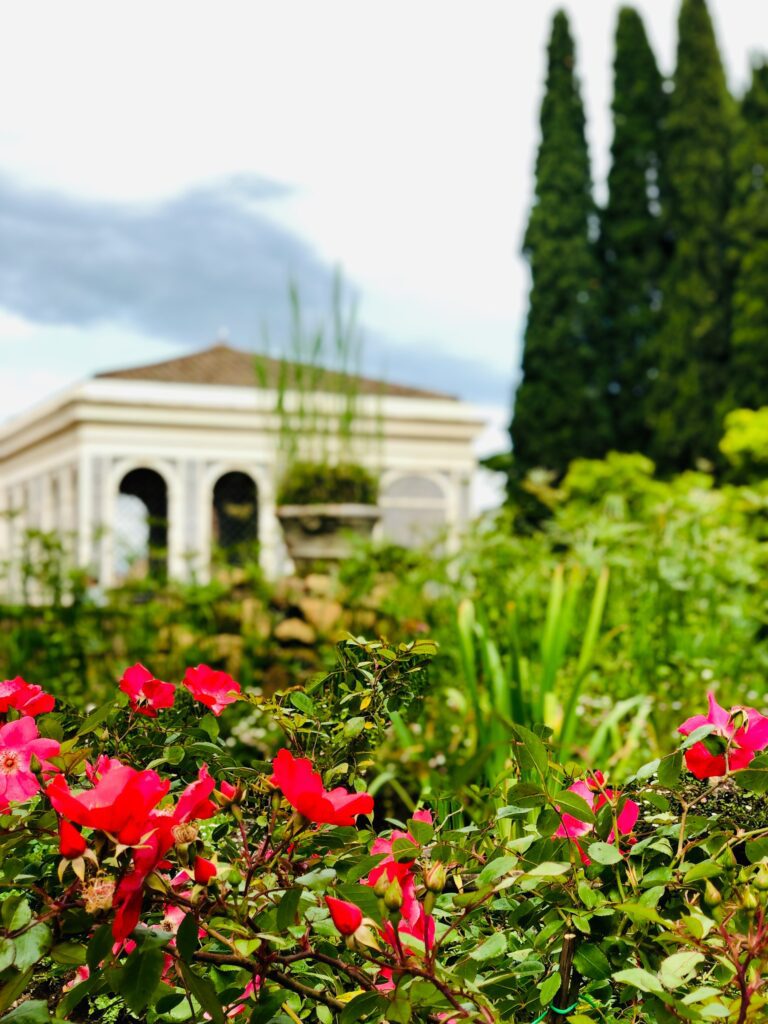
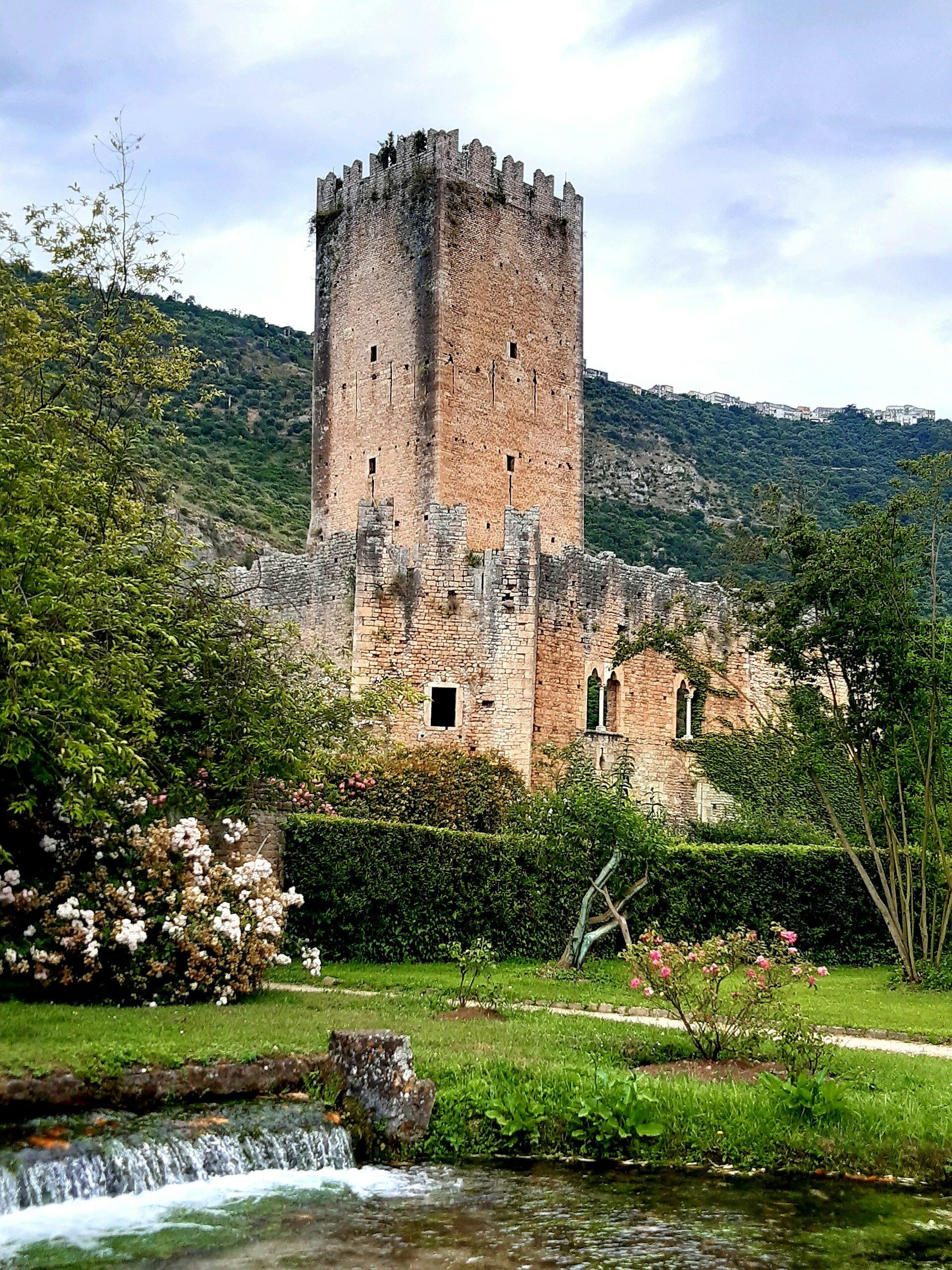
In the fourteenth century, the medieval city of Ninfa was abandoned, plague, war, the shifting allegiances of the papal states, and left to slowly dissolve into the landscape. The population scattered. The streets filled with earth. The buildings went to ruin. And then, over the following centuries, nature moved back in: roses climbed the broken towers, wisteria draped the collapsed archways, irises seeded themselves along the banks of a crystal stream that runs through what was once the town square.
In the early twentieth century, the Caetani family, who had owned the land since the Middle Ages, began cultivating the ruins deliberately, planting English and Japanese species among the wild growth, creating something that is simultaneously a controlled garden and a controlled surrender. The result is unlike anything else in Europe: a ruined city in full bloom, where medieval walls carry roses in colours that have no names, where the stream is so clear you can read the Roman road beneath it, where the air in April smells of wisteria and wet stone and something older than either.
The Fondazione Caetani opens the Garden of Ninfa on a strictly limited number of days per year, roughly fifteen visits between April and October, each one ticketed and capped at a small number of visitors. The April and May openings, when the roses and wisteria are at their absolute peak, sell out months in advance. There is no exception to this. No amount of persistence or connection will get you in on a day when Ninfa is closed. The garden operates entirely on its own calendar, which is as it should be.
To visit in May, with the tower roses at their height and the stream running clear after the spring rains, is an experience that serious gardeners and travellers return to describe with a particular kind of helplessness: the feeling of having seen something that should not have survived but did, and that asks nothing of you except to look.
Villa Carlotta, Lake Como: three weeks of controlled disorder
For most of the year, Villa Carlotta is a fine eighteenth-century villa with fine gardens above a fine lake, and you can visit it on any day the gates are open and come away with a perfectly accurate impression of what it is. Then, for three to four weeks in April and into May, approximately 150 species of rhododendrons and azaleas bloom simultaneously on its terraced slopes, and the garden becomes something the rest of the year gives no indication of.
The scale of colour is disorienting in a way that photographs do not capture. Rhododendrons in this quantity, in this compression of varieties and shades, against water and mountains and the particular light of the pre-Alps in spring, produce an effect that is closer to sensory overload than to the composed pleasure of a well-designed garden. It is not subtle. It does not ask to be contemplated quietly. It simply arrives, all at once, and then three weeks later it is over.
The villa has been open to visitors since the nineteenth century, which means the infrastructure is there and the visit requires no particular planning beyond timing. The planning is entirely the point. Come in the window and you see something genuinely extraordinary. Miss it by a fortnight and you see a beautiful garden on a beautiful lake, which is not the same thing at all.
Giverny: the one condition
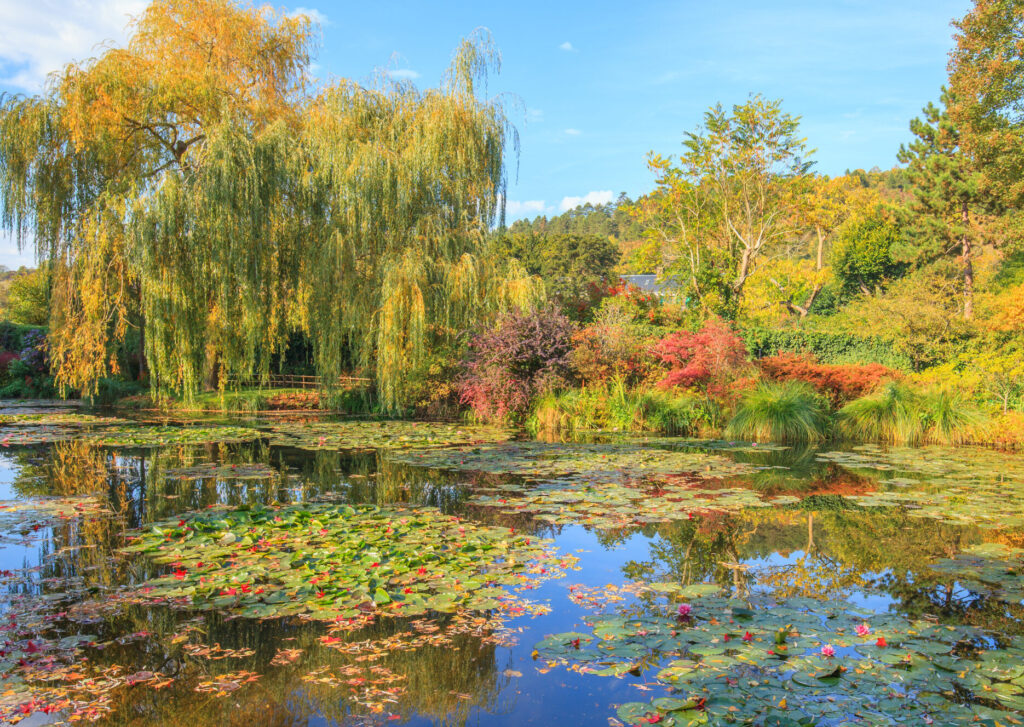
Monet’s garden at Giverny is one of the most visited gardens in France, which means that for most of the year it is one of the most crowded. The photographs taken by millions of visitors bear almost no resemblance to the paintings, because the paintings were made in the early morning, in changing light, in a garden that felt private and slightly overgrown, and the garden today, under high summer conditions with coaches arriving at nine, is none of those things.
There is, however, one condition under which Giverny becomes what Monet painted.
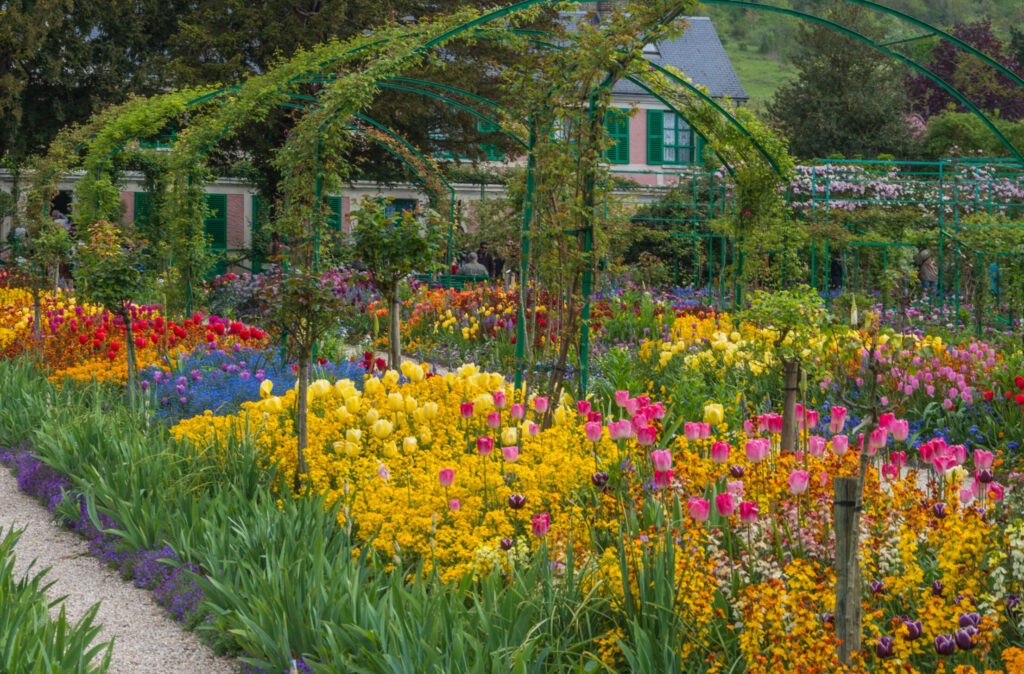
From the moment the gates open in April, the garden reopens on April 1st each year, until late May, the crowds have not yet arrived. The tour buses that define the summer experience are absent. The wisteria on the Japanese bridge is at its heaviest and most dramatic. The tulips and narcissus that Monet planted in the sections he called his clos normand, the formal beds leading to the house, are in full colour. And in the first hour after opening, with low spring light and cold air and almost nobody else present, the garden looks startlingly like the canvases in the Orangerie.
This is not a secret, exactly: it is simply a condition that requires planning. Being there at opening time rather than mid-morning; staying in the village the night before; breakfast in Giverny before the coaches arrive. The logistics are entirely manageable. The difference from the standard visit is not incremental. It is total.
What they ask of you
The question worth asking before any of these is not whether you want to go. It is whether you are willing to plan a trip around a flower. If the answer is yes, the dates are not hard to find. What is hard to find, and what these places offer in exchange, is the feeling of having arrived at exactly the right moment, which is rarer than most travel promises and more satisfying than any of them.