
Every May, before most of the world has heard the word, buyers from Tokyo land in a small Andalusian fishing port with cash, coolers, and an urgency that makes the locals uncomfortable. They are not here for the weather. They are not here for the sherry, though the sherry is extraordinary. They are here for a fish. A very specific fish, caught in a very specific way, in the only stretch of water in the world where it still works.
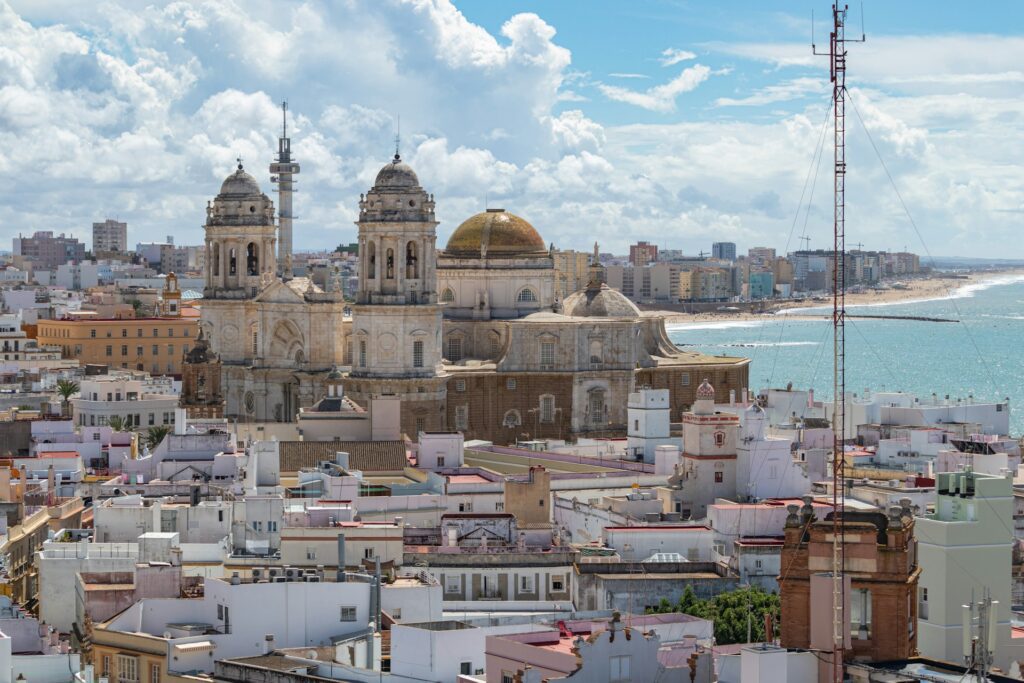
Welcome to Barbate, Cádiz province. Population 22,000. Annually home to what may be the most remarkable food event in Europe.
The fish, the route, the moment
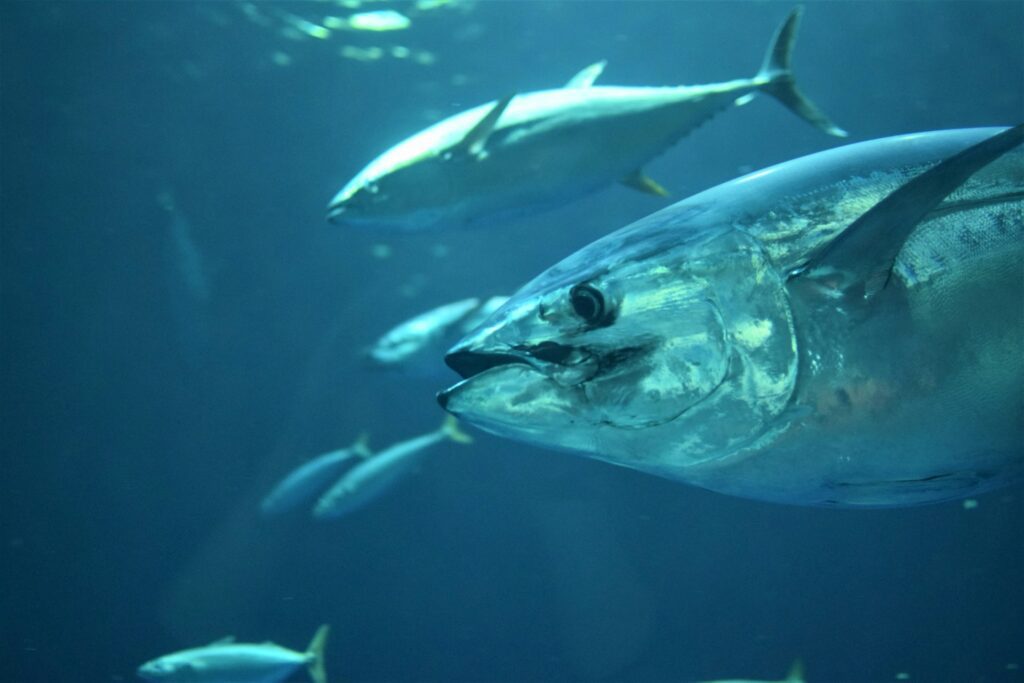
Every spring, Atlantic bluefin tuna (atún rojo, red tuna) leave their feeding grounds in the cold North Atlantic and head south through the Strait of Gibraltar to spawn in the warmer Mediterranean. They have been doing this for longer than recorded history. They do it fat: months of feeding on herring, squid and sardines have packed their flesh with the kind of deep, marbled fat that makes their belly cuts, the ventresca, melt on the tongue like butter tempered by the sea.
The window is narrow. From late April through to early June, these fish pass through. Then they are gone for another year.
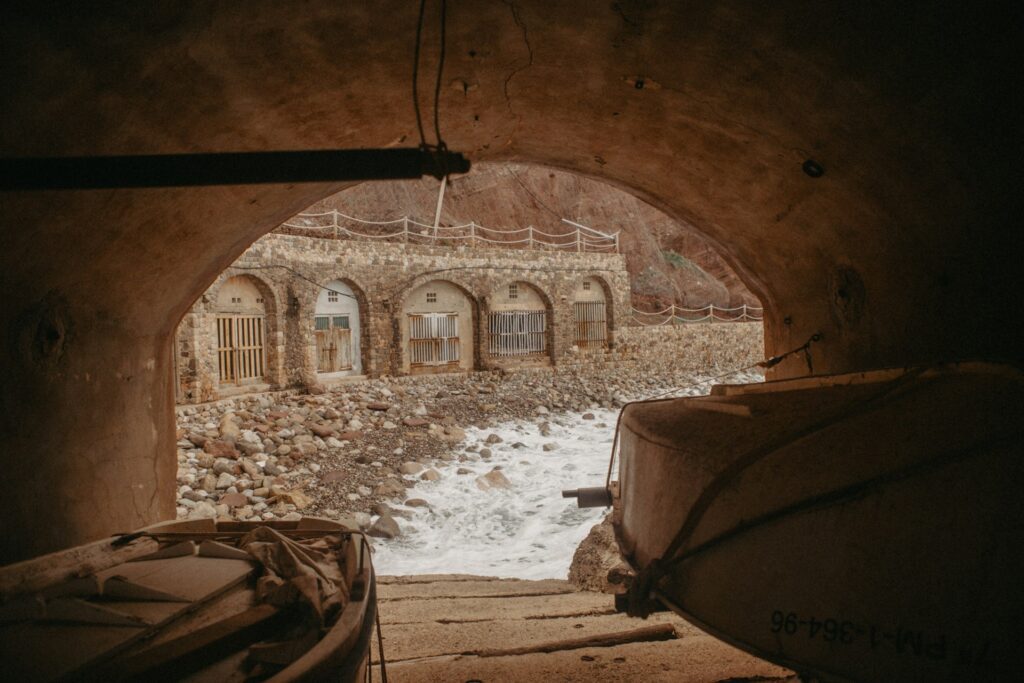
The Phoenicians noticed this 3,000 years ago. They built a labyrinth of nets, the almadraba (from the Arabic for “place to fight”), to intercept the migration. Today, on the exact same stretch of coastline, the same system still operates. Four almadrabas, four towns: Barbate, Zahara de los Atunes, Conil de la Frontera, Tarifa. No more. Everywhere else it disappeared.
The levantá
The climax is a moment called la levantá: the lifting.
The nets have been set for days, the tuna funnelled through a series of chambers towards a final enclosure called the copo. When the fishermen judge the moment right, the boats close in and the floor net begins to rise. The water tightens. Then it boils.
What happens next has not changed in three millennia, except in one crucial detail: the Japanese changed it.
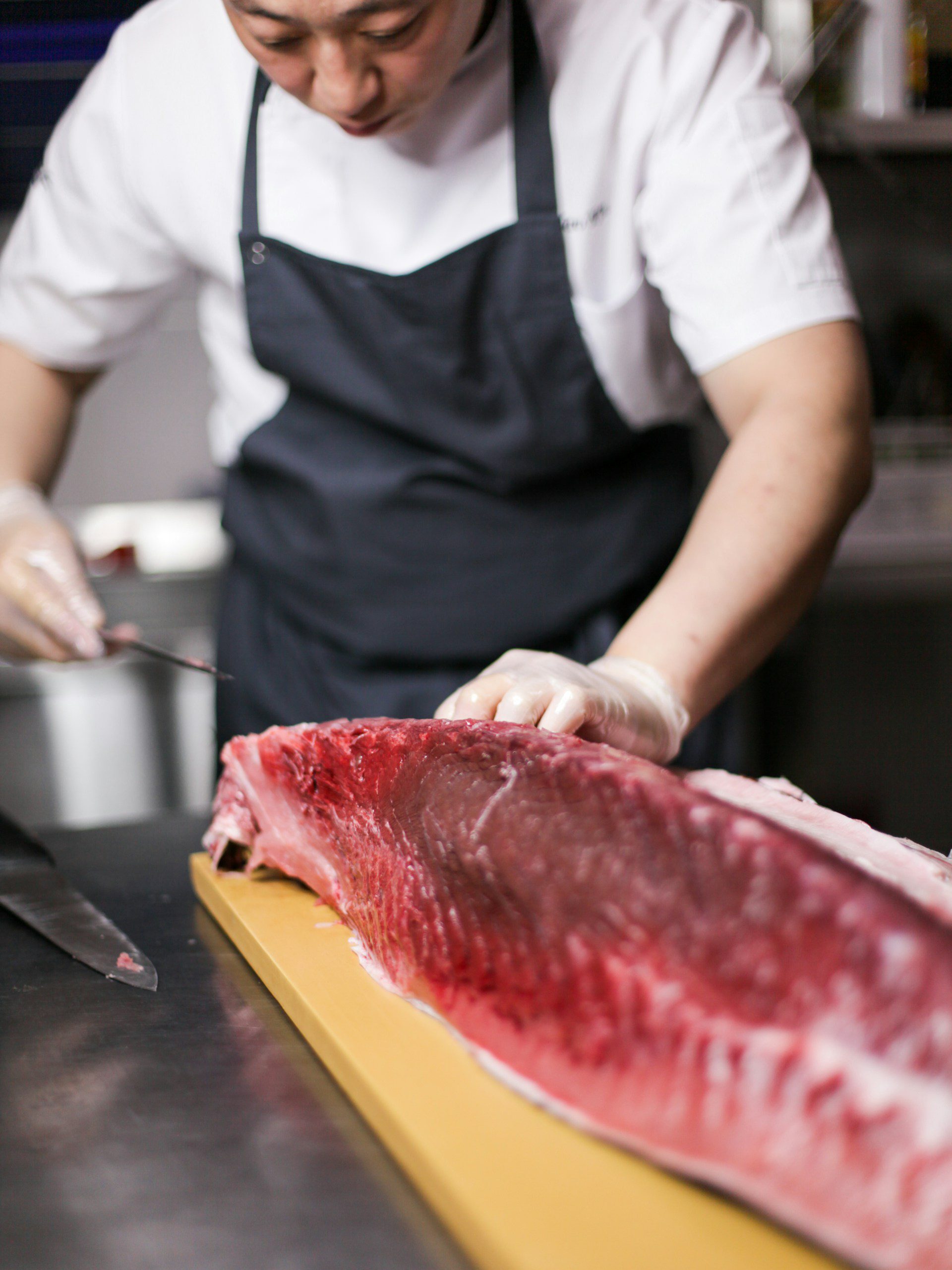
When Japanese buyers first arrived on this coast forty years ago, their own bluefin stocks having been fished nearly to extinction, they found tuna being handled roughly, stressed, bruised, the meat already compromised before it reached the dock. They introduced ikejime, the practice of killing each fish with a precise spike to the brain within seconds of capture, followed by immediate bleeding and packing on crushed ice. The difference in the flesh was immediate and profound. Today’s almadraba produces some of the most technically perfect bluefin tuna on earth, not despite Japanese influence, but because of it.
The relationship is not entirely comfortable. “They came, they took, they taught us things we should have already known,” one arrayer, a fisherman, told a journalist in Barbate last season. The truth is more layered: they also saved the tradition. By creating a market willing to pay extraordinary prices for properly handled fish, they made the almadraba financially viable again at a moment when it was close to disappearing entirely.
Today, Japanese buyers purchase between 30 and 50 percent of total almadraba production directly from the source, arriving in person, inspecting fish on the boats, air-freighting whole tuna to Tokyo’s Toyosu Market, where Atlantic bluefin now commands prices that would have been unimaginable to the fishermen of Barbate a generation ago. The remaining fish stay in Spain. And Spain, finally, has learnt what it had.
What Gadira does, and why it matters
The company that best embodies this shift is Gadira, a Cádiz-based processor that has spent years doing what no one in the region bothered to do before: treat almadraba tuna as a luxury product worthy of the same investment and storytelling as Wagyu beef or Périgord truffle.
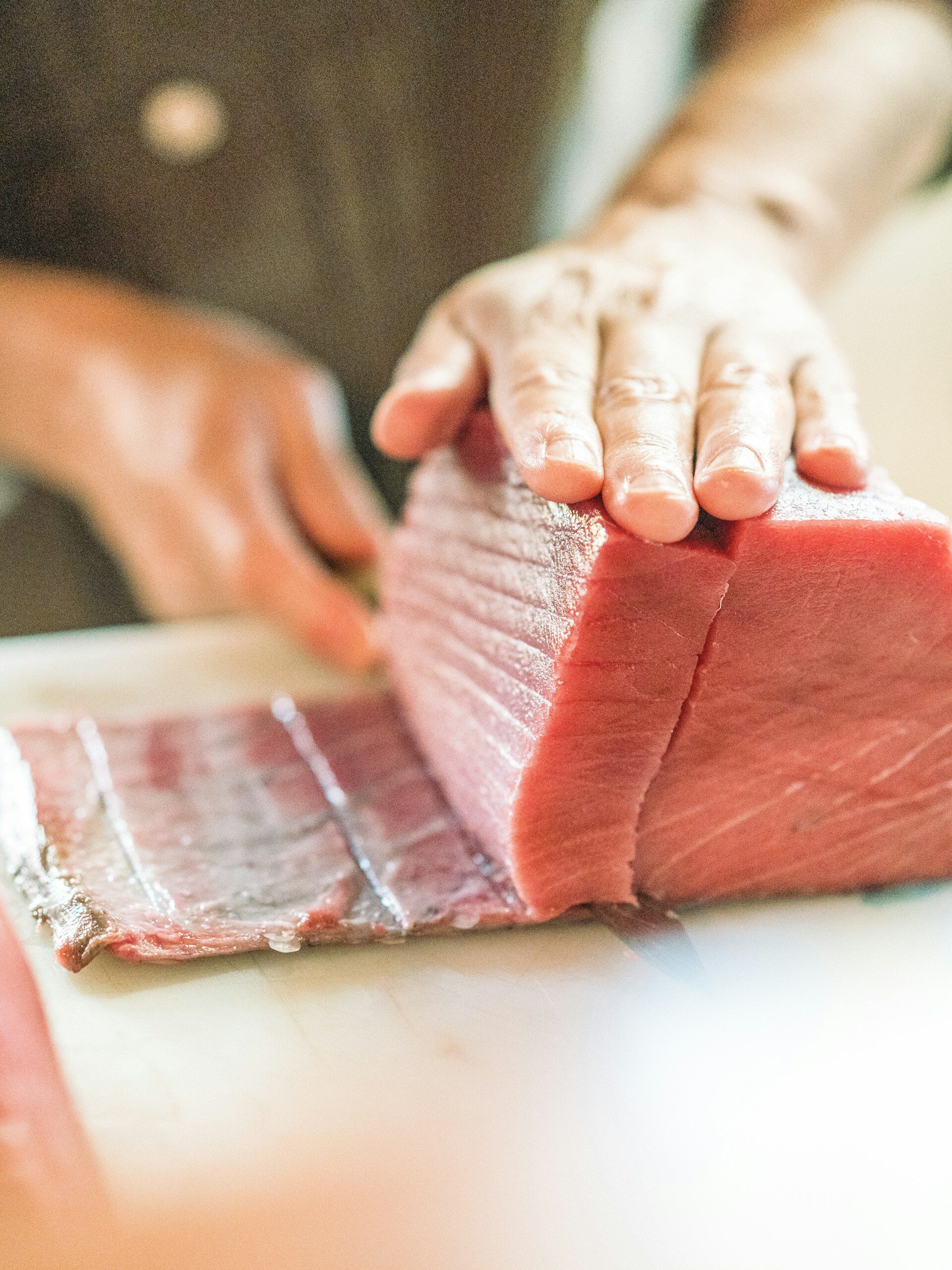
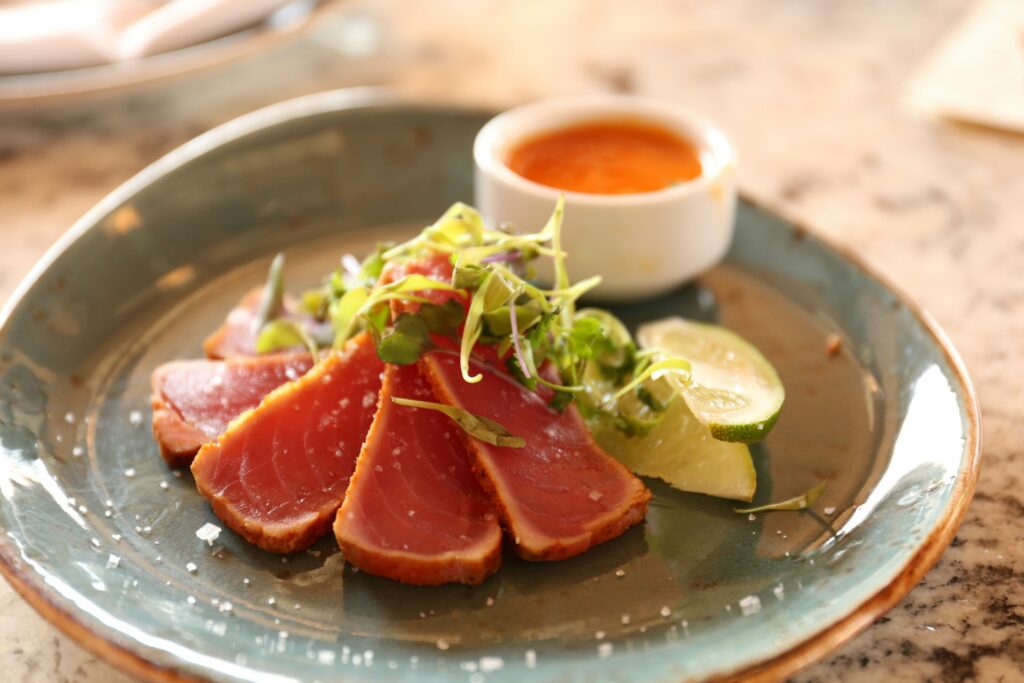
Gadira deep-freezes at minus 60 degrees Celsius, a technique that locks the fish at peak condition, preserving fat content, texture and flavour better than fresh transport over distance. The ronqueo, the butchery, breaks a single 200-kilogram tuna into at least 22 named cuts, each with a different character. The morrillo (neck), intensely flavoured, almost beefy. The tarantelo (flank), a midpoint between lean and fat, ideal for slow cooking. The facera (cheek), gelatinous and collagen-rich. The ventresca (belly), which needs nothing but a moment of heat or a very sharp knife.
The mojama, a salt-cured wind-dried tuna loin produced in Barbate since Roman times, is described by those who know it as the sea’s answer to jamón ibérico. Shaved paper-thin over a plate of almonds and olive oil, it tastes of time and salt and somewhere specific.
The chefs who came to understand
It was at El Campero in Barbate, a restaurant with no particular ambitions to elegance, its walls covered in tuna diagrams, its tasting menu running to thirteen courses of the same fish prepared thirteen different ways, that Dani García understood what he had been ignoring.
García now holds two Michelin stars at Smoked Room in Madrid, a ten-seat fire omakase restaurant where almadraba tuna anchors the menu every spring. The galete, a cut from the cheek area roughly the size of pork cheeks, is slow-cooked over embers for hours until the collagen dissolves and the flesh yields like braised short rib. It is one of the most discussed dishes in Madrid. It comes from a fishing village that most of his diners have never visited.
A few kilometres north, at Aponiente in El Puerto de Santa María, Ángel León, three Michelin stars, a Green Star for sustainability, the chef most associated with the sea in Spain today, has made the almadraba a cause as much as an ingredient. León and García have said publicly what the fishermen of Barbate have said privately for years: before anyone bans fishing on this coast, they should look at what the industrial trawlers are doing everywhere else. The almadraba does not overfish. It cannot. The nets let small fish through. The fishermen know every specimen. There is a quota, and it is enforced. This is what sustainable fishing actually looks like — not as a marketing claim, but as a 3,000-year-old structural constraint.
How to be there
The season runs from late April through May, occasionally into early June depending on quotas. The towns of Barbate, Zahara de los Atunes, Conil de la Frontera, and Tarifa each host their own Ruta del Atún, gastronomic weeks during which dozens of restaurants and bars compete to create the finest tapa from the fresh catch. The competition is genuine. The level is extraordinary.
El Campero in Barbate (book weeks in advance during season) offers the complete picture: thirteen courses, the full range of cuts, a Manzanilla list that pairs with every one of them. It is not a restaurant in the conventional sense. It is a masterclass on what a single ingredient can do when an entire culture has spent centuries learning how to use it.
Witnessing a levantá from a private boat is possible, and it is the kind of morning that doesn’t translate into photographs: the sound, the smell, the sudden violence of the water are things you have to be present for. Timing depends on the tuna, not the calendar. We work with people on this coast who know when the conditions are right and can move quickly when they are. That flexibility is part of what makes it worth doing.
The surrounding landscape earns its own time: the white hilltop village of Vejer de la Frontera, the wild Atlantic beaches of Zahara, the marshes near Tarifa where Morocco sits visible across the water on a clear day. This is the Spain that serious travellers find when they stop following the itinerary.