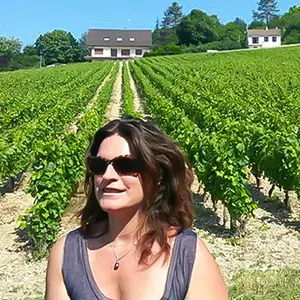

The Gardener Before the Chef
What if the most important person in a Michelin-starred kitchen isn’t the chef? What if it’s the gardener?
Behind six of Europe’s greatest restaurants, real gardens dictate what lands on the plate, when, and why. Not herb patches. Not window dressing. Working land that feeds working kitchens, every single day. And the people who tend that land, the gardeners, the foragers, the farmers, they shape the food as much as the chef does.
Here’s what changes everything: visiting the garden before you sit down to eat. Walking the rows, meeting the gardener, touching the soil, understanding the constraints. When you do that, dinner stops being a performance and becomes a conversation. You recognize the carrot because you pulled one from the row that morning. You understand why this herb and not another. The plate has a backstory, and you were part of it.
That’s the experience we build. We get you into these gardens, at the right time, with the right people. Not a quick tour before the amuse-bouche. A real visit that reshapes how you eat that night. Spring is when these gardens wake up. Here are six worth the journey.
Alain Passard, L’Arpège, Paris
You’re not in Paris. You’re standing in a field in Normandy at 7 a.m., clay under your boots, watching Sylvain Picard pull the first carrots of the morning. Sylvain has been Passard’s head gardener for over twenty years. He doesn’t rush. He holds up a turnip, still trailing roots, and explains why this one goes in today’s crate and that one stays another week. Nine gardeners work two organic estates: clay soil here in Normandy for root vegetables and brassicas, sandy soil in the Sarthe for carrots of startling sweetness, asparagus, leeks.
We arrange the morning in Normandy and the table at L’Arpège that evening. By mid-morning, wooden crates are packed and loaded onto the train to Paris. By noon, they’re inside L’Arpège’s kitchen. There is no printed menu. There won’t be one. The garden decides.
As of July 2025, L’Arpège became the first three-Michelin-starred restaurant in France to go entirely plant-based. No meat, no fish, no dairy, no eggs. Only honey from the restaurant’s own beehives. At 68, Passard isn’t slowing down. A turnip becomes carpaccio. A beetroot becomes the centerpiece of the tasting menu. “There’s light in this cuisine,” he told AFP recently.
When you sit down that evening, the tasting menu reads completely differently. You saw the field. You met the man who picked it. The carrot on your plate has a place and a morning attached to it.
Mauro Colagreco, Mirazur, Menton, France
Before lunch, you walk down. We set this up: a private hour in the terraced gardens that cascade below the restaurant toward the sea. Rosemary, wild edible flowers, Menton citrus trees heavy with fruit, one of the oldest avocado trees in France. A gardener shows you what’s being harvested today and explains why. It depends on the moon.
Colagreco is Argentine, trained under Passard and Ducasse. Three Michelin stars. Named Best Restaurant in the World 2019. His menu follows the lunar calendar: Roots, Leaves, Flowers, Fruits. The day you visit determines what you eat. Root day means beets, turnips, carrots pulled at peak density. Flower day, the plate blooms.
Walking the terraces, you understand why. The garden isn’t behind the restaurant, it’s below it, and the whole meal is a vertical journey from the soil you just stood in to the plate in front of you. You tasted a leaf of something sharp and unfamiliar ten minutes ago. Now it’s on your plate, and you know exactly where it grew.
Spring here is electric, everything waking and flowering at once, citrus blossom drifting up into the dining room. A stay built along the Côte d’Azur around a Mirazur experience, with the right lunar phase and a few quiet discoveries in the surrounding villages, is something we love putting together.
Eneko Atxa, Azurmendi, Basque Country, Spain
This one is different. The garden visit isn’t something we arrange separately. It IS the meal. You don’t sit down first. You walk into the greenhouse on the rooftop, a living, working space where the air is warm and green and smells like damp earth. Someone hands you a small picnic basket: a green juice, a smoked eel sandwich, warm snacks. You eat among the plants. The dining room comes later.
Azurmendi sits on the green hills outside Bilbao inside a bioclimatic glass structure: geothermal energy, solar panels, rainwater harvesting, full composting. Three Michelin stars, a Green Star, twice named the World’s Most Sustainable Restaurant (2014 and 2018, World’s 50 Best).
What most guests don’t realize is that the greenhouse also houses a germplasm bank developed with the Basque Institute for Agricultural Research, preserving over 400 varieties of indigenous seeds: ancient tomatoes, purple maize, vegetables vanishing from the Basque landscape. Atxa isn’t just growing food. He’s rescuing genetic heritage and putting forgotten flavors back on the plate.
When you know that, the meal shifts. You’re not just eating well. You’re eating things that almost ceased to exist. We build the days around Azurmendi with the Basque coast, the pintxos bars of San Sebastián, the cider houses and fishing villages that give this region its soul. Spring is when the seedlings show their colors and the hills turn impossibly green.
Sébastien Bras, Le Suquet, Laguiole, France
You don’t go to the restaurant first. You go to the garden. Lagardelle sits a few kilometers below Le Suquet, and when you walk in, the scale of it stops you. Over 200 species of edible plants, most of which you wouldn’t recognize at any market. Michel Bras, Sébastien’s father, still tends it. He’s the one who created the Gargouillou: 60 to 80 different vegetables, herbs, leaves, and flowers on a single plate. One of the most important dishes in modern cuisine.
Michel walks you through it. You touch leaves, crush stems between your fingers, smell cistre, an alpine fennel with a fierce anise punch that’s the signature scent of the house. You brush past tiny shoots you can’t name. You start to understand how someone could spend a lifetime learning this single hillside.
Then you drive up to the Aubrac plateau. The landscape changes completely: wind, granite, open sky, grass rolling to the horizon. Le Suquet appears on a ridge, glass and stone against the clouds. Sébastien runs the kitchen, building on his father’s foundation with his own explorations: seeds from the Philippines, Sansho pepper from Japan, tulsi basil from India.
When the Gargouillou arrives, it’s a different dish. You recognize individual leaves, herbs you brushed past an hour earlier. The plate stops being impressive and starts being personal.
The Aubrac is a region we know intimately. We arrange the garden visit with Michel, the right table at Le Suquet, and the days around it: the winding roads, the local producers, the places to stay that make a visit here complete.
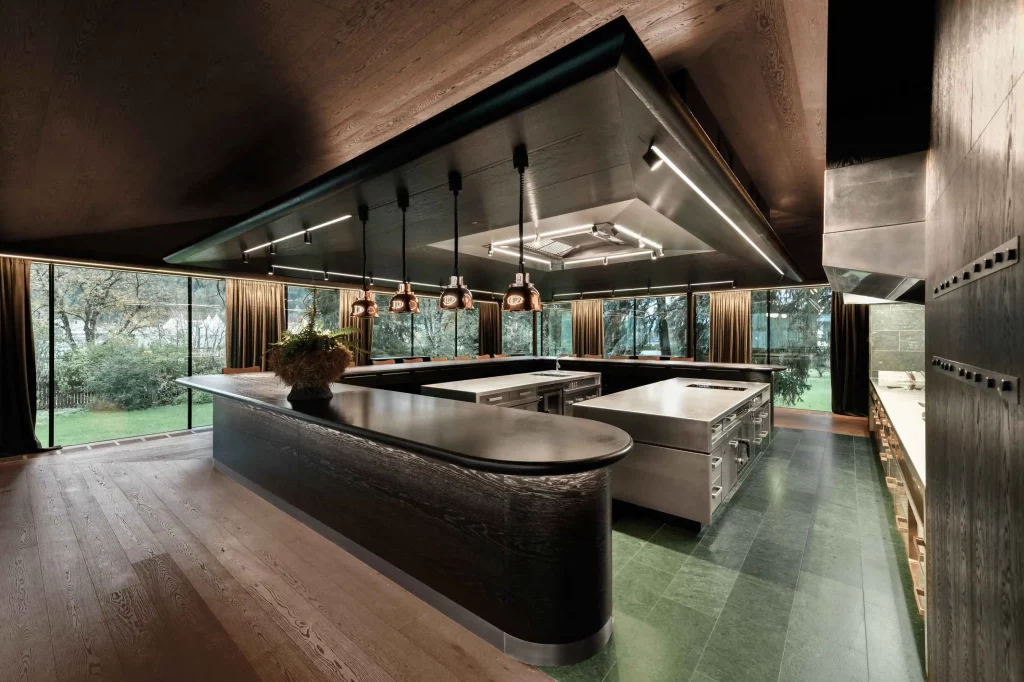
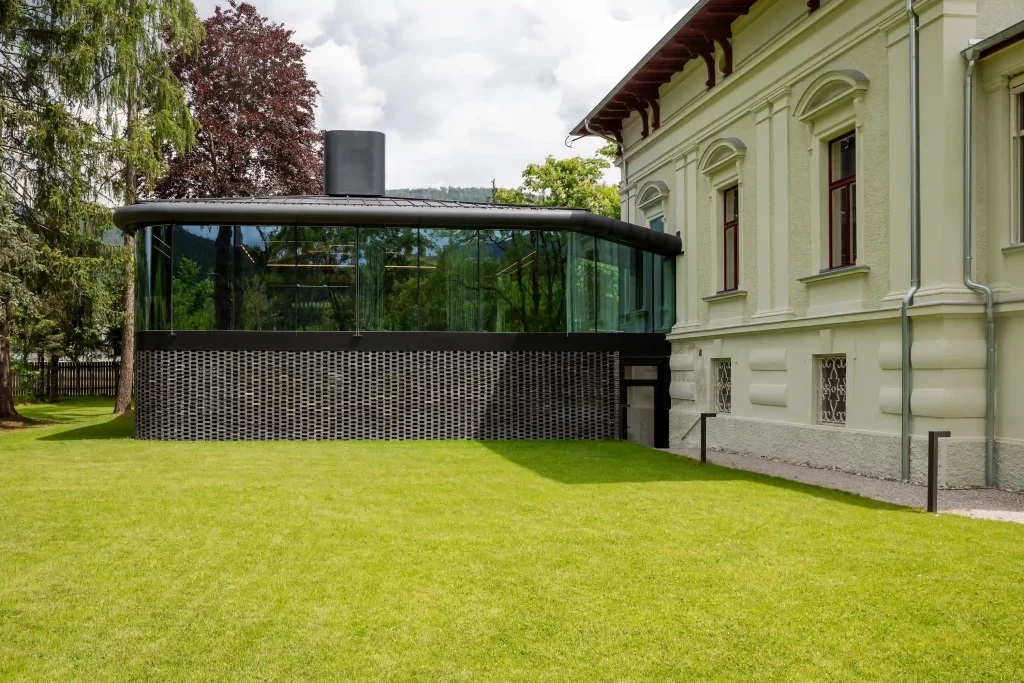
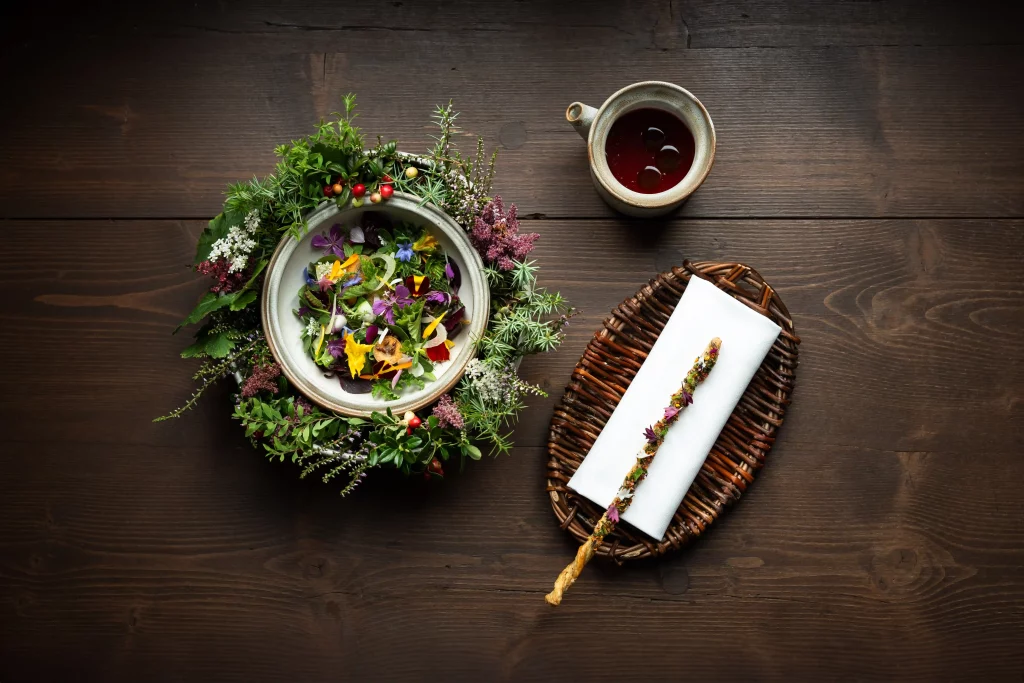
Atelier Moessmer Norbert Niederkofler, Dolomites, Italy
The garden here isn’t a garden. It’s the whole mountain. We arrange a day with the foragers and farmers who supply Niederkofler’s kitchen, then the table that evening. You walk alpine meadows with people who’ve been gathering herbs on these slopes since childhood. They show you wild garlic, spruce tips, things that grow in crevices between rocks. You start to feel what “local” actually means when you can’t import anything.
For years, Niederkofler brought in foie gras, lobster, and olive oil from outside South Tyrol. Then he stopped. Cook the Mountain: nothing that doesn’t grow, graze, swim, or forage within the Alpine terroir. No olive oil (doesn’t grow up there). No citrus. No imported anything. Three Michelin stars and the Green Star, ranked #20 World’s 50 Best 2025. Without lemons, he ferments plums and uses sea buckthorn. Without olive oil, butter and animal fats become the canvas.
The restaurant is inside a 19th-century villa which was once the executive villa of the Moessmer textile factory. In warmer months, dinner starts outside in the garden: spruce tartlets, waffles with fish lard, eaten standing among the plants while the mountain air bites at your sleeves. After a day spent understanding the constraints, every course makes sense. You’re not wondering why there’s no lemon. You’re understanding why there doesn’t need to be.
Spring in the Dolomites is a slow thaw: the first alpine herbs pushing through cold soil while the peaks are still streaked with snow.
Niko Romito, Reale / Casadonna, Abruzzo, Italy
Three hours south of Rome, you turn off the main road and climb toward a white building standing alone on a hilltop. A 16th-century monastery. No signs. No noise. Just vineyards, orchards, and a stillness that takes a moment to adjust to.
You stay on the estate (we handle the booking, the timing, the room with the right view), and before dinner you walk the grounds. Six hectares: wild gardens, forests, ten species of bees producing mountain honey, a vineyard of Pecorino grapes (also a local white grape variety, not just a cheese) grown at 860 metres, producing the estate’s own sharp mountain wine. Ten guest rooms. Cristiana Romito runs the front of house. You taste the honey. You see where the wine comes from. You start to understand the scale of restraint.
Niko Romito is self-taught. He doesn’t add. He subtracts. Six months working on the essence of a single cauliflower, stripping everything until what remains is the purest expression of the ingredient. On the plate, almost nothing. In the mouth, it detonates. Three Michelin stars since 2013.
By the time you sit down for dinner, the minimalism makes sense. Every ingredient has a place you’ve already visited. And the breakfast the next morning, served overlooking the garden and the Sangro valley, is quietly famous: fresh bread from Romito’s laboratory, homemade jams, mountain honey, artisan cheeses.
The Soil Beneath the Stars
Six gardens. Six ways of working. One thing in common: the meal starts long before you sit down. And when you’ve seen the garden first, you don’t eat the same way.
That’s the experience we build. Not a food tour. A journey where you visit the garden before the meal, meet the people who tend it, and sit down to eat with a completely different understanding of what’s on your plate.
Spring won’t wait. Neither will these tables.
Which garden feels like yours?