

Visit Greece : Eternal Myths, Living Traditions and Mediterranean Flavors
Where Myths Refuse to Fade
Forget the guidebooks. Greece doesn’t care what you came to see, it has its own tempo, and you either surrender or miss the point. The sea here doesn’t shimmer politely; it blinds you, demanding attention. Cicadas don’t sing, they scream their presence like a rock band of eternity. Even the air seems audacious, mixing salt, grilled octopus, and wild thyme until you can’t tell where appetite ends and desire begins. At dawn, a fisherman knots his net with the patience of someone who knows the sea always wins. In the mountains, a priest strikes a match and dares the gods to listen. Children run barefoot across marble streets that outlasted empires. And when the bouzouki starts, you don’t “watch”, you either dance or you don’t belong. Greece doesn’t perform for you; it invites you to be part of it.
+110
Archaeological Museums
13
Wine Regions
20
UNESCO World Heritage Site
6,000
Islands and Islets
Meet Greece
Luxury here isn’t silk curtains and hushed voices. It’s raw, unpredictable, and often a little messy, in the best way. You’ll be pulled into a village celebration where wine spills faster than it’s poured. You’ll find yourself sitting on a terrace at 2 a.m., arguing philosophy with strangers who suddenly feel like old friends. Greece offers you intensity: the sting of strong coffee, the salt that lingers on your skin after a midnight swim, the laughter that erupts when language fails but hands and eyes say enough. Philoxenia — that sacred duty of hospitality — drags you into its embrace whether you’re ready or not.
A Journey Through Greek Landscapes
Athens is where every journey begins. To walk here is not only to see a modern capital but to trace the steps of the world’s greatest minds — Socrates debating in the Agora, Plato teaching in his Academy, Aristotle walking with his students in the Lyceum. The Acropolis still looms above the city, yet daily life never pauses for it. Cafés spill into the streets, scooters weave through narrow lanes, and conversations grow louder as the night deepens. The ancient and the modern don’t compete here, they coexist.
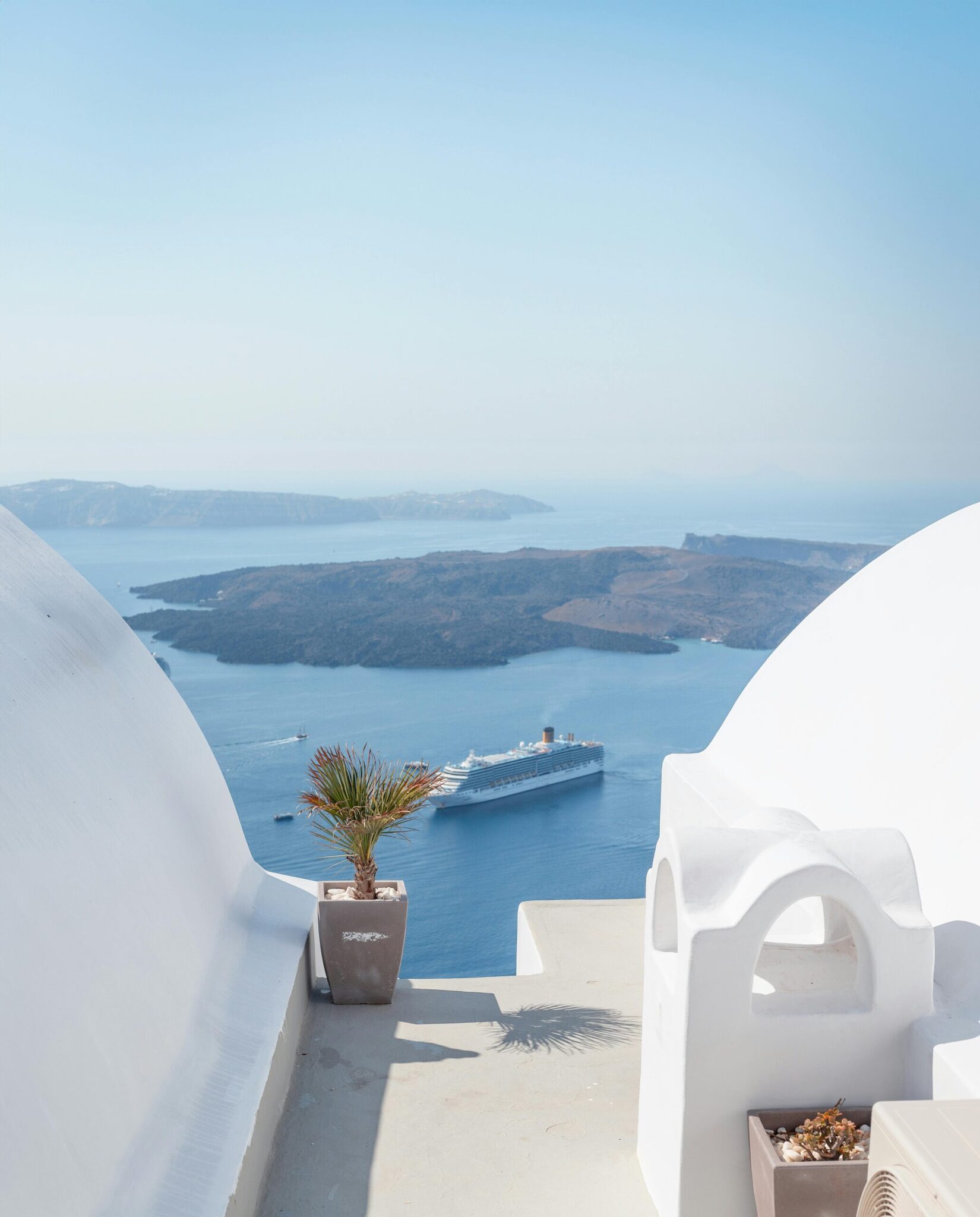
Out on the Aegean, the islands scatter like jewels across the water. Santorini is the most dazzling: black cliffs, white houses, blue domes, all set against the volcanic caldera. It’s a place that feels sculpted rather than built, where sunsets gather whole crowds into silence. There is an island where luxury yachts crowd turquoise bays by day and music spills into the alleys by night — Mykonos, restless and cosmopolitan, but still grounded in chapels and fishing boats that outlast the parties. Further south, a vast land stretches like its own republic. Crete carries myths in its palaces and raw power in its landscapes: gorges that slice through mountains, harbors framed by Venetian facades, markets alive with olives, cheeses, and raki poured without hesitation.
On another shore, sunlight glitters over medieval walls and stone streets. Inside, the Palace of the Grand Masters still holds its ground, while outside, bays like Lindos shimmer below. This is Rhodes, where the line between holiday and history blurs. And at the edge of the Ionian, a greener rhythm takes over. Corfu, with its Venetian balconies, French arcades, and English gardens, feels aristocratic yet deeply Greek. Cypress and olive trees sweep down to hidden coves, while kumquat liqueur is offered with a smile that makes it impossible to refuse. Greece is a mosaic, not a single picture. Every island, every valley, every city offers a new tone.


Living Traditions: Culture, Craft, and Celebration
The ruins may tell the history, but Greece’s soul survives in the rituals that continue today. On Easter night, thousands of candles ignite across the country, church bells clash through the dark, and fireworks scatter over towns , a celebration as powerful as anything in antiquity. In summer, village festivals (panigyria) bring everyone together, from young dancers circling to bouzouki music to elders pouring wine at long wooden tables. For those who prefer intimacy, doors open quietly. In Athens, a Byzantine icon painter welcomes visitors into his atelier, explaining how pigments are still mixed from minerals as they were centuries ago. In Crete, a family goldsmith demonstrates filigree techniques passed down for generations, while in Rethymno, a lyra-maker strings an instrument by hand and plays a melody before your eyes. These are not tourist shows, but living traditions, offered privately to guests who come with curiosity and respect.
Gastronomy carries the same weight of heritage. Michelin-starred chefs in Athens and Santorini reinterpret ancient recipes recorded by philosophers like Archestratus, pairing them with wines that speak of volcanic soil or mountain air. Private dining experiences can be arranged in historic estates, where symposium-style meals echo Plato’s Athens. Monastic products — wines, honey, and herbs cultivated by Orthodox communities — inspire contemporary chefs who bring centuries of knowledge into today’s kitchens. For discerning travelers, the instinct translates into experiences that feel personal: invitations to family feasts, reserved tables at local festivals, or after-hours access to cultural institutions like the Acropolis Museum. Afternoons pause for mesimeri, when shutters close, streets fall silent, and the country seems to hold its breath. Culture in Greece does not stay locked in display cases. It spills into kitchens, workshops, and theatres still in use. In Epidaurus, the ancient theatre continues to host performances under the stars, with prime seating available for those who wish to witness drama as it was meant to be seen. To experience Greece is not to observe at a distance, it is to be absorbed into a living tradition that refuses to fade.
Art, Time, and Memory: Greece’s Enduring Legacy
In Athens, the Parthenon is not just a ruin; it is marble turned to light, its columns shifting color as the sun arcs across the sky. With a private archaeologist at your side, an inscription becomes a voice, and a fragment of sculpture reveals a story that never left the stone. After hours at the Acropolis Museum, the statues glow in silence, their presence almost human. Further north, Thessaloniki carries the brilliance of Byzantium. Inside its churches, golden mosaics shimmer like constellations, while the city outside hums with youthful energy and cutting-edge gastronomy. In Nafplio, Greece’s first capital, neoclassical facades line quiet streets that now shelter small galleries and boutiques. It is a city where Venetian fortresses look down on contemporary art shows.
On Hydra, where cars are forbidden and the rhythm slows to donkeys’ steps, artists have long sought refuge. Leonard Cohen once wrote from a whitewashed house here, and today the island’s galleries still draw collectors in search of contemporary Greek voices. In Epirus, the lakeside city of Ioannina reveals a different artistry: intricate silver filigree, Ottoman echoes, and monasteries reflected in still waters. Elsewhere, Crete dazzles with the vivid frescoes of Knossos, while Rhodes preserves medieval mosaics under sunlight that bounces from stone to sea. And high above, in Meteora, monasteries cling to impossible cliffs, their frescoes glowing with candlelight while the horizon dissolves into mist. Greece is not a museum. It is texture: the grain of ancient marble, the shimmer of icons, the silence of frescoes, the shock of modern stages. It is art that continues to breathe, memory that insists on being felt, and time that refuses to stay buried.

A Mediterranean Table Set for Centuries
To taste Greece is to understand its soul. In Athens, chefs reinterpret recipes passed down for centuries, plating dolmades and lamb with the precision of haute cuisine. But step into the city’s markets, and the essence is raw: olives in shades of green and black, herbs so fragrant they perfume the air, figs offered with a nod from vendors who know they will be gone by noon. Further north, Thessaloniki claims its title as Greece’s culinary capital. Here, Byzantine, Ottoman, and Jewish legacies merge on the plate: bougatsa filled with cream, spiced soutzouk sausages, and delicate seafood pulled straight from the Thermaic Gulf. Michelin-starred chefs have begun to echo this diversity, creating menus that travel from Anatolia to the Balkans in a single evening.
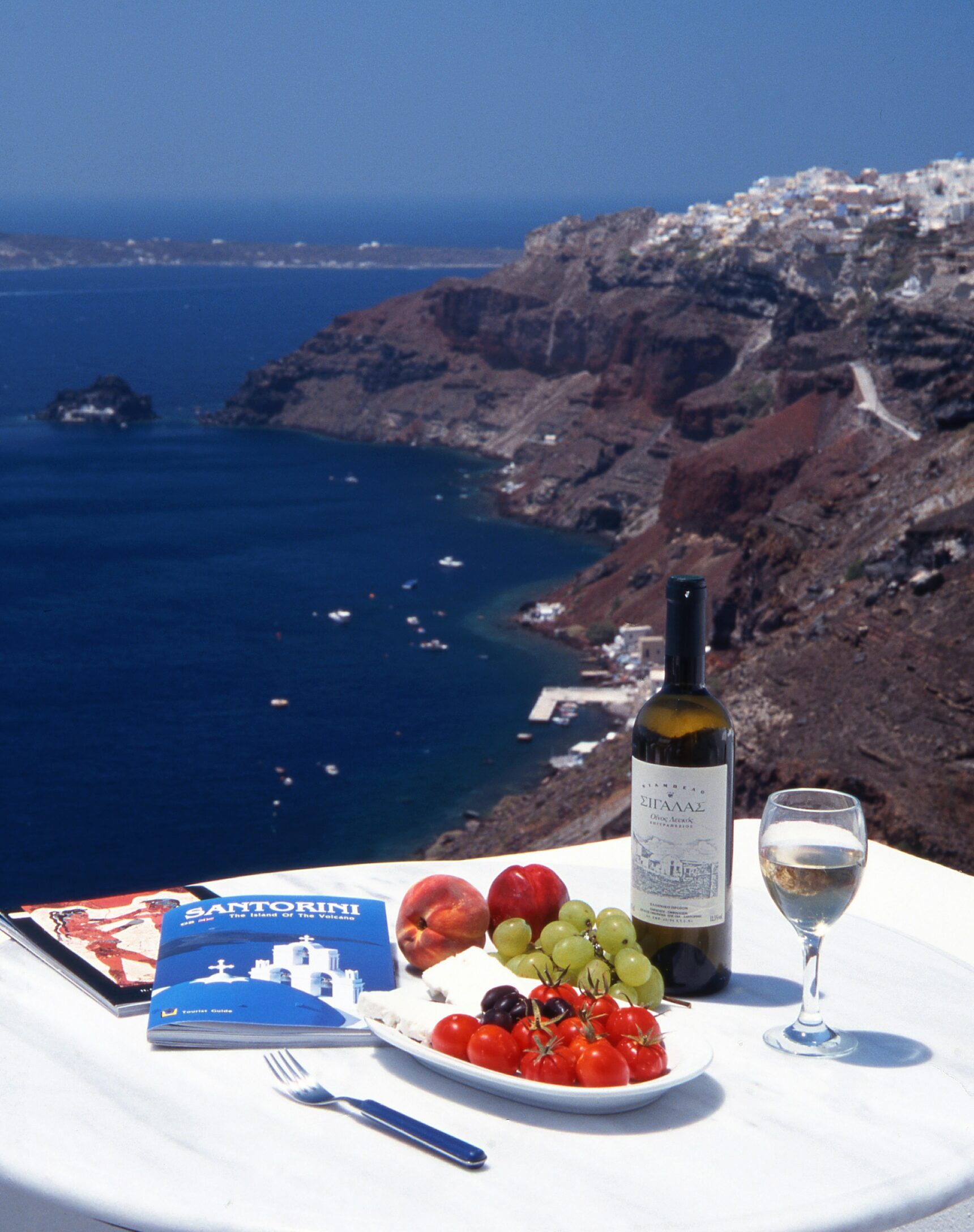
In Crete, food still begins at the farm. Markets overflow with local cheeses ( graviera, mizithra ) and honey infused with thyme from the mountains. Raki is poured as generously as stories, and olive oil, thick and golden, is treated not as a condiment but as a lifeblood. A private tasting in a traditional village, with recipes prepared by women whose families have cooked the same way for centuries, offers a rare intimacy no Michelin star can replicate. The islands each tell their own tale. On Santorini, volcanic soil gives rise to Assyrtiko, a white wine as sharp and mineral as the cliffs it grows on. Paired with sun-dried tomatoes and capers, it becomes a signature of the island. Across the Aegean in Symi, tavernas serve shrimp so sweet they require nothing more than lemon and a glass of ouzo. Corfu surprises with Venetian echoes: kumquat liqueur, sofrito, and pastitsada — a noble cuisine shaped by centuries of empire.
Then there is the Peloponnese, where vineyards in Nemea and Mantinia have brought Agiorgitiko and Moschofilero into the spotlight. In Naoussa and Drama, Xinomavro matures into bottles prized by collectors worldwide. The renaissance of Greek wine is not a passing trend but a revelation: terroirs that once supplied amphorae for ancient symposiums now produce vintages that sit alongside Bordeaux and Barolo on the world’s finest tables. At its heart, Greek gastronomy is an expression of Mediterranean cuisine — fresh, seasonal, rooted in olive oil, herbs, grains, and seafood, yet constantly reinvented by regional identities. It is a table that unites the shores of the sea, while still remaining unmistakably Greek.

Wine: Greece’s Liquid Legacy
Greece’s relationship with wine is as old as its myths, yet today it speaks a new language of prestige. In Santorini, vines older than empires twist low against volcanic winds, producing Assyrtiko whites of piercing minerality and Vinsanto sweet wines that age for decades in cask. A private tasting on a caldera terrace reveals bottles so rare they rarely leave the island, each sip carrying the force of land shaped by fire. Further south, the Peloponnese rolls out its hills of Nemea, where Agiorgitiko reds, known as the “blood of Hercules”, rival the world’s most celebrated vintages in depth and longevity. Here, an afternoon among the vines easily extends into evening with a vertical tasting of iconic blends followed by dinner in a neoclassical estate in Nafplio.
In the north, Xinomavro reigns over the slopes of Naoussa and Amyndeon, producing age-worthy reds often compared to Nebbiolo. Tastings at estates like Alpha or Kir-Yianni are not simply technical encounters but personal ones: a winemaker guiding you through library vintages while mountains rise behind the vineyards, sometimes accompanied by meals of local delicacies prepared just for you.
On Crete, ancient grapes like Vidiano, Dafni, and Liatiko are given modern voices, poured alongside farm-to-table meals where wild herbs, cheeses, and slow-roasted lamb mirror the island’s rugged refinement. Visitors may find themselves tasting cult bottlings released only in tiny quantities or exploring Minoan wine-pressing sites before sitting down to a private picnic in the vines. Some estates even invite you to arrive by helicopter or continue the journey by yacht, a sommelier at your side as the coastline glows in the dusk. What unites these regions is not abundance but exclusivity: a handful of wines that have earned international accolades — from Decanter’s Best in Show to perfect scores in global rankings and experiences that can only be lived in situ.
Lifestyle & Islands: Where Time Slows, and Nights Never End
In Greece, lifestyle is measured less by clocks than by rhythms. Mornings belong to the sea, afternoons to shaded terraces, and evenings to the music of cicadas or the echo of waves against the hull of a yacht. To move between islands is not simply to travel, it is to shift into a new cadence of life. Patmos is one of those rare places where silence itself feels sacred. Known as the island of Revelation, it blends spiritual gravity with understated elegance. Private villas overlook secluded bays, while centuries-old monasteries remind you that luxury here begins with stillness. Further into the Cyclades, Folegandros whispers to those who seek intimacy over spectacle. Its cliffside Chora glows white under the moon, tavernas seat only a handful of guests, and paths lead to beaches where you may be the only visitor.
Milos offers something entirely different, a geology of drama. Volcanic cliffs plunge into turquoise waters, beaches shimmer in improbable shades of white, red, and black, and many of the most breathtaking coves are accessible only by private boat. Astypalea, shaped like a butterfly, has recently drawn attention for its blend of tradition and modern design. Restored windmills crown the Chora, while new architectural resorts carve elegance into the island’s raw landscape. Of course, the familiar icons remain irresistible. Mykonos continues to pulse with cosmopolitan glamour, yet still offers quiet chapels and fishermen’s boats that outlast the parties. Santorini remains sculpted in volcanic drama, with sunsets that gather whole crowds into silence. The Greek islands are not simply destinations but stages. Imagine private dinners in monasteries closed to the public, yacht journeys tracing coastlines that glow silver under the moon, curator-led visits to island museums after hours.
To travel through Greece is to realize that no itinerary can ever contain it. The islands, the mountains, the cities, they are fragments of a story that has been written and rewritten for millennia. Greece does not ask you to consume it. It challenges you to engage with it. And if you surrender, even briefly, you carry more than memories home. You inherit a fragment of its legacy, something to hold, refine, and return to. The question is: Will you listen to the call of Greece?