

A luxury birthday in Bordeaux for a Brazilian CEO who had dreamed of the region for years — seventeen guests, seven days, and a week designed to turn one man’s imagination into a memory that belonged to everyone.
A Childhood Dream of Bordeaux
For one luxury birthday in Bordeaux, the starting point was not a venue, a château, or a wine list. It was a childhood dream.
The guest was Brazilian, a founder and CEO whose professional life had been built around movement, cities and shared access. But for this celebration, the movement was more inward. Bordeaux had lived in his imagination for years — not as a vague destination, but as a place he had long wanted to reach properly: through its wines, its rituals, its river, its châteaux, its names spoken almost like landmarks.
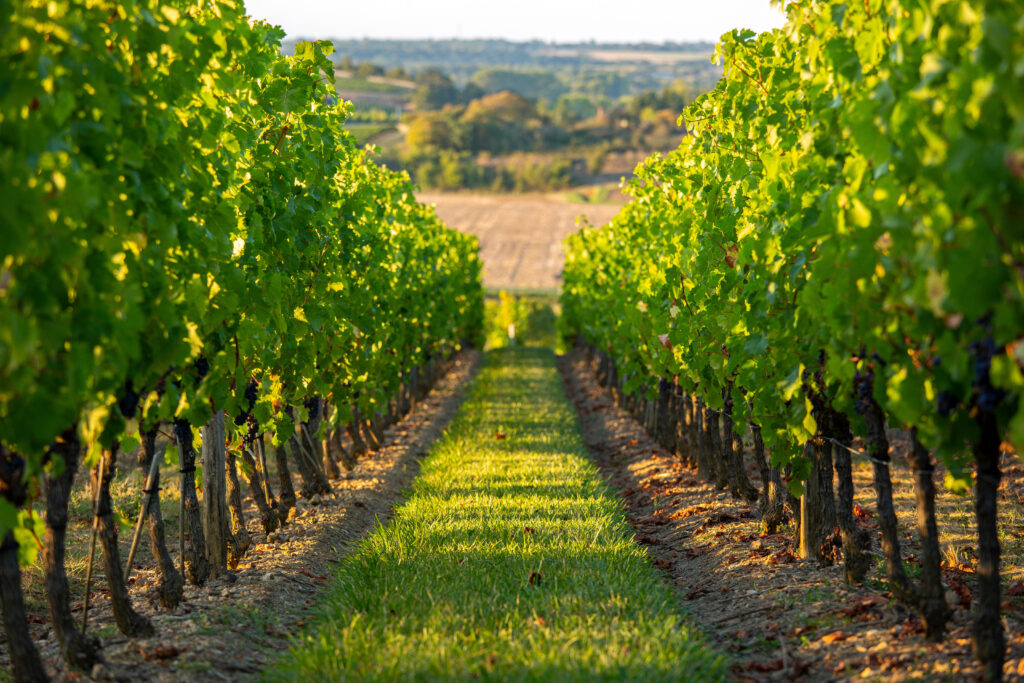
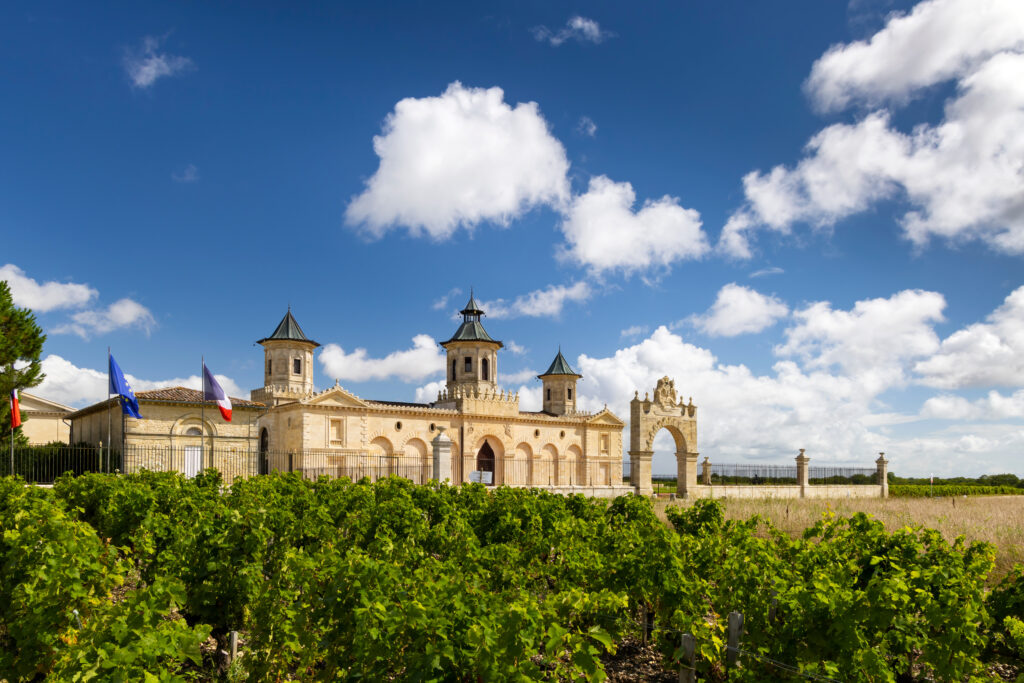
He came with sixteen guests. That number mattered. It was intimate enough for the celebration to remain personal, but large enough to contain several kinds of travelers. Some were deeply interested in wine. Others were not. Some wanted to understand the Médoc, the classifications, the estates, the quiet codes of great Bordeaux. Others wanted beauty, pleasure, friendship, movement: a spa afternoon, a boat, oysters, a view, a dinner that felt festive rather than educational.
The challenge was to honor his dream without making everyone else a spectator of it. So the week had to breathe.
Wine would be everywhere, but not always in the same form. Sometimes it would be serious, almost ceremonial. Sometimes it would become more playful: a blending workshop, a countryside lunch, a glass poured as an aperitif, a conversation rather than a lesson. Sometimes it would step aside entirely and let Bordeaux reveal itself through another door: the river, the city, the Bassin d’Arcachon, Cap Ferret, the Dune du Pilat.
That balance was the heart of the celebration. Because a dream can become heavy if everyone is asked to carry it in the same way.
Making the Wine World Available to Everyone
For him, the great wine moments had to matter. They could not be decorative. There is a particular emotion in watching someone arrive at a place he has imagined for so long. The first cellar is not only a cellar. The first glass is not only a tasting. It is the moment when an inner image, kept alive for years, finally meets stone, silence, oak, and the cool breath of a real place — the same cellars that produced the legendary vintages he had studied from across an ocean.
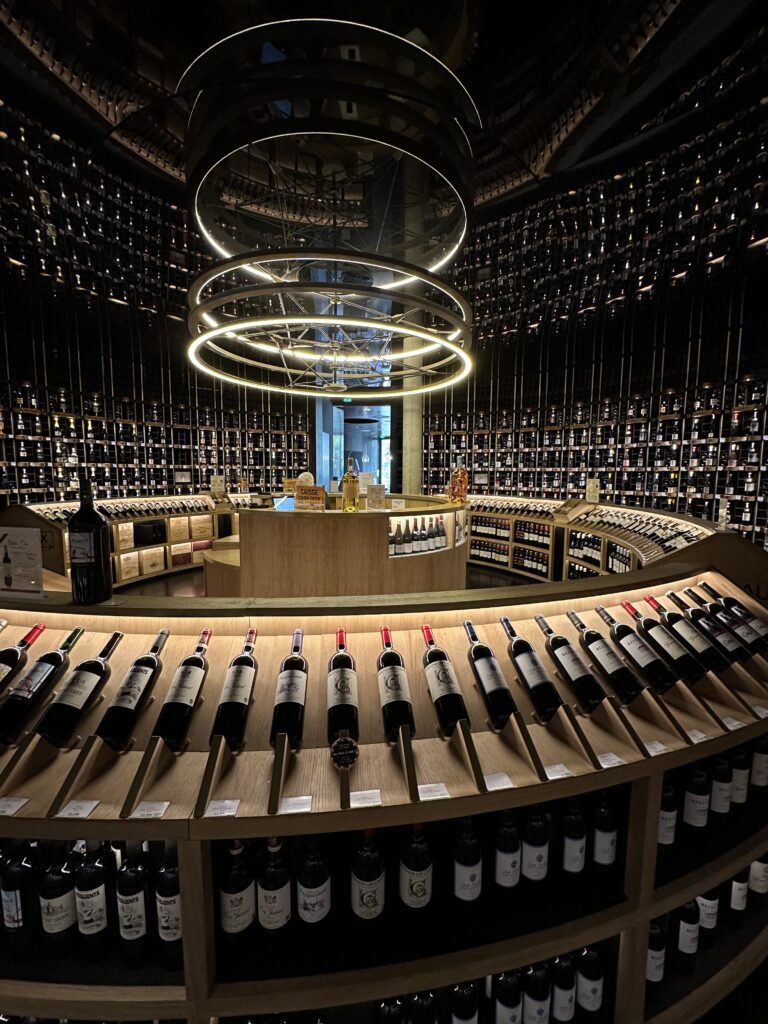
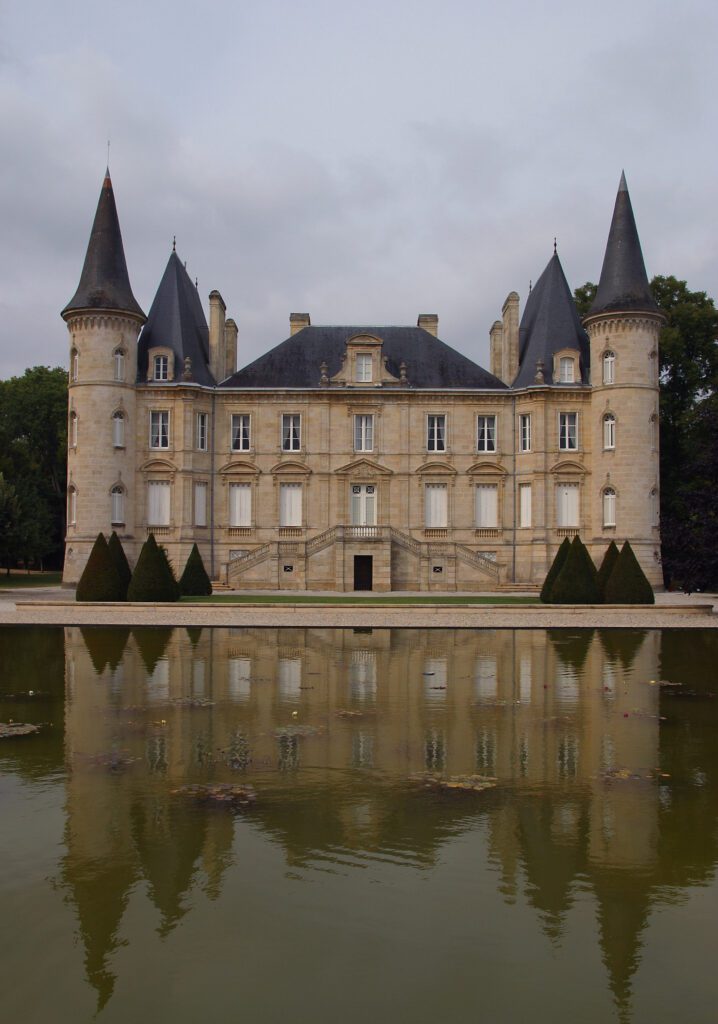
But Bordeaux has codes. Its beauty has gates. Its wines have hierarchies. Its châteaux have a way of making even pleasure feel precise. For those who love wine, that precision can be thrilling. For others, it can become a wall. So the wall had to become a door.
The Blending Workshop: When Wine Becomes a Gesture
A blending workshop did exactly that. Suddenly, wine was no longer something to admire from the outside. It became a gesture. A decision. A little more structure, a little more softness, a shift in balance, a glass that changed because someone dared to touch the invisible architecture of it. The wine lovers could go deep. The others could laugh, try, adjust, disagree, understand with their hands before they understood with words.
That is often where a celebration succeeds. Not when everyone knows the same things. When everyone is given a way in.
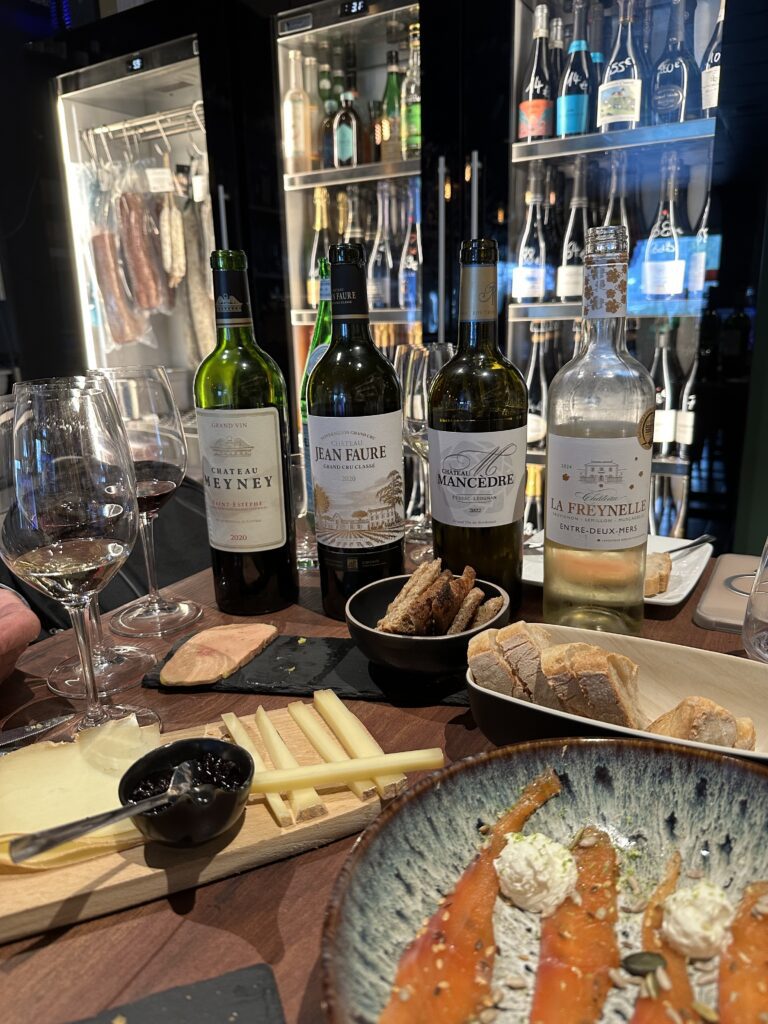
The River, the Basin, and the Open Sky
The river gave them another way in. On the Gironde, Bordeaux loosened its collar. The region stopped being only a procession of prestigious doors and became air, water, fortified stone, movement. A boat table. A different horizon. A place where conversation could drift without needing to prove anything. For a Brazilian group, this mattered: the joy needed space, not only protocol.
Cap Ferret: Salt, Oysters, and Another Bordeaux
Then came the Bassin. Cap Ferret changed the taste of the celebration. Traditional pinasses, oysters, white wine, the cabanes tchanquées in the distance — suddenly Bordeaux was no longer speaking in oak and classification, but in salt, tide, breeze, and appetite. The group could belong to the place without needing to decode it.
The Dune du Pilat: Where Formality Disappears
Later, bicycles in Arcachon. The villas of the Ville d’Hiver. Then the Dune du Pilat.
Sixteen people at the foot of the dune. The day already full. Sand entering the shoes. Some climbing faster, some stopping, some laughing, some pretending the effort was nothing. With every step, the formality of the week softened. No château protocol there. No tasting vocabulary. Just the body, the sand, the wind, and the shared stubbornness of reaching the top.
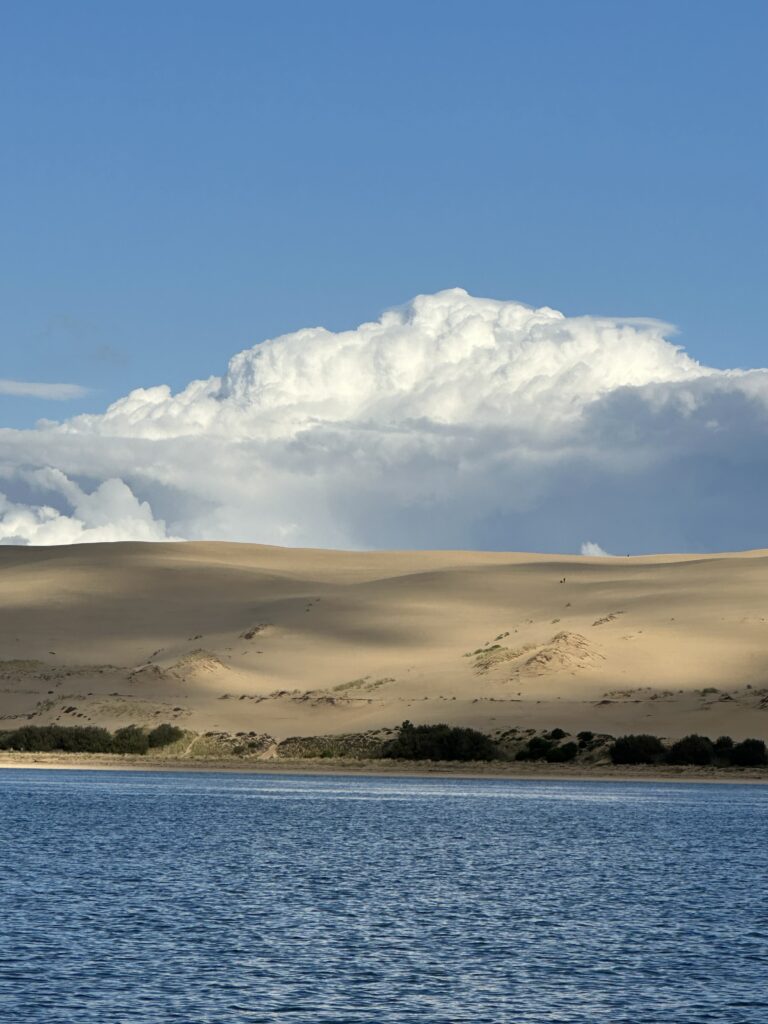
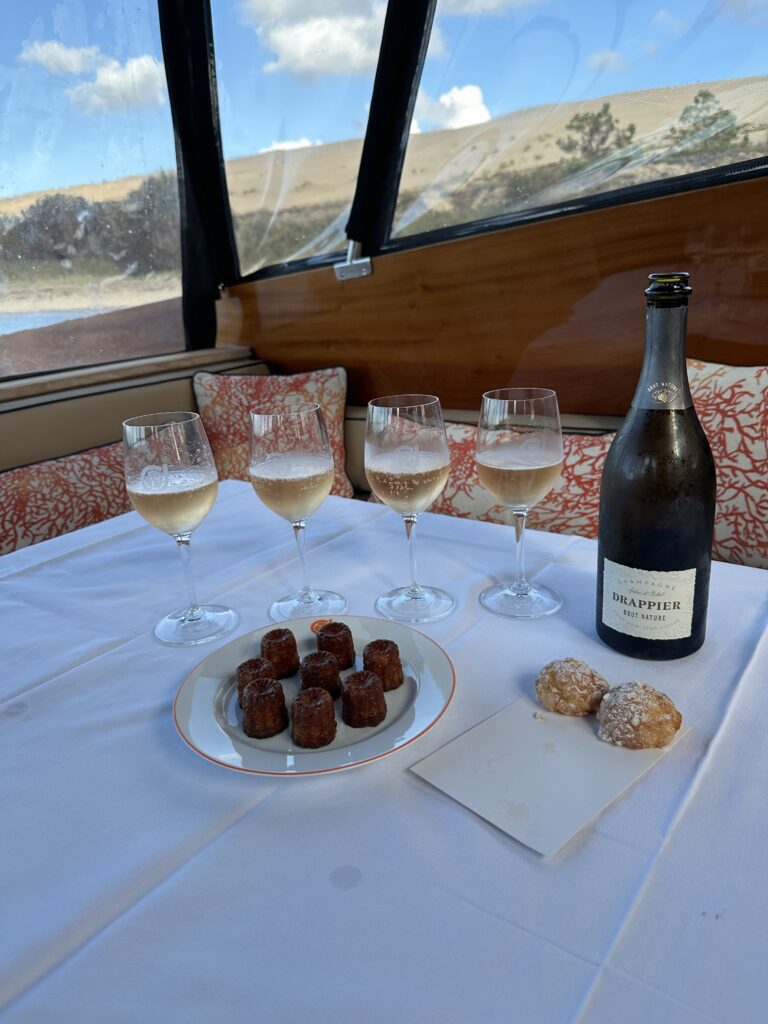
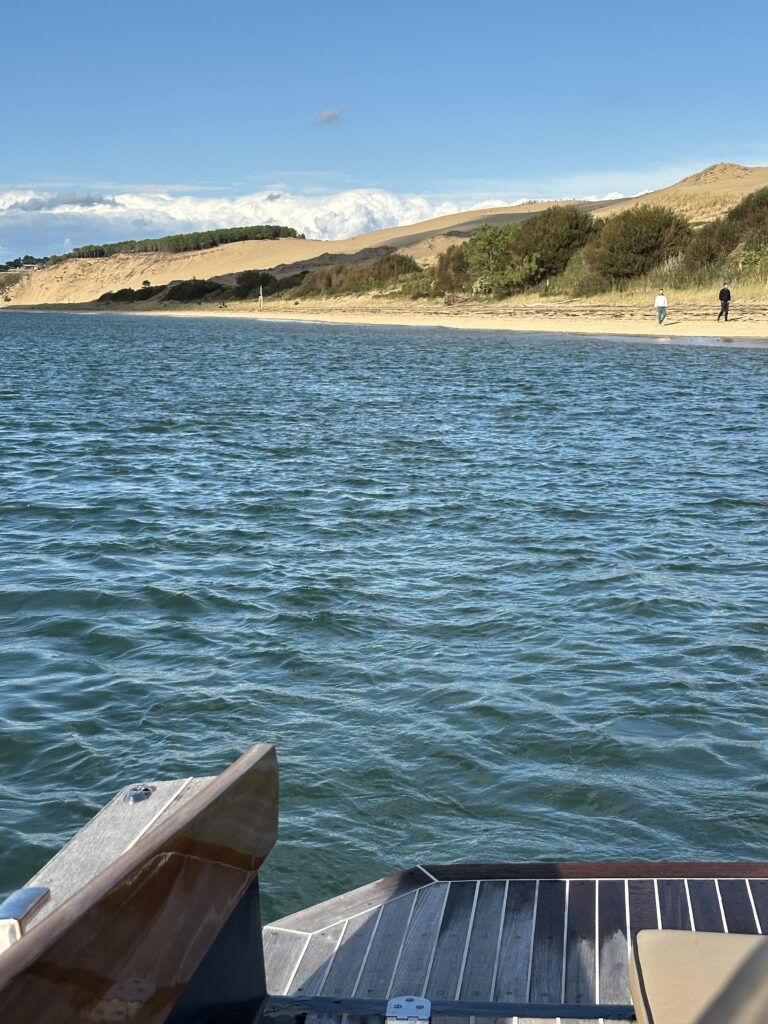
And then the view. Forest behind. Ocean ahead. The Bassin below. For a few seconds, the group did not need to speak.
For a man whose dream was Bordeaux, this may have been the unexpected gift: discovering that the region was not only made of labels and cellars, but of scale, wind, and open sky. The festive dinner that followed did not have to manufacture emotion. It had inherited it. Everyone arrived with the same light still in their eyes.
The Art of Cultural Translation
Holding all this together required more than planning. It required translation. A Brazilian celebration has its own pulse: warmth, spontaneity, appetite for connection, sudden ideas, laughter that arrives before the schedule has made room for it. The French world of great wine can be magnificent, but it is not always built for improvisation. Appointments are precise. Protocol matters. Doors open because the approach has been prepared properly.
The tour leader’s role was essential. Not simply to accompany, but to hold the temperature of the week. To protect the structure without killing the joy. To make spontaneity feel welcome without letting the day unravel. To reassure the French side when the group’s energy became more fluid than expected. To keep the Brazilian warmth intact in places that sometimes prefer restraint. Someone had to hold both worlds. That was the quiet architecture behind the success.
The guest’s dream had to remain central. His friends had to feel included. The wine moments had to be worthy. The non-wine moments had to be equally alive. The week had to feel elevated, but never stiff; generous, but never shapeless.
By the end, Bordeaux had done what it needed to do. It had not only fulfilled a childhood dream. It had absorbed a Brazilian celebration and given it shape — through wine, river, oysters, bicycles, sand, cellars, long tables, and the kind of laughter that makes formal places soften.
Some birthdays are built around a person. This one was built around a dream. The real success was that, by the end, the dream no longer belonged only to him.