
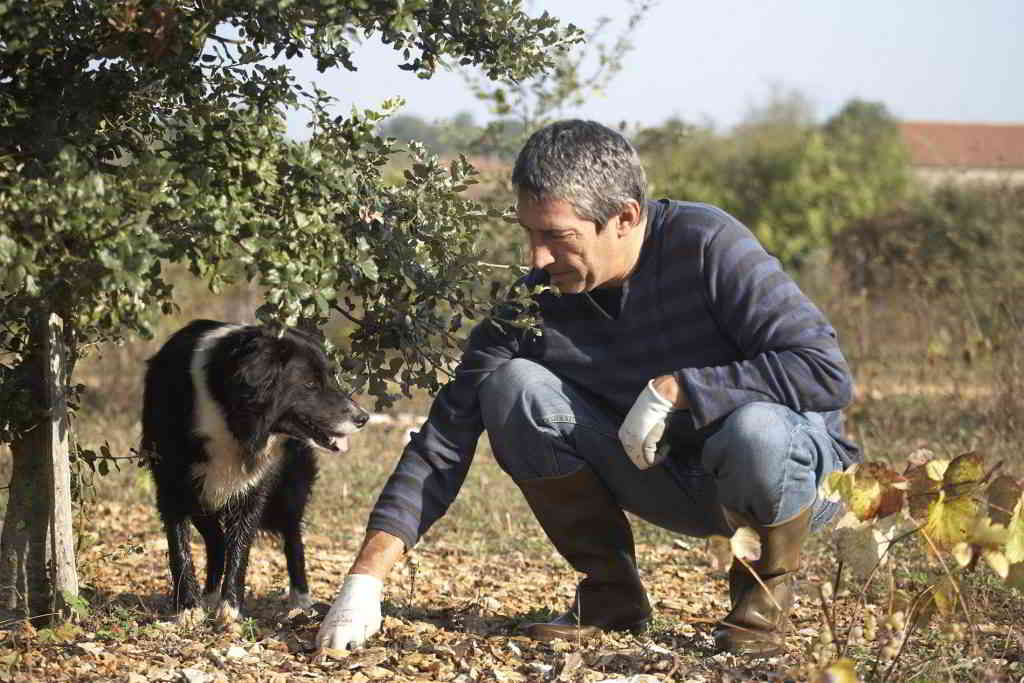
It’s 6 AM in the Périgord. The ground is hard with frost. Your guide a hunter who’s been working these forests for thirty years reads the soil like most people read a map. His dog, a Lagotto Romagnolo with a nose calibrated for one specific scent, quarters the oak grove methodically. You’re cold. Your boots are already muddy.
Three hours pass. You find nothing.
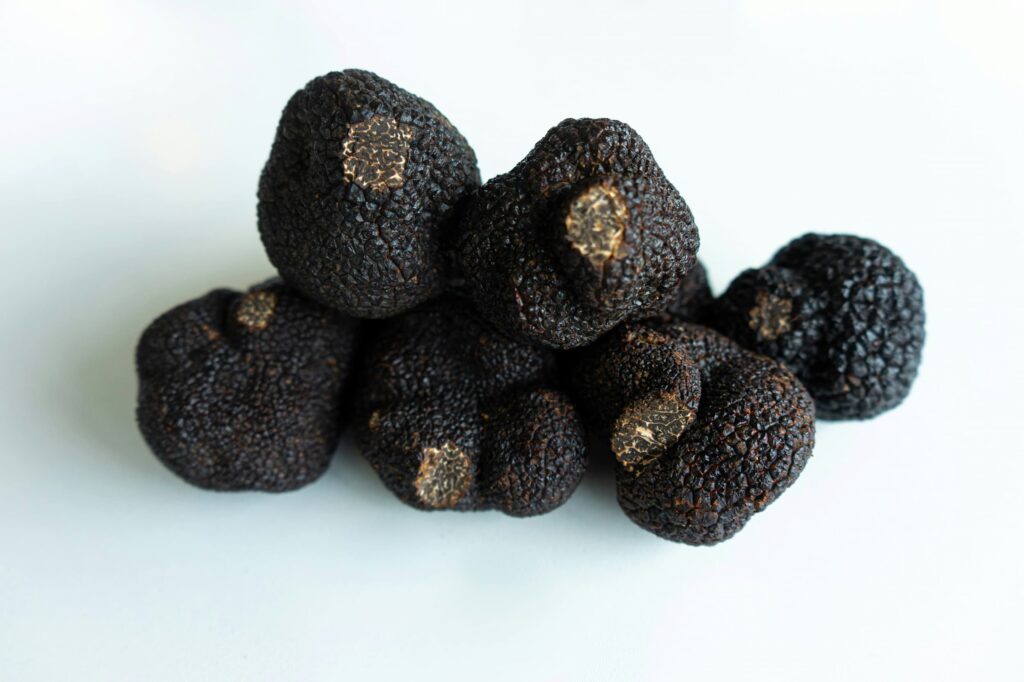
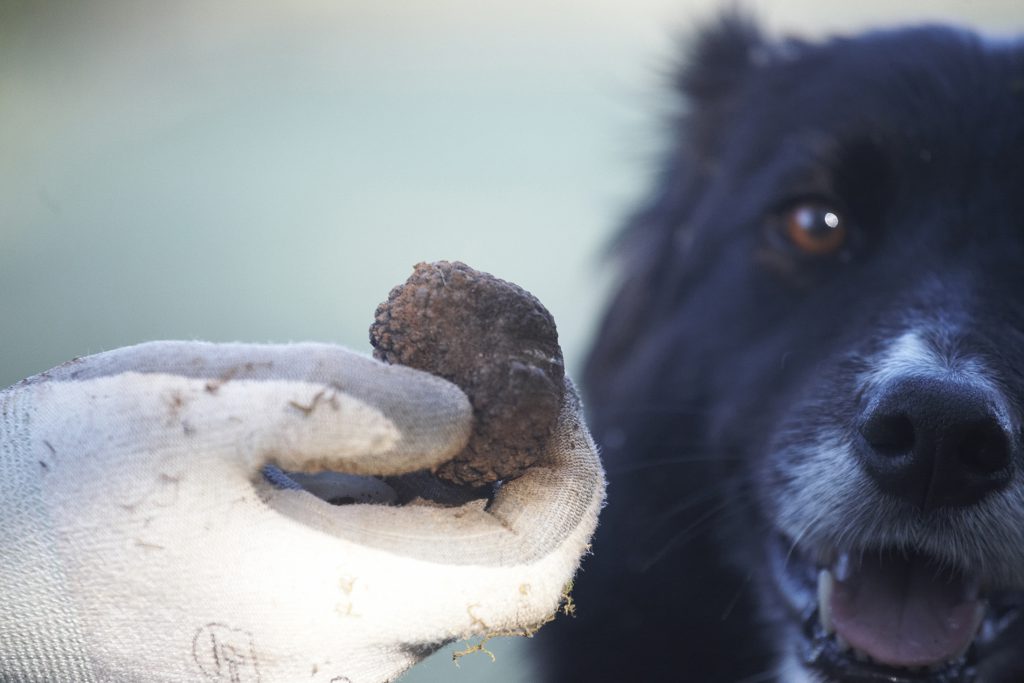
Then, on a slope facing southeast, the dog signals. Your guide digs carefully with a small spade, hand-sorting through dirt until a black, knobbly truffle the size of a walnut emerges. He brushes it clean, holds it to his nose, and nods. It smells like earth, yes but also like something older, deeper, almost mineral. This truffle is worth roughly $300. It took decades of knowledge to find it.
“Half the time, this is how it ends,” he says. “You work all morning and find nothing. But when you find one, you understand why people have been doing this for centuries.”
That’s truffle season in France. Not the version you see at festivals with crowds and photo opportunities. The real one.
Quick Guide: French Truffle Season 2024/2025
| Feature | Details |
| Peak Season | January – February (Best for hunting success) |
| Best Regions | Périgord (Dordogne) & Provence (Vaucluse) |
| Key Festivals | Sarlat (Jan 18-19, 2025), Richerenches (Sundays) |
| Our Services | Private Hunts & Tours, Chef dinners, VIP Market access |
Why Truffles Matter (And Why Most People Miss It)
When people think about truffles, they think about luxury. Expensive ingredient, fine dining, something to brag about. But that’s missing the actual story.
Black truffles diamants noirs are at the center of an entire regional culture in France. Some 20,000 specialist hunters work across the country. Families have been doing this for generations. The knowledge of how to find them, where they grow, why certain years fail and others flourish that’s not written down. It’s lived.
In the Périgord, an estimated 30 tonnes of black truffles are harvested annually. But “harvested” is the wrong word. They’re hunted. Searched for. Coaxed from the earth by people who’ve spent lifetimes learning to read a landscape. Most of France’s production about 80% comes from the Vaucluse in Provence, where limestone-rich soil and extensive oak forests create conditions where these fungi mysteriously thrive. But the hunters there will tell you: they still don’t fully understand why.
That uncertainty that not-knowing is precisely what draws serious people to truffle season. It’s honest work in a world increasingly full of packaged experiences.
The Two Truffle Regions: Different Landscapes, Different Hunts
1. Périgord: The Landscape of Tradition
The Dordogne’s Périgord region is where black truffle culture was born. Walk through the oak and hazelnut forests here, and you’re walking through centuries of accumulated knowledge. The soil is clay-based, the landscape is gentle but deliberate, and the truffle hunters here move with the confidence of people who know exactly what they’re looking for.
A hunt in Périgord typically begins before dawn. You meet your guide at their property usually a modest stone house on the edge of a working farm. Coffee is strong. The dog is already alert, sensing the day’s work. As you walk, your guide points out details most tourists never notice: the slight discoloration of soil where a truffle might be growing, the specific way certain oak trees affect the ground around them, frost patterns that indicate drainage.
The forests here are dense enough that you feel separated from the world. Just trees, soil, the sound of your boots, the dog working. The air smells like wet earth and pine. When you do find a truffle, it comes out of the ground almost reluctantly your guide works slowly, carefully, protecting both the fungus and the mycelium network beneath the soil that will produce next year’s harvest.
By mid-morning, you’re at the Sarlat market but not as a tourist. You’re there with someone who knows producers by name, who understands which harvests are worth attention. The market itself is controlled chaos: hunters, buyers, producers, chefs all negotiating quality and price. You learn to read a truffle the way professionals do assess the aroma, check for firmness, understand why price fluctuates based on specifics you couldn’t see before.
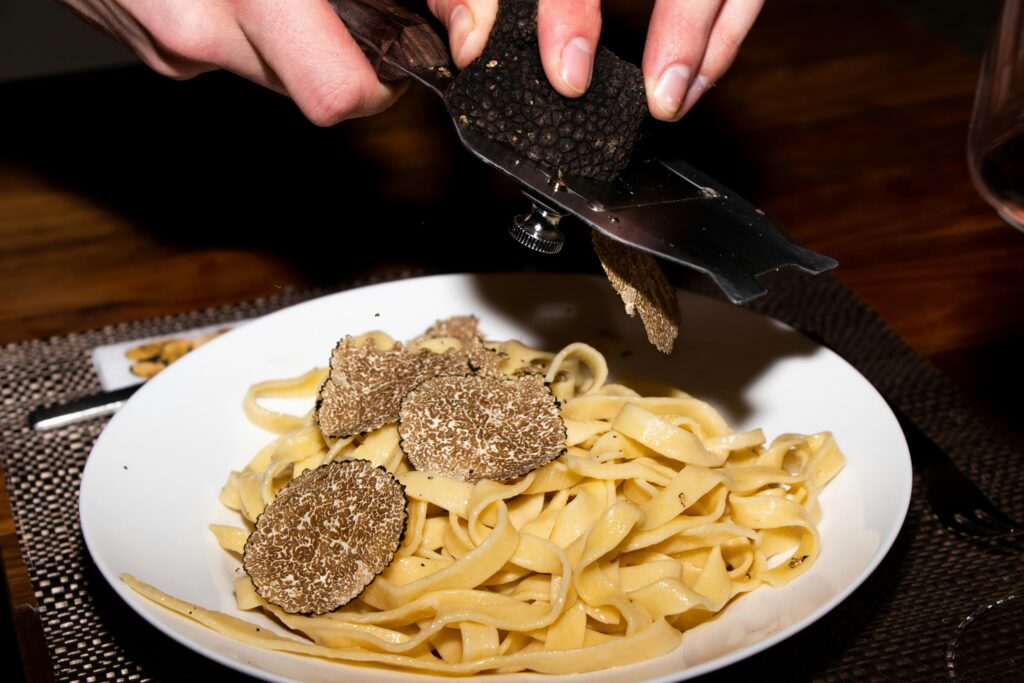
Afternoon brings dinner, typically at a restaurant where the chef sources from the same market you’ve been in. Le Vieux Logis in Trémolat (Michelin 1 star) is one option—chef Vincent Arnould cooks with restraint, allowing the truffle to be the focal point rather than the spectacle. But the real magic happens if you can arrange a private dinner at a producer’s home, where truffles are prepared the way they’ve been cooked for generations: simply, often just with pasta, butter, and nothing else.
2. Provence: The Landscape of Intensity
Drive south into Vaucluse, and the landscape shifts dramatically. The terrain becomes more dramatic limestone hills, drier air, vegetation that’s been shaped by Mediterranean sun. The truffle hunts here are more intense, partly because the stakes are higher (Provence produces significantly more truffles), partly because the landscape is more challenging.
Hunts in Provence often cover more ground. Your guide moves faster, the dog works with greater urgency. The soil is limestone-rich, sometimes hard-packed, and digging requires more effort. But when you find a truffle here, there’s often a sense that you’ve discovered something that wanted to stay hidden.
The markets are different too. Richerenches market which runs every Saturday through March is the truffle trade in its most authentic form. Cash only. Scales that look like they’re from another century. Negotiations conducted in rapid French between buyers and producers who’ve known each other for decades. There’s no tourism here; there’s just business, conducted the way it’s been conducted for generations.
Carpentras market, held Friday mornings, is slightly less intense but still deeply professional. You can purchase directly from producers, and the selection is extraordinary from small, intense specimens to larger truffles that fill an entire hand.
What a Truffle Season Actually Feels Like
It’s not romantic. It’s cold. Your hands get dirty. You spend hours finding nothing, then maybe find something that smells like the earth was keeping a secret and finally decided to tell it.
But that’s also why it matters.
The frost-covered grass crunches under your boots. The dog breathes in small clouds. Your guide moves methodically, reading the landscape with the kind of attention most people never give to anything. When the dog signals a specific pause, a shift in posture you kneel down and watch soil become revelation.
The truffle, when it emerges, is smaller than you’d expect. Knobbled. Black. It smells intensely of earth, minerals, something indefinably old. You hold it. Your guide nods or shakes his head based on what he smells you’re learning to read it too.
Then you drive to market, where that same truffle will be weighed on scales, negotiated over, and priced based on factors you’re only beginning to understand. By evening, it might be shaved over fresh pasta at a Michelin-starred table, its flavor filling your mouth with something you’ve never quite tasted before.
That progression from forest to market to table is the actual experience. Not any single moment. The whole arc.
The Festivals: What’s Real, What’s Tourism
Sarlat Truffle Festival (typically mid-January)
This is the most famous truffle event in France, and for good reason. The medieval town fills with hunters, producers, and chefs. Workshops run throughout the day. Cooking demonstrations are conducted by professionals who actually know what they’re doing. There’s a competitive hunt in surrounding forests where you can watch how experts work.
The Insider Difference: The difference between going to Sarlat on festival weekend and being part of Sarlat during festival season is significant. If you’re there as part of a curated private experience with access to producers before and after the crowds, private tastings, dinners that connect you to people who make this trade function it’s one thing. If you’re following a crowd through a public market, it’s another.
Richerenches Truffle Mass and Market (Third Sunday in January)
This is less tourism, more genuine ritual. The Brotherhood of the Knights of the Black Diamond conducts a ceremony blessing the truffle harvest. Robed members process outside the church. Afterward, the market opens, and actual trading happens. The atmosphere is solemn, respectful, rooted in centuries of tradition.
Carpentras Market (Fridays, November through March)
This is pure trade. No ceremony. Producers and buyers conducting business in the same way they’ve done it for decades. The truffle quality here is exceptional. The pace is fast. You can purchase directly, but you need to know what you’re looking for or be with someone who does.
Where Truffles Are Actually Understood: Three Essential Tables
Most restaurants use truffles as garnish or spectacle. A few understand them as ingredient with philosophy.
Le Vieux Logis (Trémolat, Michelin 1 Star)
Chef Vincent Arnould’s approach is restraint disguised as simplicity. A pasta course might feature fresh tagliatelle, butter, local truffle, and nothing else. The truffle isn’t performing; it’s being heard. The reason this matters: Arnould sources from the same Périgord producers you’ve been learning about. When you eat here after a morning hunt, you’re tasting directly what you’ve been searching for no intermediaries, no reinvention, just the product and the skill to let it be itself.
Chez Bruno (Lorgues, Michelin 1 Star)
This restaurant exists almost entirely within truffle season. The chef, Bruno Clément, has spent his career understanding how to cook with black truffles not just garnish them, but build entire menus around their possibilities. Every course assumes you want to taste truffle, then taste it again in a different context. It’s not subtle, but it’s not excess either. It’s immersion. If you want to spend an entire evening thinking about truffle in its many expressions, this is where that happens.
La Beaugravière (Mondragon, Michelin Recommended)
This is a family restaurant where classical Provençal cooking meets a lifetime of understanding how truffles work in that context. Less formal than the starred establishments, but no less skilled. If you want to understand how truffle integrates into daily Provençal cooking rather than featuring as the main event, this is the place.
What We Actually Provide (And What You Won’t Find Anywhere Else)
Here’s the distinction that matters. You can book a group truffle hunt through any number of platforms. You’ll join other tourists. You’ll hunt with someone who does this work to pay bills, not because they’ve chosen it across a lifetime.
What we build is different:
- Private hunts with working producers. Not someone who hunts part-time for tourists. Someone actively working Périgord or Provence forests, selling to chefs and markets, whose livelihood depends on knowing this landscape at genuine depth.
- Market access that’s real. You don’t just observe from the sidelines. You’re there with someone who knows the producers, who can explain what you’re seeing, who can help you understand quality and navigate negotiation if you want to purchase directly.
- Dinners that connect to your hunt. Not just “here’s a Michelin restaurant.” Rather: here’s the chef who buys from the market you visited this morning, or here’s the producer’s home kitchen where truffles are cooked the way his family has cooked them for generations.
- After-hours access. Private tastings at restaurants after service, conversations with chefs when they’re not in front of customers, time in producers’ homes without the performance of public hospitality.
- Real failure. Some mornings, you hunt and find nothing. That’s not a bug in our experience design it’s actually the point. You’re seeing truffle hunting as it actually exists, not as edited for tourism.
Périgord vs. Provence: How to Choose
| Aspect | Périgord | Provence |
| Hunt Difficulty | Moderate; forests are navigable | More intense; terrain is more challenging |
| Landscape | Gentle but deep; feels intimate | Dramatic; Mediterranean light and dryness |
| Market Culture | Long-established tradition; slower pace | Higher volume; faster, more intense trading |
| Restaurant Scene | Excellent; deeply rooted in region | Excellent; more Mediterranean approach |
| Why choose it? | You want to understand tradition deeply and at a slower pace. | You want intensity, drama, and immersion in the major market. |
When to Plan Your Visit
Truffle season runs officially from November through March, but the best experiences concentrate in December through February:
- December: Markets are active; crowds are minimal. Good for first-time experiences.
- January: Peak season. Festivals happen. Markets are at full volume. This is when truffle season feels most alive.
- February: Still excellent; slightly fewer crowds than January; market quality remains high.
- March: Tail end of season; some markets close; what’s available is often excellent but selection shrinks.
FAQ: What People Actually Want to Know
When exactly is truffle season?
Officially November through March, with peak season December through February. Most restaurants and markets are fully active December–February.
How are truffles actually found?
Trained dogs (usually Lagotto Romagnolos or mixed breeds) are trained to scent truffles underground. When the dog signals, a hunter carefully digs with a small spade, protecting both the truffle and the mycelium network beneath the soil that produces future harvests.
Why are truffles so expensive?
A combination of factors: they’re difficult to find (success isn’t guaranteed), they have a limited season, they can’t be cultivated reliably, and demand far exceeds supply. A single excellent black truffle can cost $200-400.
What’s the cost of a private truffle experience?
This varies based on what you want. A private hunt typically runs €800-1,500. Dinners at Michelin restaurants run €200-400 per person. Market access depends on purchases. We work with you on what makes sense for your budget and interests.
How This Works
You reach out and tell us what draws you to truffles. The hunt itself? The markets and trading? Understanding how chefs work with them? Wine pairings? Some combination? We’re not asking because we have a template you’ll fit into. We’re asking because the answer changes how we build this.
We tell you what’s actually possible during the season you’re planning. We’re honest about success rates, about what days are best for markets versus hunts, about which restaurants are worth the splurge and which are tourist traps masquerading as authenticity.
Then we build something specific to you not a “truffle tour” but an actual progression of experiences that connects hunt to market to table in ways that make sense for how you think and what you’re genuinely curious about.
Ready to plan a truffle season?
Reach out and tell us what aspect genuinely interests you. Hunt, markets, cooking, wine pairings, or something else entirely. We’ll respond with specific thoughts on timing, logistics, and what’s actually possible for the season you’re planning.
No sales pitch. No pressure. Just a real conversation about whether and how this makes sense for you.