
Kris and Todd turned to us once again to plan their winter escape, admitting they were ‘mindblown’ by our previous collaboration. After years of European travel, they were looking for something they hadn’t quite managed on their own: a December in Germany and Austria that went deeper than Christmas markets and castle photos. They’d done the homework, but wanted us to unlock the layers underneath the workshops, the private access, and the guides who could explain why things matter.
THE TIMELINE 5 days / 4 nights:
- Munich: 4 nights (Deep immersion, hub-and-spoke model for day trips)
- Salzburg: 1 night (Concentrated Austrian contrast)
- Timing: First week of December – markets fully operational, winter weather established, but before the mid-month tourist surge when locals still outnumber visitors
WHAT HAPPENED
Munich served as anchor. Four nights meant they could move slowly. We focused on understanding rather than checklist tourism.
The Cuvilliés Theatre before public hours – baroque acoustics, WWII survival story, how it shaped Munich’s music scene. Nymphenburg Porcelain workshop where they made a piece themselves, learned the chemistry, understood why family workshops still compete with factories.
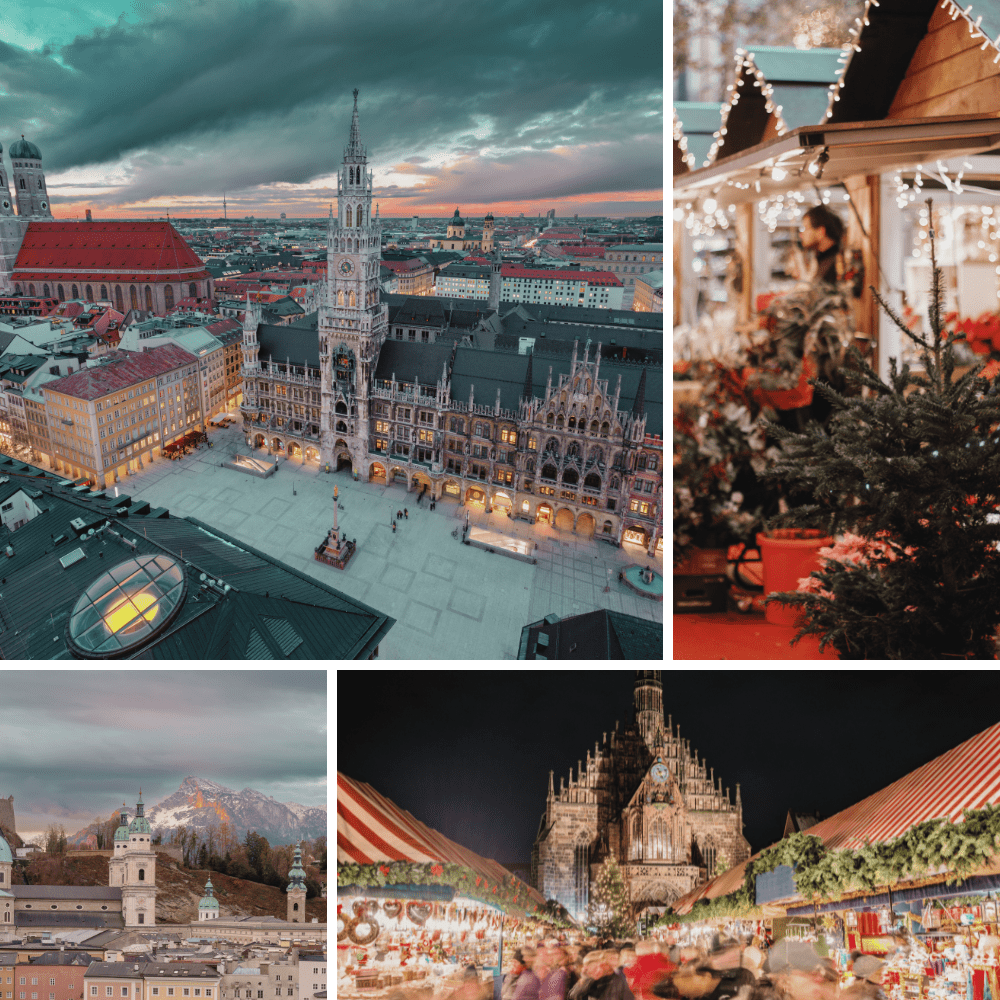
Christmas markets with a local guide who knew which stalls were family-run and which weren’t. Where the flaming mulled wine actually tastes right. Marienplatz for the famous clock tower with moving figurines, the food market, smaller markets scattered through the old town.
A day north to Nuremberg for Germany’s oldest Christmas market. Castle tour with an architecture specialist covering medieval defensive systems and water engineering. The craftsmen’s courtyard for traditional woodcarving and leather tooling. The Christmas market at dusk – 16th-century origins, wartime destruction, post-war rebuilding. Tasted gingerbread while understanding the spice routes that made it possible.
A day south into the Alps for Neuschwanstein. Early access before crowds. The guide explained Ludwig II’s politics en route – why he built fantasy castles during Bavaria’s annexation, how Wagner influenced the architecture. Inside the castle: what the interiors reveal about his psychology, why it stayed unfinished. The famous bridge viewpoint in snow. Hohenschwangau for contrast – Ludwig’s childhood castle, smaller and actually lived in.
Final push to Salzburg across the Austrian border. One concentrated night. Horse-drawn carriage through the old town. Cathedral Square market showing the shift from Bavarian to Austrian Christmas traditions – different ornaments, different food, different music. Mozart concert that evening in Mirabell Palace’s Marble Hall, the actual venue where he performed. Apple strudel workshop the next morning – hands-on cooking, Austrian versus German technique, why apple varieties matter, Ottoman influence on Central European desserts.
LOGISTICS
- Private driver throughout – no rental car chaos, no icy Alpine road navigation, no parking battles in medieval centers
- Strategic hotel placement – Munich home base (4 nights, unpack once), Salzburg finale (1 night, airport-ready)
- Specialist network – historians who’ve published on the region, master craftspeople, third-generation market vendors. Not booking platform guides.
- Before-hours access – castle entry before crowds, private workshop slots, concert seats not available online
- Real-time adjustment capability – weather backup plans, adapting dining plans, timing shifts when needed
- Airport coordination – departure logistics from Salzburg timed to avoid morning rush
THE OUTCOME
Five days gave them time to understand rather than just photograph. The hub-and-spoke model from Munich eliminated constant packing while maintaining access to multiple cities. Specialist guides answered questions three layers deep. Before-hours access meant experiencing sites without tourist crowds.
They left understanding why things exist, how they evolved, what makes Bavarian traditions different from Austrian ones. The kind of comprehension that changes how you see the rest of Europe.