

Visit Switzerland : Precision, Silence, and a Certain Way of Living
Some countries make an entrance. Switzerland doesn’t need to..
You think precision is cold? You haven’t felt the warmth of a bell tuned by hand, heard cowbells ring across fog at dawn, or watched a cheesemaker’s fingers read temperature the way others read poetry.
Switzerland doesn’t announce itself. It hums. A train arrives at 6:47, not 6:45, not 6:50, its reflection clean against Lake Geneva’s surface. In Gruyère, a bell sounds across pastures, tuned to a frequency that carries a kilometer through fog. This isn’t decoration. It’s how farmers find their herds when clouds erase the mountains. In a Zürich workshop smaller than most closets, hands adjust 648 parts, each measured in tenths of millimeters. Across town, chocolate tempers at exactly 31°C because molecular structure demands it. Nearby, someone slices Bündnerfleisch thin enough to read newsprint through, a technique unchanged since the 1300s because it doesn’t need improvement.
This is Switzerland before the world wakes. Not performing. Just working the way it has for centuries: deliberately, precisely, without needing applause. You don’t visit Switzerland to be impressed. You visit to understand what happens when a culture commits, for centuries, to doing things properly. When difficulty becomes method. When restraint becomes sophistication. When the question isn’t “Is this good enough?” but “Can this be better?”
252
Grape Varieties
+400
Varieties of cheese
+5000
Jazz recordings
+25
Billions CHF in Swiss watch exports
Meet Switzerland
Here is the Switzerland that exists beyond postcards and expectations. The one that reveals itself quietly, in moments you did not anticipate. A lake crossed at dawn, when the water is perfectly still and the world feels suspended. A mountain path taken slowly, where altitude sharpens both air and attention. A conversation that unfolds late, at a table you would never have found on your own. Time stretching, not because it stops, but because nothing rushes it.
We don’t offer itineraries filled to the brim.
We offer the right moment, at the right altitude. A door opened without ceremony. A table set simply, precisely, for those who know how to wait. A pause that does not appear in guidebooks, yet becomes the quiet core of the journey.
This is Switzerland, approached the way it prefers to be.
With discretion. With intention. And with the understanding that some places are not meant to impress you immediately, but to stay with you long after you leave.
Mountains That Made a Nation
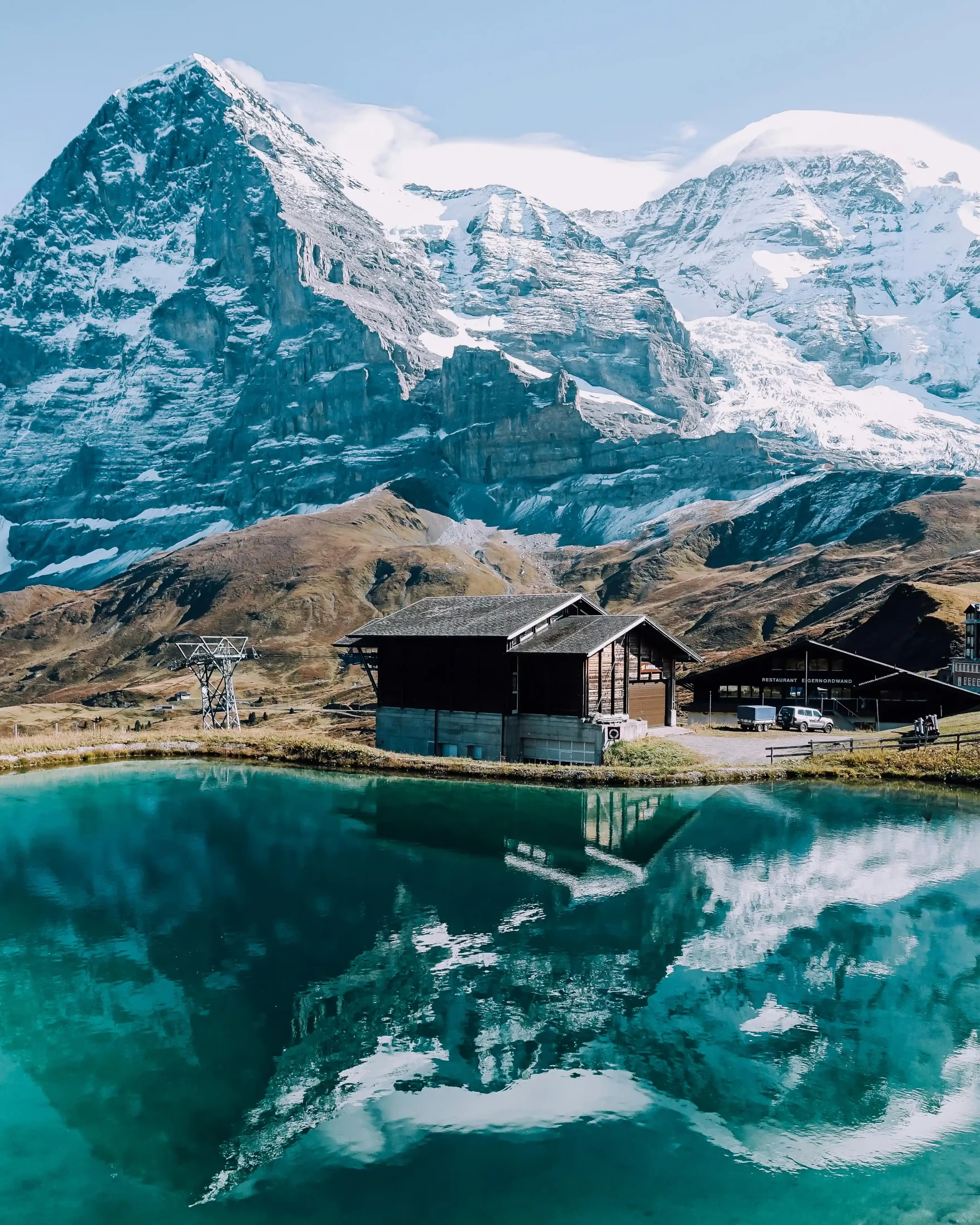
Switzerland is 41,285 square kilometers, smaller than Costa Rica, yet holds more variation than countries ten times its size. Sixty percent rises above 1,000 meters. More than 1,500 lakes interrupt the landscape, most carved by glaciers that retreated 12,000 years ago, leaving basins that now define where people live, how they move, what they grow.
The Alps didn’t just dominate the country. They created it. Valleys developed in isolation, separated by passes that closed six months yearly. Villages evolved distinct dialects, architectural styles, agricultural methods, all because a mountain stood between them and the next valley. What looks like diversity is actually geography that became identity.
In the east, the Rhine carves through gorges where Romansh, spoken by just 40,000 people, survives because landscape kept everyone else out. In the west, Lake Geneva’s microclimate allows Chasselas vines to thrive on slopes too steep for anything else. In Ticino, palm trees grow in Locarno while glaciers loom forty kilometers north.
Cities emerged where geography permitted: Zürich where the Limmat exits the lake, Bern in a river bend that created natural defenses, Geneva where the Rhône narrows enough to bridge. Nothing here is arbitrary.
This isn’t a country that conquered its geography. It’s one that learned to work within it so precisely that constraints became advantages. Mountains that isolated also protected. Altitude that made farming difficult made air pure. Terrain that prevented sprawl enforced density, which created efficiency.
When you’re landlocked, mountainous, and resource-poor, you either get very good at what you can control, or you disappear. Switzerland chose precision.

Where Time Became an Argument
In the Vallée de Joux, winter seals the valley for seven months. Snow closes passes from November to April, isolating communities in landscape too steep and cold for agriculture. So in the 1700s, farmers became watchmakers, spending months by candlelight assembling mechanisms in rooms heated barely above freezing. Isolation that made life hard made watchmaking possible. No distractions. No shortcuts. Just time, literal and figurative, to perfect complications requiring 600+ individual parts.
Today, that valley produces some of the world’s most complex timepieces. Jaeger-LeCoultre, Audemars Piguet, Blancpain: ateliers where master watchmakers spend six months assembling a single perpetual calendar. These aren’t watches. They’re arguments about what’s possible when you refuse to simplify.
At the International Watchmaking Museum in La Chaux-de-Fonds, a UNESCO site designed on a grid to maximize natural light for watchmakers, history unfolds as evolution of precision. Early watches lost fifteen minutes daily. By the 1800s, marine chronometers kept time accurately enough to calculate longitude at sea. Today, COSC-certified chronometers deviate less than four to six seconds daily.
But accuracy alone doesn’t explain Swiss watchmaking. What Switzerland mastered was integrating complications, functions beyond simple timekeeping, into movements small enough to wear. A perpetual calendar accounts for months of different lengths and leap years, requiring no adjustment until 2100. A minute repeater chimes time on demand using hammers striking gongs, developed so people could tell time in darkness. A tourbillon compensates for gravity’s effect by rotating the escapement continuously, a solution to a problem most people don’t know exists.
Several manufactures offer private atelier visits for those who contact ahead. At Audemars Piguet’s Musée Atelier in Le Brassus, watch watchmakers assemble movements under magnification, explaining why a single misaligned jewel can stop a watch cold. At Jaeger-LeCoultre’s Grande Maison, they demonstrate why they produce 1,200 calibers in-house: because buying from suppliers means accepting someone else’s precision standards.
A smartphone tells better time. But that’s not the point. Swiss watchmaking isn’t about time. It’s about refusing to accept that good enough is good enough.
Bells, Pastures, and Cheese That Tastes Like Altitude
Every June, the Alpaufzug begins. Cattle ascend to pastures above 1,800 meters, following routes walked for centuries, led by farmers who spend summer in stone huts without electricity or running water. Cows wear bells, not for tourists, but because in fog, sound is the only way to locate animals across kilometers of meadow. Each bell is tuned to a specific frequency, cast in bronze, fitted to individual cows so farmers can identify their herd by ear.
This isn’t tradition preserved for show. It’s agriculture that still makes sense. High pastures produce grass and herbs unavailable lower down: génépi, edelweiss, alpine clover, yarrow. Milk from cows grazing these plants contains higher omega-3 levels, producing cheese with flavor profiles lowland dairy can’t match. Alp cheese, made in mountain huts during summer, tastes measurably different.
At Alp Schaukäserei Klausen in Urnäsch, watch cheese production in a working alpine dairy, where milk collected at dawn heats in copper cauldrons over wood fire. The cheesemaker works by feel, testing curd temperature with bare hands, judging moisture by texture. Cheese is pressed into molds, salted, aged in the hut’s cellar for three weeks, then carried down the mountain in September when cattle return.
The descent, the Alpabzug, marks summer’s end. Cows wear elaborate flower crowns, bells ringing, parading through villages where residents gather. It’s not a festival invented for tourists. It’s a community event celebrating survival. Another summer completed. Another season’s cheese secured.
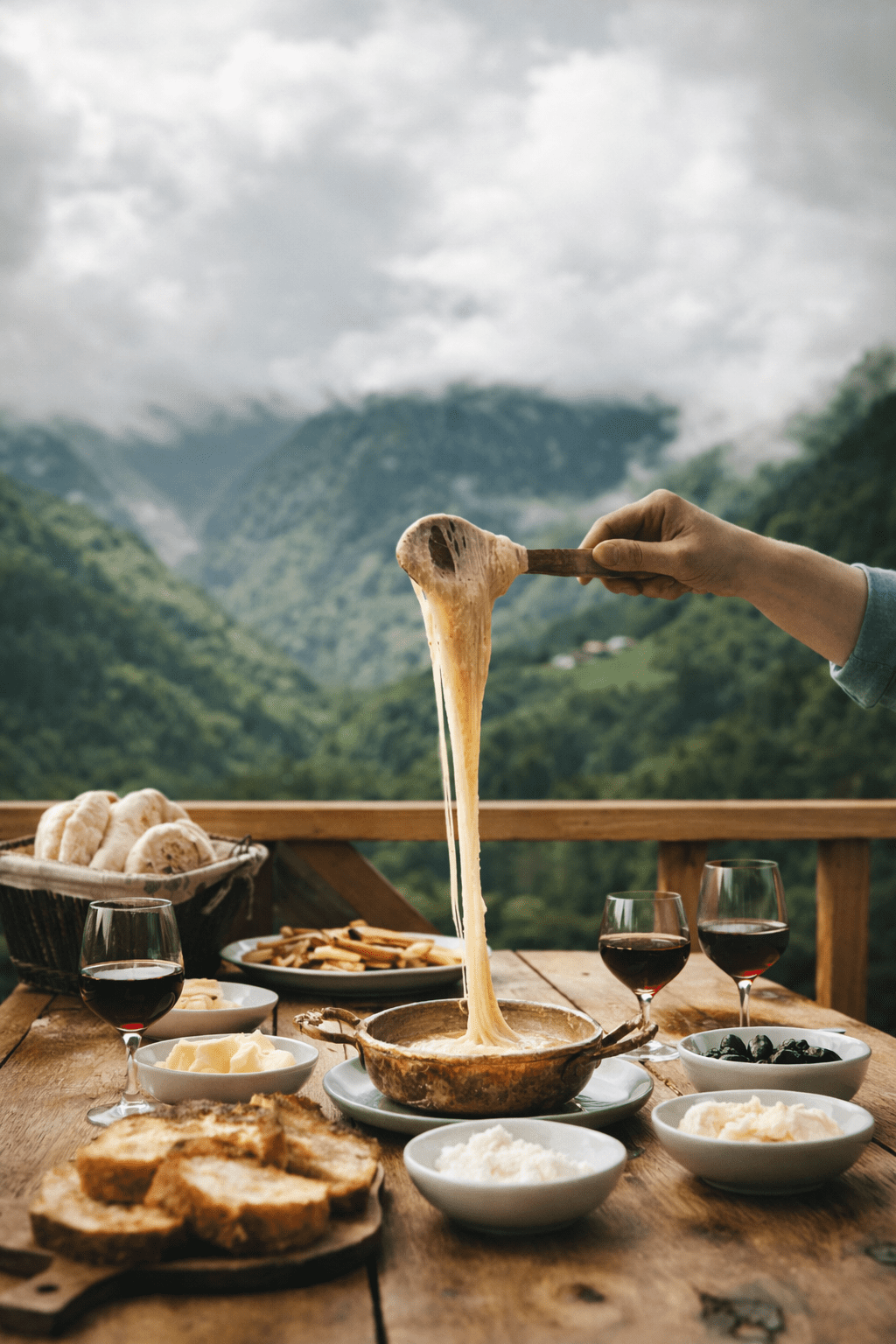
In Gruyère, AOP cheese production follows protocols established in 1115, when Cistercian monks realized milk from cows grazing above 800 meters created something fundamentally different. Each 35-kilogram wheel requires exactly 400 liters of raw milk. At Maison du Gruyère in Pringy, copper vats still heat milk to precisely 32°C before rennet is added. Affineurs turn each wheel by hand three times weekly for minimum five months in caves where humidity sits at exactly 94%. On certain mornings, the affineur will explain why properly aged Gruyère develops white crystalline deposits, calcium lactate crystals indicating proteins have broken down correctly.
In Valais, raclette production remains tied to villages where the method originated in the 1500s: cheese melted over open fire, scraped onto potatoes, eaten by vineyard workers laboring on steep terraces. The cheese wasn’t designed to be elegant. It was designed to sustain people through physical labor at altitude.
Switzerland didn’t choose this system because it’s picturesque. It chose it because mountains leave few alternatives, and the culture valued what difficulty produces.
Vineyards That Defy Gravity
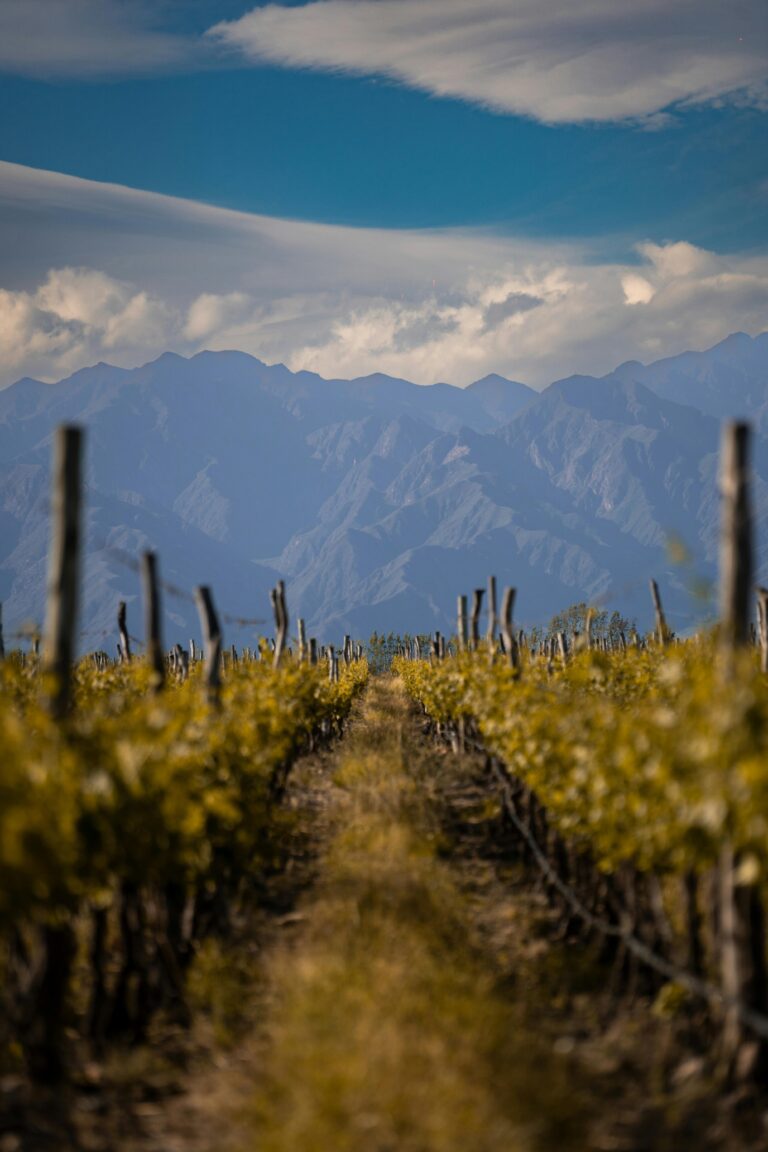
Lavaux shouldn’t work. Terraces rise at angles between 30 and 60 degrees along Lake Geneva’s northern shore, built stone by stone starting in the 11th century by monks who understood wine mattered more than ease. Chasselas, dismissed for decades as neutral, owns 60% of the region’s 805 hectares, planted because it’s one of few varieties ripening reliably at 45° latitude.
The shift came when producers like Domaine Bovy began bottling single-parcel cuvées, proving Chasselas from Dézaley’s steep schist tastes nothing like Chasselas from Epesses’s limestone soils three kilometers away. Dézaley delivers mineral tension, saline precision. Epesses offers floral lift, rounder texture. During harvest, late September, some domaines accept visitors who contact ahead, walking rows where every vine is still tended by hand because at these angles, tractors tip.
In Valais, viticulture becomes more extreme. Visperterminen holds Europe’s highest vineyards at 1,150 meters, where Heida grows in terraces accessible only by funicular. Altitude creates a 25°C temperature swing between day and night, forcing grapes to retain acidity while developing concentration. Valais also shelters varieties found almost nowhere else: Petite Arvine with grapefruit and saline minerality, Humagne Rouge with wild herbs and dark fruit, grapes that survived because isolation protected them from homogenization.
Nearly 90% of Swiss wine never leaves the country. Not because it’s not good enough, but because there isn’t enough. Total production is roughly 100 million liters annually, about what Bordeaux produces in a bad week. Most estates span fewer than five hectares. Many winemakers have other jobs.
The wines make sense only here, at the tables they were designed for. Chasselas with perch from Lake Geneva. Petite Arvine with raclette. They’re not meant to impress critics. They’re meant to work.
Walk these terraces with someone whose family has worked them for generations. Feel the angle in your calves. Understand why mechanization never arrived. The terraces weren’t built for efficiency. They were built because wine mattered enough to justify the effort. And because you can’t find these wines elsewhere, drinking them in Switzerland isn’t just tasting wine. It’s tasting a place that refused to compromise even when compromise would have been easier.
When Jazz Found the Mountains
Every July, Montreux transforms. Not loudly, not dramatically, but completely. Since 1967, the Montreux Jazz Festival has drawn musicians who could play anywhere but choose to play here, where Lake Geneva holds the sound and the Alps create natural acoustics that no concert hall can replicate. Miles Davis performed seventeen times. Nina Simone recorded live albums here. Prince played secret shows at 2am in the festival’s smallest venues, emerging afterward to walk the promenade alone, watching the water.
The festival doesn’t feel like a festival. It feels like a conversation that’s been ongoing for decades, where every note adds to what came before. Claude Nobs, who founded it, understood something essential: that jazz thrives not in stadiums but in spaces where musicians and audience share the same air, the same moment, the same listening.
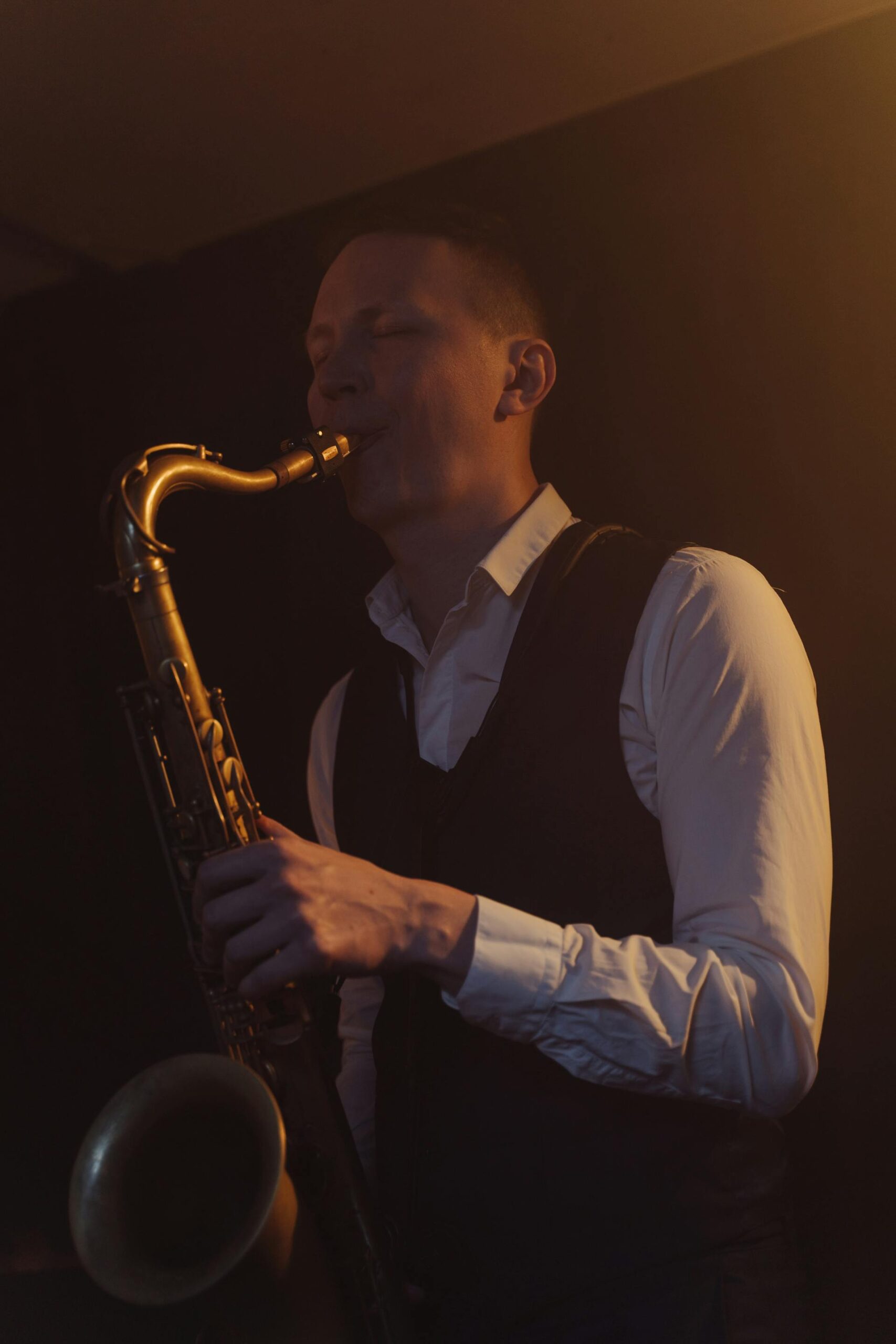
Walk into the Montreux Jazz Lab during festival weeks and you’ll find musicians who just finished their main set, still sweating, instruments in hand, sitting down to jam with whoever’s there. No set list. No plan. Just the trust that if everyone’s listening, something will emerge. A saxophone answers a piano. A bass line finds a rhythm that wasn’t there before. The audience leans forward. No phones. Just presence.
The festival’s archives hold over 5,000 hours of recordings, spanning six decades of performances. In the Montreux Jazz Digital Project, you can listen to sets that were never released, hear how a song evolved over different years, trace the moment when fusion became a language and not just an experiment. But the real archive lives elsewhere: in the way musicians talk about Montreux. The respect in their voice when they mention it. The fact that they keep coming back, year after year, even when they don’t need to prove anything to anyone anymore.
Outside festival season, Montreux remains a city shaped by music. Small jazz clubs along the waterfront host intimate performances most weekends. The Montreux Jazz Café serves wine and fondue while projected footage from past festivals plays silently on the walls: Ella Fitzgerald mid-phrase, B.B. King’s fingers on strings, Dizzy Gillespie’s cheeks puffed with air and sound.
This is where Switzerland’s precision meets improvisation. Where structure creates freedom rather than constraining it. Where the question isn’t “Can you play the notes?” but “Can you listen well enough to know which notes to play next?” Jazz in Montreux isn’t preserved. It’s alive, breathing, changing with every performance, yet somehow staying true to something that began decades ago when someone decided the mountains and the lake and the music belonged together.
Chocolate: When Two Degrees Changes Everything
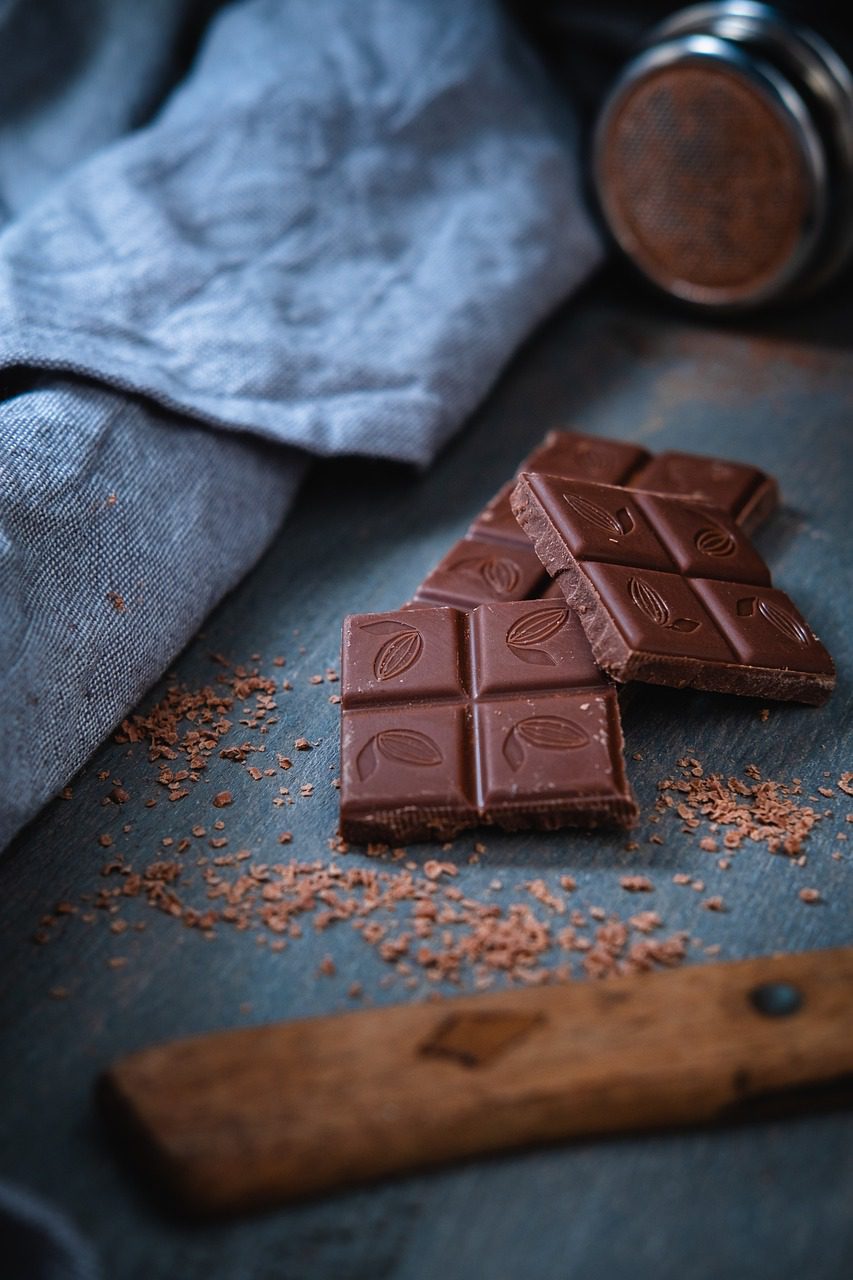
In 1875, Daniel Peter spent eight years perfecting milk chocolate in Vevey, working alongside Henri Nestlé. The problem wasn’t adding milk to chocolate. That’s simple. The problem was water. Fresh milk contains 87% water, and water makes chocolate seize into chalky paste. Peter’s breakthrough was using condensed milk with low enough water content that emulsification worked. The result was chocolate tasting like milk and cocoa simultaneously, not one masked by the other.
Rodolphe Lindt solved the next problem in 1879 with conching, stirring chocolate for hours at controlled temperature to break down sugar crystals and develop flavor. Before conching, chocolate tasted raw and gritty. After, it became smooth, complex, aromatic. At Lindt’s factory in Kilchberg, chocolate is still conched for up to 72 hours: prolonged agitation at 60°C oxidizes volatile acids while desirable flavor compounds develop.
At Maison Cailler in Broc, Switzerland’s oldest chocolate factory, operating since 1819, tours explain the precise temperature curves required for tempering. Chocolate contains six different crystal structures of cocoa butter. Only one, beta crystals forming at 31 to 32°C, produces the snap, shine, and stability good chocolate requires. Too hot, and wrong crystals form, creating chocolate that blooms white and melts in the wrapper. Too cool, and chocolate never sets properly. The margin is two degrees.
Several chocolatiers in Zürich and Geneva offer private workshops where participants temper their own ganache, learning why a one-degree difference changes everything. The lesson isn’t chocolate. The lesson is that pleasure has requirements. That “close enough” produces mediocrity. That the difference between good and extraordinary is often precision invisible to everyone except those who know what they’re doing.
This is why Swiss chocolate tastes the way it does. Not because of secret recipes, but because the culture that built watches accurate to seconds per day applied the same standards to chocolate. The question wasn’t “Is this good enough?” The question was “Can this be better?” And when the answer was yes, they kept going until it couldn’t.
Switzerland is a country that reveals itself gradually, then stays with you. From alpine ridgelines to lakeside towns, from high pastures to discreet urban corners, it offers a rare balance between nature, culture, and restraint. Steam rises from thermal waters at dusk, a train glides silently along the edge of a lake, lights appear one by one in a village settling into evening. Each moment feels composed rather than staged. A conversation that unfolds slowly, a table set without excess, the stillness of a morning before the world begins to move.
What if your journey followed this same rhythm? A bespoke itinerary, thoughtfully designed, not to show you everything, but to place you exactly where Switzerland makes the most sense to you. Some destinations impress at first glance. Switzerland rewards those who take the time to truly experience it.